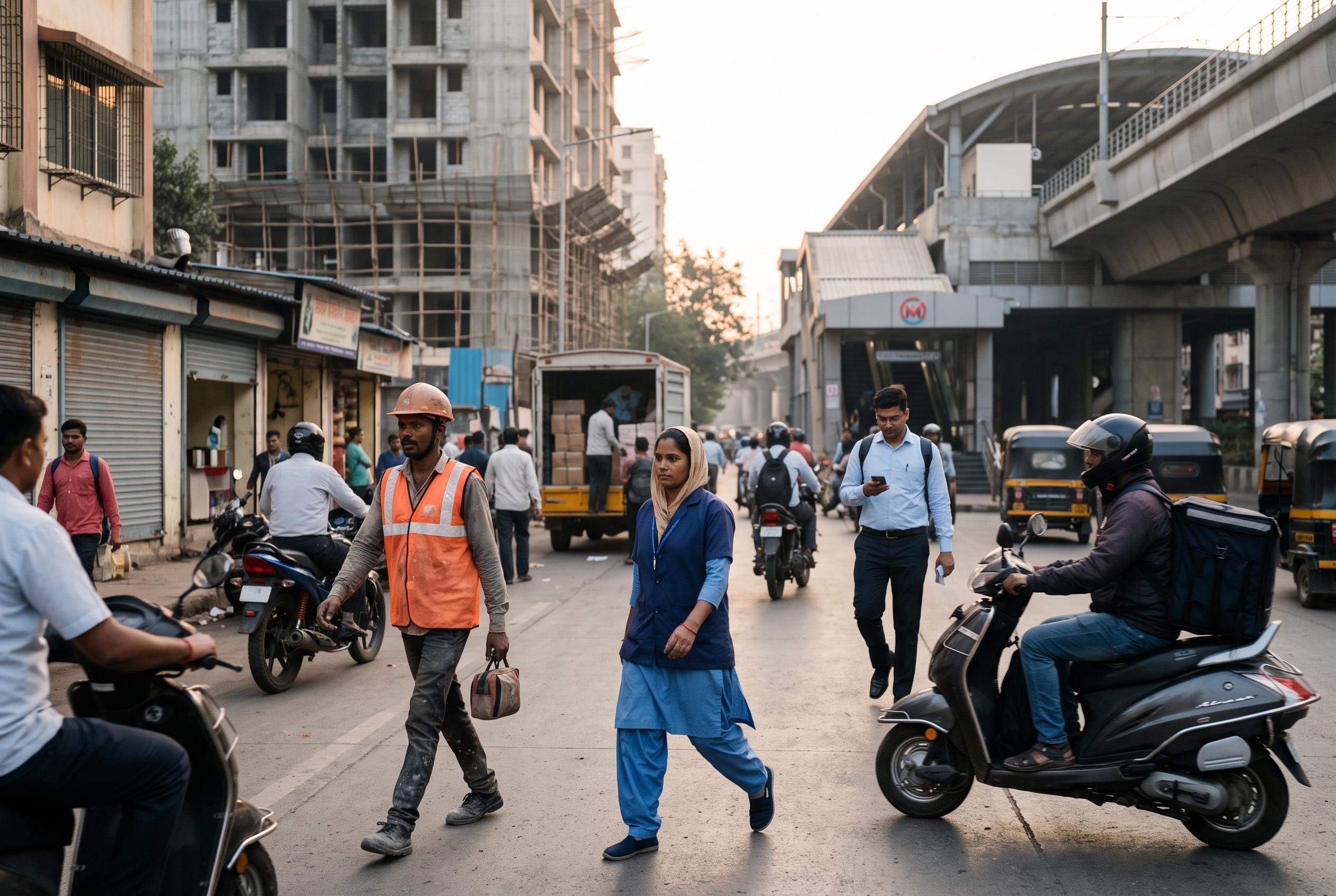

India’s labour market demonstrated renewed strength in August, with increased participation and a dip in unemployment, driven by growth in informal and formal sectors amid ongoing economic recovery.
India’s labour market showed fresh signs of resilience in August, with participation rising to a five-month high and unemployment edging lower, even as the economy continued to rely heavily on self-employment and small, unincorporated businesses for job creation. The Department of Economic Affairs’ September 2026 Monthly Economic Review said the labour force participation rate climbed to 55.6% in August, while the unemployment rate eased to 5% from 5.1% in July.
The improvement was especially visible in the countryside. According to the review, rural unemployment fell to 4.1% from 4.5% in July, its lowest level since January 2026. Trading Economics’ reading of the same labour data likewise showed stronger participation, a higher worker-population ratio and an increase in female labour-force participation, suggesting the recovery was not limited to one segment of the workforce.
Behind the headline figures, India’s unincorporated non-agricultural sector remained a major employer. The review said employment in that segment reached 13.7 crore in April-June 2026, up 6.55% from a year earlier, while the number of establishments rose 9.2% to 8.67 crore in the first quarter of FY27. Yet the composition of that employment shows how dependent the sector still is on owner-driven businesses: working owners made up 62.38% of jobs, while the share of hired workers slipped to 22.77% from 24.38% a year earlier. Women accounted for 30.56% of the workforce in the sector, underscoring its importance as a source of income beyond formal corporate employment.
At the same time, there were clearer signs of momentum in white-collar hiring. The Naukri JobSpeak Index showed a 14% year-on-year rise in white-collar recruitment in August 2026, with artificial intelligence and machine learning roles up 31% and fresher hiring up 15%. Hiring also broadened across industries, with gains in insurance, information technology, banking and fast-moving consumer goods. The overall picture is of a labour market that remains uneven, but is being supported by improving participation, a lower jobless rate and continued growth in both informal enterprise and selected formal-sector roles.
Disclaimer: This article is intended to inform and educate, not to recommend or endorse any financial product, investment or strategy. Please consider your own financial circumstances and seek professional advice where appropriate before making financial decisions.