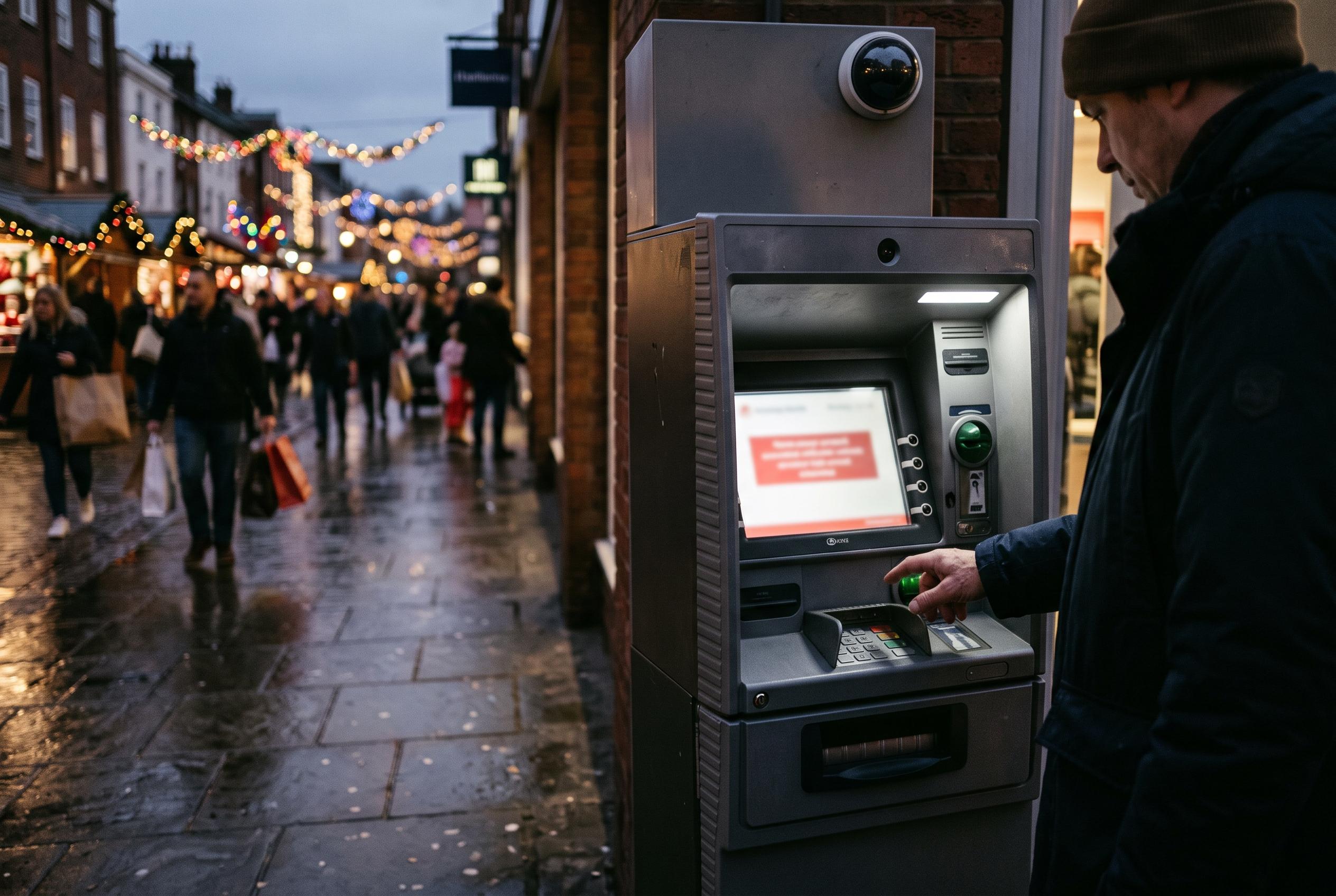

During busy festive seasons, ATM glitches can cause panic. Experts advise on recognising error messages, avoiding hasty actions, and ensuring proper redress through RBI rules if transactions fail due to technical faults.
If an ATM screen suddenly flashes an error while you are trying to withdraw cash during festive shopping, travel or an emergency, the worst thing to do is panic. The Indian consumer finance article warns that the most unsettling scenario is when the bank sends a debit alert by SMS even though no cash appears. In that situation, repeated card attempts or hasty cancellations can make matters worse rather than better.
The reason these failures happen is usually straightforward: the machine, the switch and the bank’s core systems are all checking each other in real time. Industry explainers on card declines note that withdrawals can be rejected for lack of available funds, crossed daily limits, inactive cash-withdrawal settings, fraud flags, expired cards or network problems. The key distinction is that a card may be declined even when the account balance looks healthy, because what matters is the available balance after holds, limits and security checks have been applied.
The error shown on the screen can also reveal where the problem lies. A “transaction declined” message usually points to the bank or card issuer rejecting the request, often because the account lacks sufficient funds or the withdrawal limit has been reached. A “request timeout” or host timeout, by contrast, suggests the ATM could not complete the authorisation in time, often because of a connectivity failure between the machine, the switch and the bank. A “cash out” or hardware error usually means the transaction may have been approved, but the dispenser jammed or ran out of notes before cash could be released.
If money is deducted but no cash is delivered, the recommended response is to wait briefly at the machine, because some systems automatically reverse failed withdrawals. If a receipt prints, it can serve as useful evidence; if not, the ATM ID, time and date should be recorded immediately. The next step is to contact the bank’s helpline or file a dispute through its app or internet banking, and to keep the complaint reference number. RBI rules, as described in the Indian article, require failed ATM transactions caused by technical faults to be refunded within five working days, with compensation of ₹100 a day starting from the sixth day if the bank does not act in time. Customers who do not receive redress can escalate the matter through the RBI’s banking ombudsman portal, and keeping a registered mobile number active helps ensure alerts arrive without delay.
Disclaimer: This article is intended to inform and educate, not to recommend or endorse any financial product, investment or strategy. Please consider your own financial circumstances and seek professional advice where appropriate before making financial decisions.