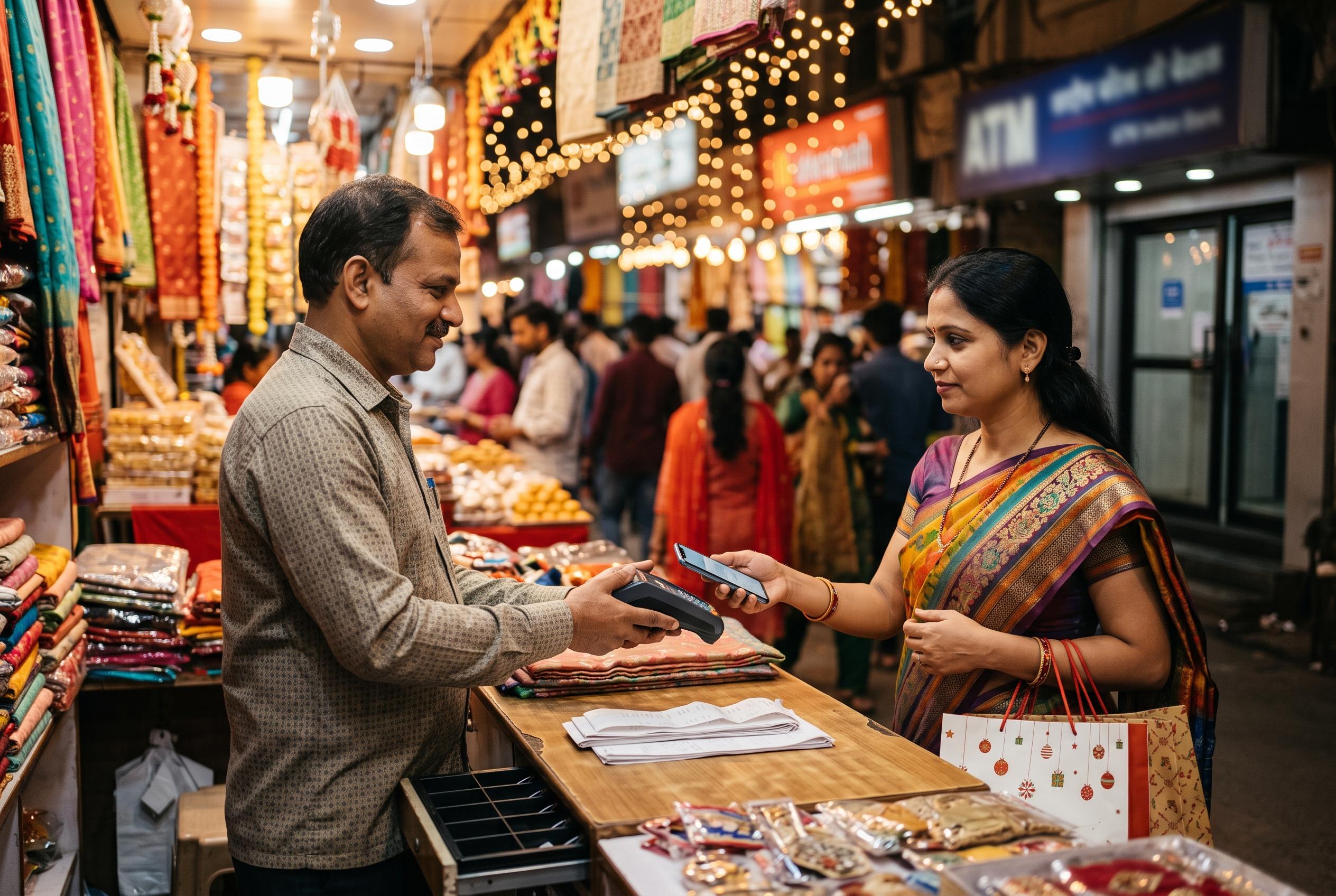

India’s Unified Payments Interface saw a modest decline in September transactions, yet the system hit new daily and annual growth marks, driven by seasonal spending and robust fundamentals ahead of new merchant charges in October.
India’s Unified Payments Interface eased slightly in September, but the scale of the slowdown was modest and still left the system at a new high. Data released by the National Payments Corporation of India showed 24.07 billion transactions worth ₹29.37 lakh crore during the month, down 1.8% in volume from August’s record 24.51 billion and down 1.5% in value from ₹29.82 lakh crore. Even so, the average day saw 802 million payments, the first time UPI has crossed that threshold, while daily value rose to ₹97,913 crore. Reuters-style reports based on the NPCI figures said the month-on-month dip was partly explained by September having one fewer day than August.
On a yearly basis, growth remained robust. Transaction volume was up about 23% from September last year, while transaction value rose 18%, underscoring how deeply UPI has become embedded in everyday payments. Business Standard noted that the average daily pace above 800 million transactions signalled that the system’s underlying momentum remained intact, even after back-to-back record months in July and August.
Industry observers linked the higher daily activity to the start of the festive season, with Ganesh Chaturthi falling in mid-September helping to lift spending. Reeju Datta, co-founder of Cashfree, said the average daily transaction value had held near ₹96,000 crore between April and August because incremental payments were mostly small-ticket purchases, but festival-related buying pushed the September figure higher. Datta told The Hindu BusinessLine he expected transaction values to strengthen further through October and November as major sales and Diwali shopping gathered pace.
Attention is also turning to the merchant discount rate, or MDR, which is due to apply to select UPI transactions from October 15. MDR is the fee merchants pay on card-based or other digital transactions. Mint and Business Standard both reported that some traders have voiced concerns, but Datta said he did not expect the new structure to materially weaken UPI usage because the platform remains cheaper than cards and enjoys broad consumer adoption. Whether that proves correct will become clearer as the festive season advances and the first transactions subject to the new charges begin to flow.
Disclaimer: This article is intended to inform and educate, not to recommend or endorse any financial product, investment or strategy. Please consider your own financial circumstances and seek professional advice where appropriate before making financial decisions.