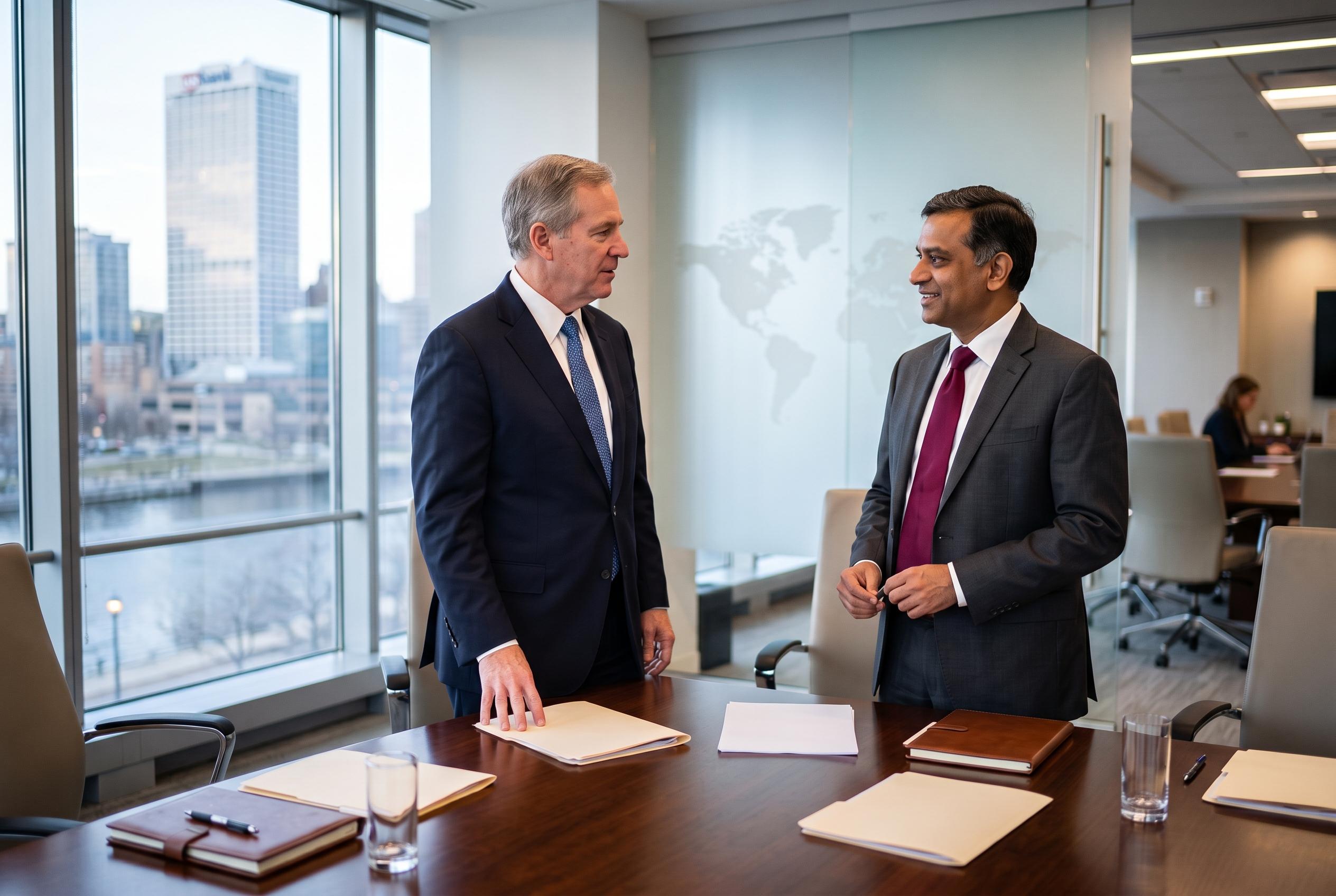

Piyush Goyal and Jamieson Greer met in Milwaukee as India and the US push forward on a bilateral trade pact, aiming for a balanced and mutually beneficial arrangement amid ongoing negotiations.
Piyush Goyal met the US trade representative, Jamieson Greer, in Milwaukee on Wednesday as India and the United States pushed ahead with talks on a bilateral trade agreement the two sides want to frame as balanced and mutually beneficial. The discussion took place on the sidelines of the G20 Trade Ministerial and came as both governments tried to keep momentum behind a deal that has been repeatedly described as close, but not yet complete.
The meeting followed a phone call the same day between Narendra Modi and Donald Trump, during which the prime minister and the US president reviewed cooperation across trade, defence, energy and critical technologies, according to the Indian government. India’s commerce ministry had already signalled that Goyal would use the visit to press ahead with talks on a broader bilateral trade agreement and to work towards an interim deal in line with the joint statement issued on 7 February 2026.
India and the US said in February that they had settled the framework for the first phase of the pact, but negotiations have continued as Washington’s tariff approach has shifted. Goyal said on 24 September that the agreement was “done and dusted” and would be implemented once the US gave India a competitive edge over other suppliers in the American market. That comparison matters because India is seeking terms that would put its exporters ahead of rivals such as ASEAN economies, China and Bangladesh.
Reporting from the Milwaukee meetings suggested the talks also carried a wider trade-policy dimension. Nation Press said Goyal used the G20 platform to defend WTO-led multilateralism, while discussions with Greer touched on supply chains, market access and the challenge of aligning India’s tariff system with the United States’ use of executive tariffs. The Economic Times quoted officials saying the deal was “more or less finalised”, though the shape of a preferential market-access framework still appears to be under negotiation.
Disclaimer: This article is intended to inform and educate, not to recommend or endorse any financial product, investment or strategy. Please consider your own financial circumstances and seek professional advice where appropriate before making financial decisions.