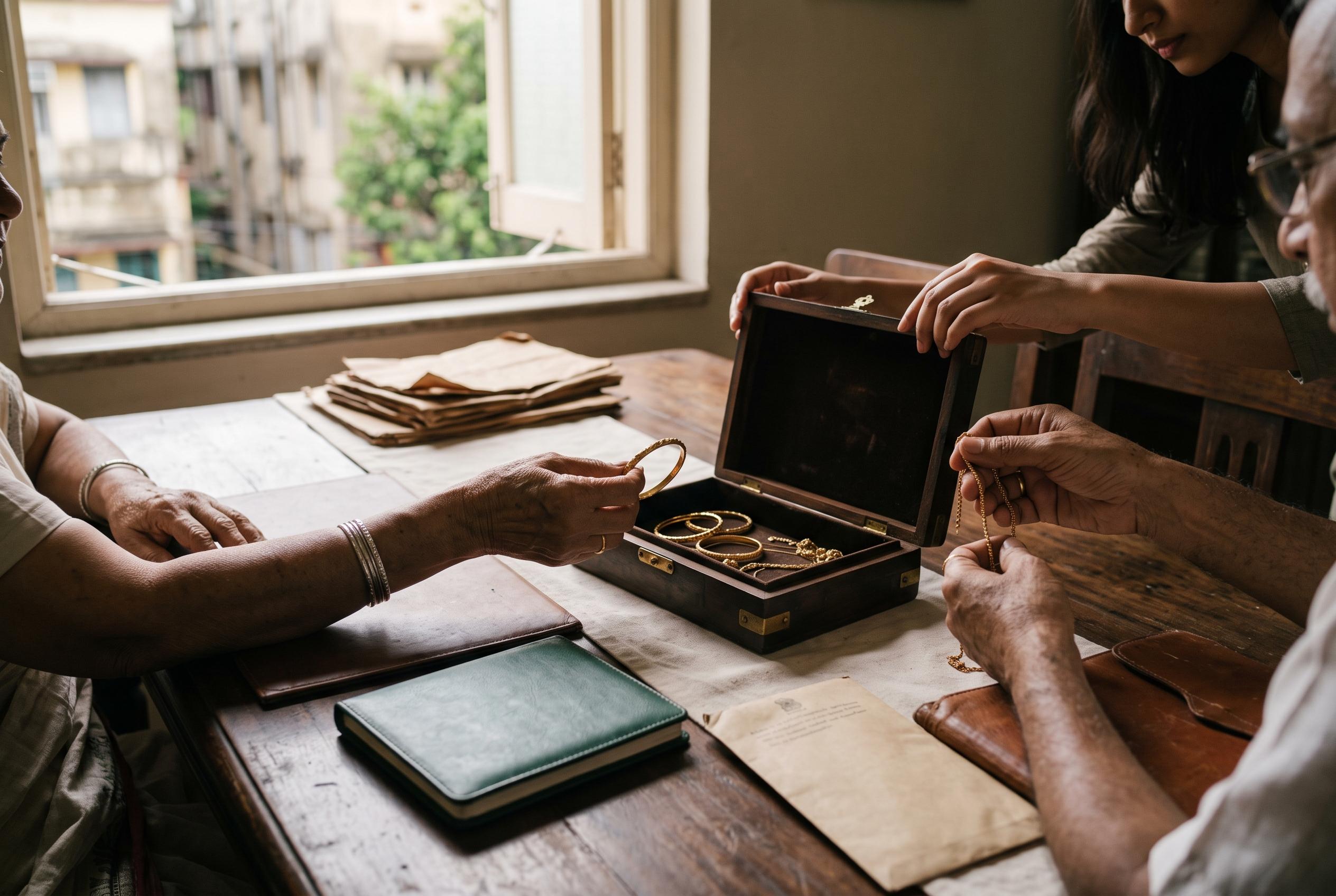

A recent ruling by the Kolkata Income Tax Appellate Tribunal highlights that inherited gold jewellery is not automatically taxable if families can substantiate its origins with appropriate documentation, offering guidance for those navigating tax searches.
Inherited jewellery can trigger a tax dispute if families cannot show where it came from, but a Kolkata tribunal ruling has underlined that ancestral gold is not automatically taxable simply because it turns up in a search.
The case concerned 3,233.11 grams of jewellery, valued at ₹1.56 crore, found during a tax search of Miraj Digvijay Shah’s premises and family lockers. Shah said the ornaments belonged to deceased relatives and to his father’s Hindu undivided family, or HUF. The Kolkata Income Tax Appellate Tribunal accepted that explanation and ruled in his favour, according to the Business Standard report and later accounts of the decision.
The ruling matters because tax officials look for proof of the nature and source of jewellery, not just where it was found. As tax advisers quoted by Business Standard noted, a piece’s presence in a house or locker does not by itself prove ownership. The authorities may examine who controlled the locker, who had access to it and whether earlier records support the family’s version. If the explanation fails, the ornaments can be treated as unexplained income, which can bring a far heavier tax burden.
The key lesson is that inheritance claims work best when they are backed by older records created before any search. These can include valuation reports, wealth tax papers, insurance documents, wills, succession papers, family settlement deeds, photographs and locker records. Tax professionals quoted in the report said no single document is decisive on its own; what matters is a consistent chain of evidence showing that the jewellery belonged to an earlier generation and passed within the family.
Current inventories can still help. A fresh valuation, photographs and a signed list can establish the weight and value of the pieces now in the family’s possession, even if they cannot prove original ownership. Business Standard also cited the Central Board of Direct Taxes’ 1994 search guidelines, which generally treat 500 grams for a married woman, 250 grams for an unmarried woman and 100 grams for a man as explained for seizure purposes, though those thresholds do not cap lawful ownership. Tax experts quoted in the piece added that jewellery bought from disclosed income, exempt income or household savings can also be supported through purchase bills and other records.
The wider point is that family lockers need paperwork. When several relatives share access, a signed and updated inventory can help show who owns what, and preserve the paper trail if the tax department asks questions later. The tribunal case also shows why appeals can take years: if an addition is made, taxpayers can first go to the Commissioner (Appeals) and then to the tribunal, but interest and penalty exposure may continue while the case is pending. For families holding inherited gold, the safest approach is to keep the documents long after the purchase receipt has gone.
Disclaimer: This article is intended to inform and educate, not to recommend or endorse any financial product, investment or strategy. Please consider your own financial circumstances and seek professional advice where appropriate before making financial decisions.