

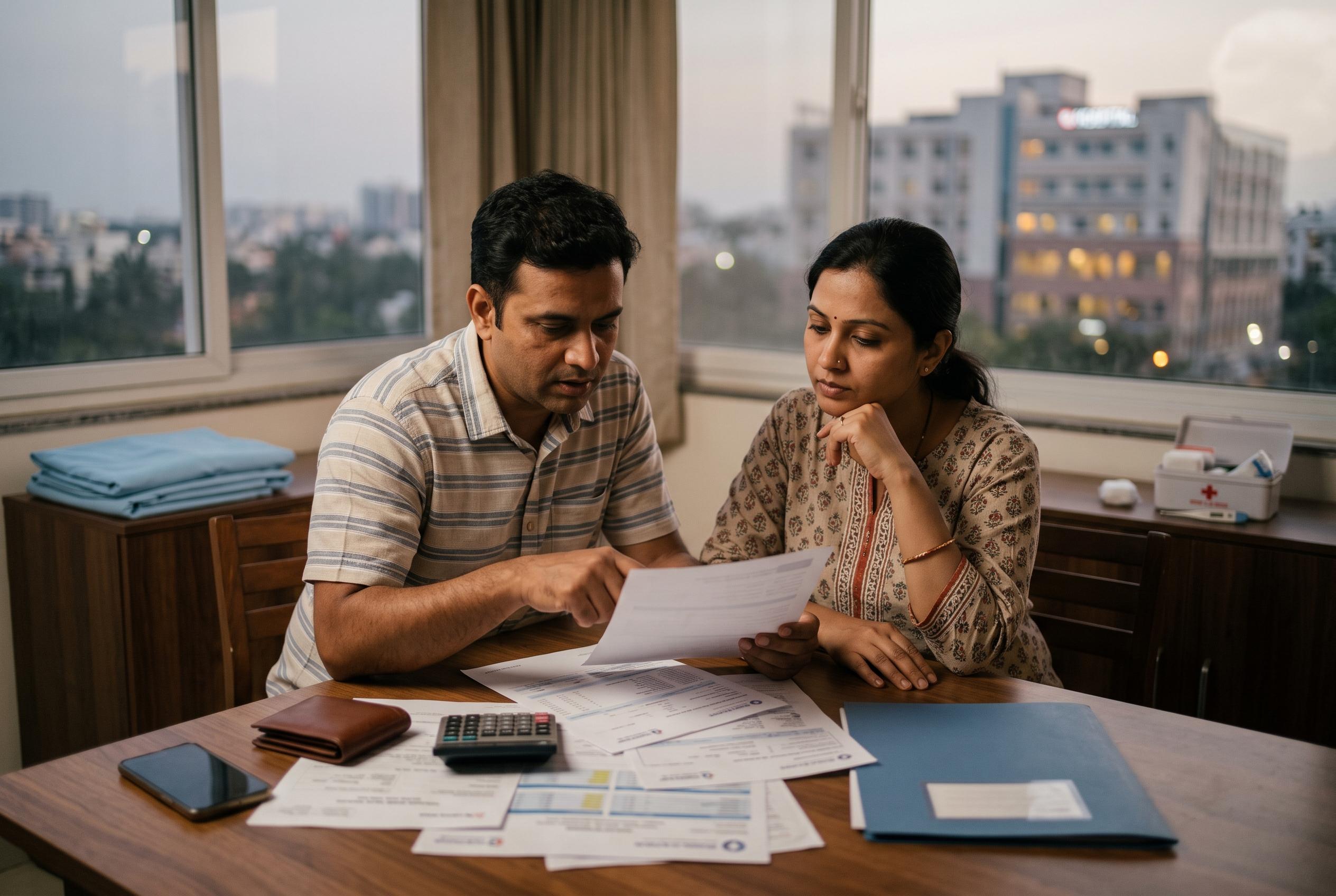

With heart diseases striking younger Indians and costs escalating, experts recommend layered insurance coverage and careful policy planning to manage financial risks before emergencies occur.
World Heart Day on September 29 is a reminder that cardiac disease is no longer a distant or late-life threat for many Indian families. The financial shock can arrive suddenly and be severe, with treatment for a heart attack or major cardiac procedure often running into several lakh rupees. In India, cardiovascular disease remains a major cause of death, and experts say the age at which problems appear seems to be falling. The World Health Organisation says cardiovascular diseases account for a substantial share of deaths in India and across the wider region, reinforcing the case for planning before an emergency arrives.
The scale of the risk helps explain why insurers and advisers stress layered protection rather than a single policy. Shilpa Arora, co-founder and chief operating officer at Insurance Samadhan, says cardiovascular diseases account for roughly one in three deaths in India, citing the 2022-24 Sample Registration System cause-of-death report. Vikas Gupta, head of health administration at Bajaj General Insurance, says cardiac illness appears to be striking earlier than it did in previous decades, while the World Heart Federation estimates that India recorded 31.65 lakh cardiovascular deaths in 2024.
That medical burden can translate into large bills. According to the guidance compiled by insurance advisers, admission for an acute myocardial infarction or acute coronary syndrome can cost about ₹2 lakh to ₹4 lakh when intensive care is needed, while angiography, angioplasty and bypass surgery can push costs far higher. Complex cases, repeat procedures and complications can raise the total further, and a premium hospital in a metro city can be far more expensive than a facility in a tier-two location. Varsha Gujarathi, chief customer officer at Universal Sompo General Insurance, says comparable procedures in smaller cities can cost 30% to 40% less on average, excluding the price of fixed implants.
For that reason, advisers generally recommend building coverage in layers. Gupta suggests that a resident of a large city consider a base policy of ₹15 lakh to ₹20 lakh, then add a super top-up of roughly ₹40 lakh to ₹50 lakh if repeated hospitalisation is a concern. A super top-up begins paying after a deductible is crossed, so the deductible should not exceed the amount already insured under the base plan. Arora adds that holding both policies with the same insurer can sometimes make cashless processing easier.
The details of a policy matter as much as the amount insured. Gupta says buyers should avoid room-rent caps where possible, because those limits can trigger proportional deductions if a more expensive room is used. Cardiac and critical-care treatment can also involve sub-limits for intensive care, procedures or devices, alongside co-payments, exclusions and waiting periods for pre-existing illness. Gujarathi says it is also worth checking whether nearby cardiac centres sit within the insurer’s cashless hospital network, since access to that network can make treatment easier at the moment it is needed most.
Critical illness cover works differently from hospitalisation insurance. Siddharth Singhal, head of health insurance at Policybazaar, says it pays a lump sum once the diagnosis matches the policy wording, and families can use that money for lost income, travel, long-term medicine or debt repayments. But the triggers are specific. Surinder Bhagat, president for employee benefits and large account practices at Prudent Insurance Brokers, says a claim for a heart attack generally needs typical clinical evidence, such as electrocardiogram changes and raised cardiac biomarkers, while a bypass claim requires a qualifying operation confirmed by a cardiologist. Singhal adds that angiography alone does not usually trigger payment, and that angioplasty and stenting are often excluded from these definitions.
Some people with known cardiac conditions may also look at cardiac-specific indemnity policies. Bhagat says these products can help those who might otherwise be declined, loaded with higher pricing or given a permanent cardiac exclusion under a standard health policy. Waiting periods vary widely, and premiums are usually higher than for an ordinary health plan, with some policies also applying age-based co-payments. In some cases, a hospitalisation policy may offer a rider that shortens the waiting period, but buyers need to compare the terms carefully before deciding.
Even a strong policy may not cover the full cost of recovery. Travel to a different city, accommodation for relatives, special diets, hired help at home, physiotherapy and follow-up tests can all create extra expenses after discharge. Singhal says a healthy person should keep an emergency corpus covering six to 12 months of household spending, while someone with a cardiac condition should aim for 12 to 24 months. Tax rules also matter: under Section 80D of the old tax regime, premiums for self and family can attract a deduction of up to ₹25,000, or ₹50,000 if the insured person is a senior citizen, with separate limits for parents.
Disclaimer: This article is intended to inform and educate, not to recommend or endorse any financial product, investment or strategy. Please consider your own financial circumstances and seek professional advice where appropriate before making financial decisions.



