

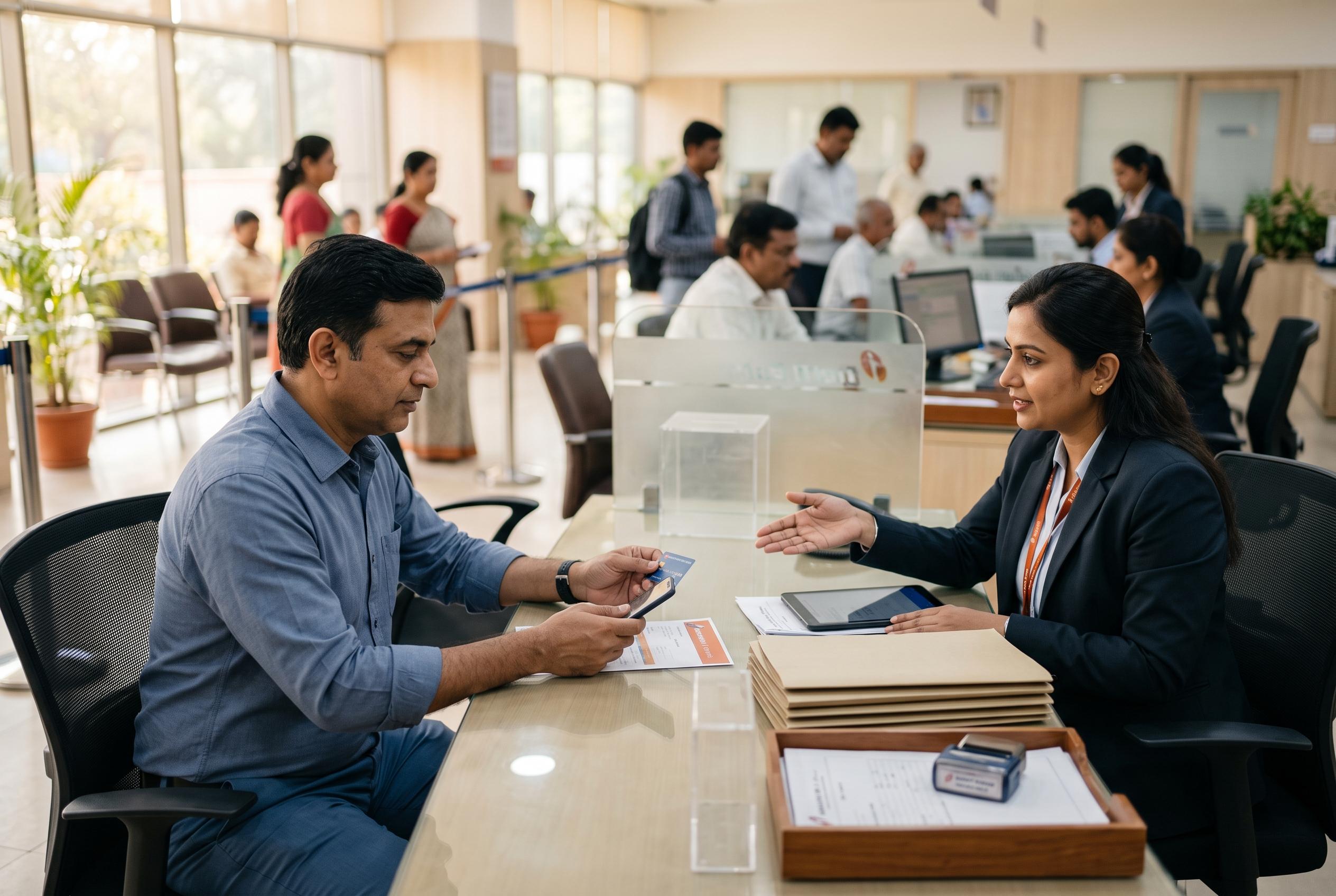

The Reserve Bank of India has introduced regulations to ensure transparency and fairness in minimum balance charges, with some banks like SBI already removing penalties to simplify account maintenance for customers.
For millions of savings account holders in India, the fee for failing to keep a minimum balance can come as an unwelcome surprise. Banks may call it a charge for non-maintenance of the minimum average balance, but the Reserve Bank of India has set out rules intended to stop lenders from levying such fees arbitrarily.
The RBI says banks must be transparent about minimum balance requirements when an account is opened, and customers should be told clearly what balance they must maintain and what charges may apply. The central bank also requires advance warning, usually by SMS, email or letter, before a penalty is imposed, with a grace period to restore the balance. Guidance cited in banking documents also makes clear that the charge should not push an account into a negative balance and should be proportionate to the shortfall.
Minimum balance rules still vary widely by bank and by branch location. In metro and urban branches, some private lenders require as much as ₹10,000 to be maintained, while semi-urban and rural branches often have lower thresholds. Articles published by Livemint and Lemonn on State Bank of India, HDFC Bank, ICICI Bank, Punjab National Bank and Bank of Baroda show that penalties can also differ sharply, ranging from modest fixed charges to sums that rise with the size of the deficit.
State Bank of India is the main exception. According to reporting by Economic Times and Upstox, the bank stopped levying penalties for non-maintenance of minimum balance in regular savings accounts in March 2020, a change that was later confirmed in remarks attributed to the finance ministry. That means SBI customers with standard savings accounts are not subject to the same minimum balance rules that still apply at many other banks.
If a bank deducts money without giving proper notice, customers can challenge the charge and seek a refund. The usual first step is to complain in writing to the branch or through the bank’s customer service system. If that fails, the matter can be escalated to the bank’s principal nodal officer or grievance cell. Should the bank still not resolve the issue within 30 days, customers can take the complaint to the Reserve Bank’s Integrated Ombudsman Scheme through the CMS portal.
For people who want to avoid the problem altogether, a basic savings bank deposit account or another zero-balance account can be a practical solution. These accounts are designed to offer banking access without the pressure of maintaining a fixed minimum, making them useful for customers with irregular incomes or low account activity.
Disclaimer: This article is intended to inform and educate, not to recommend or endorse any financial product, investment or strategy. Please consider your own financial circumstances and seek professional advice where appropriate before making financial decisions.



