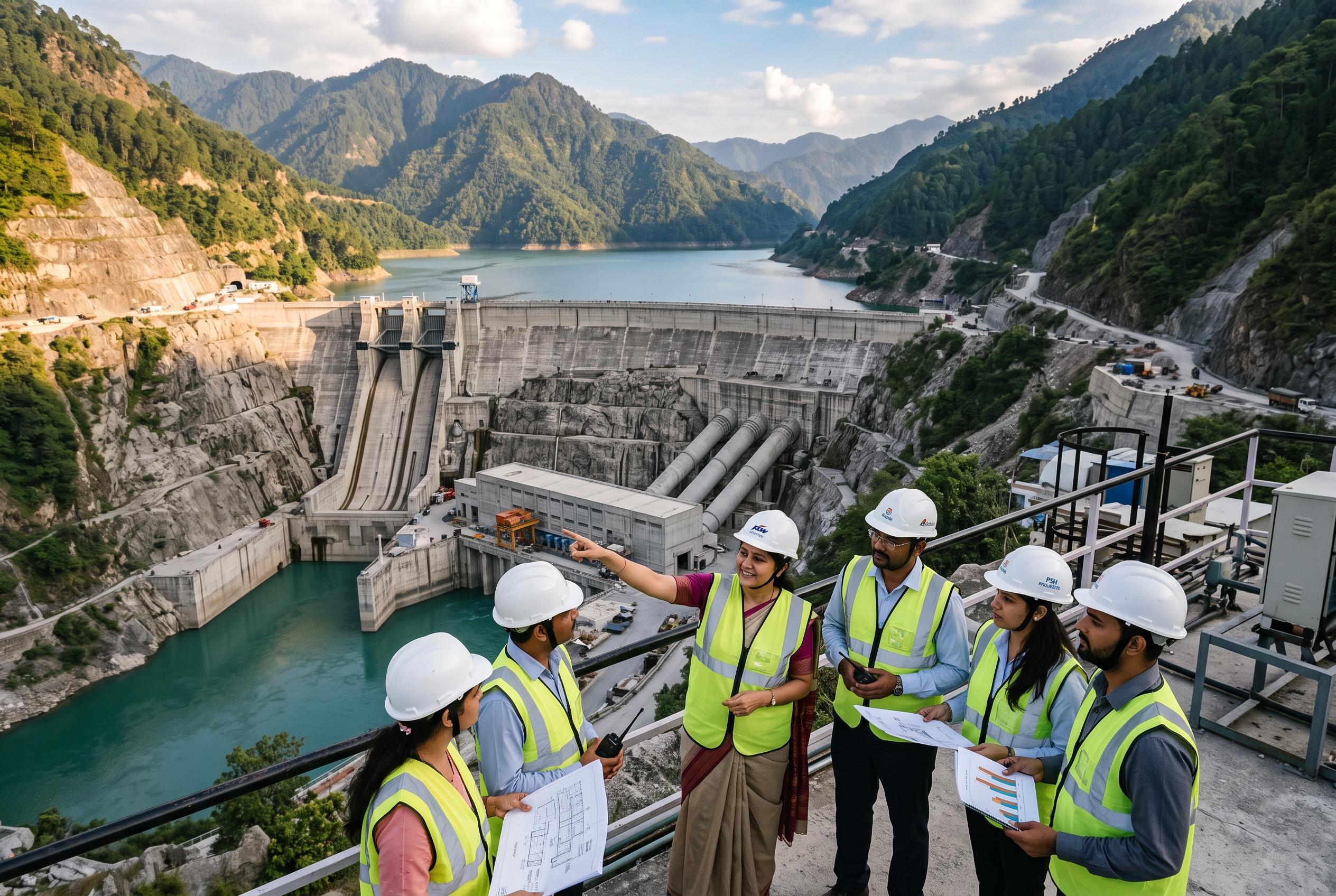

India’s move from planning to executing over 120 GW of pumped storage projects marks a crucial step in enhancing grid flexibility and achieving its green energy targets ahead of 2030.
India’s plan to build out pumped storage is moving from ambition to large-scale execution, with the Central Electricity Authority estimating that 122.77 gigawatts across 87 projects would need about ₹7.36 trillion, according to Livemint and supporting industry estimates. The push matters because India is trying to lift non-fossil power capacity to 500 GW by 2030 while managing the uneven output of solar and wind, which can rise and fall with weather and time of day. Pumped storage systems act like giant water batteries, using surplus electricity to move water uphill and then releasing it later to generate power when demand is stronger.
The CEA says 15.87 GW of pumped storage capacity is under construction, another 10.4 GW has cleared its review process, and surveys are under way for a further 96.5 GW. That takes the project pipeline well beyond the country’s current installed base of 7.42 GW, which includes the 1,000 MW Tehri scheme commissioned in 2025. The authority has already set a roadmap for 100 GW of pumped storage by 2035-36, a target echoed in reports by the India Brand Equity Foundation and Business Standard, which say the investment case is built around the need for longer-duration storage as renewable generation expands.
The need for that flexibility is becoming more urgent. India has about 43 GW of solar capacity that has yet to find buyers, while distribution companies have been selling surplus green power on exchanges at prices below their procurement costs, according to Livemint. At the same time, the national grid must keep frequency within a narrow band, and sudden drops in solar output or wind generation can make that harder. Pumped storage is designed for exactly that problem: it can absorb excess electricity off-peak, deliver power over many hours, and provide grid inertia that helps keep the system stable.
Industry specialists say the target is demanding but possible. AK Singh, a hydrologist and adjunct professor at IIT Roorkee, told Livemint that pumped storage projects typically take four to five years to build and require two reservoirs with a substantial height difference, though India has some sites with far greater elevation gaps. Singh pointed to the Western Ghats in Maharashtra and Karnataka and the Eastern Ghats in Andhra Pradesh and Odisha as promising locations, although geology and forest cover could slow some schemes. Existing commissioned projects include those from Tata Power, Greenko, Mahagenco and Tamil Nadu Generation and Distribution Corporation, while Adani Group, Tata Power and JSW Energy are among the developers with large projects under way.
Disclaimer: This article is intended to inform and educate, not to recommend or endorse any financial product, investment or strategy. Please consider your own financial circumstances and seek professional advice where appropriate before making financial decisions.