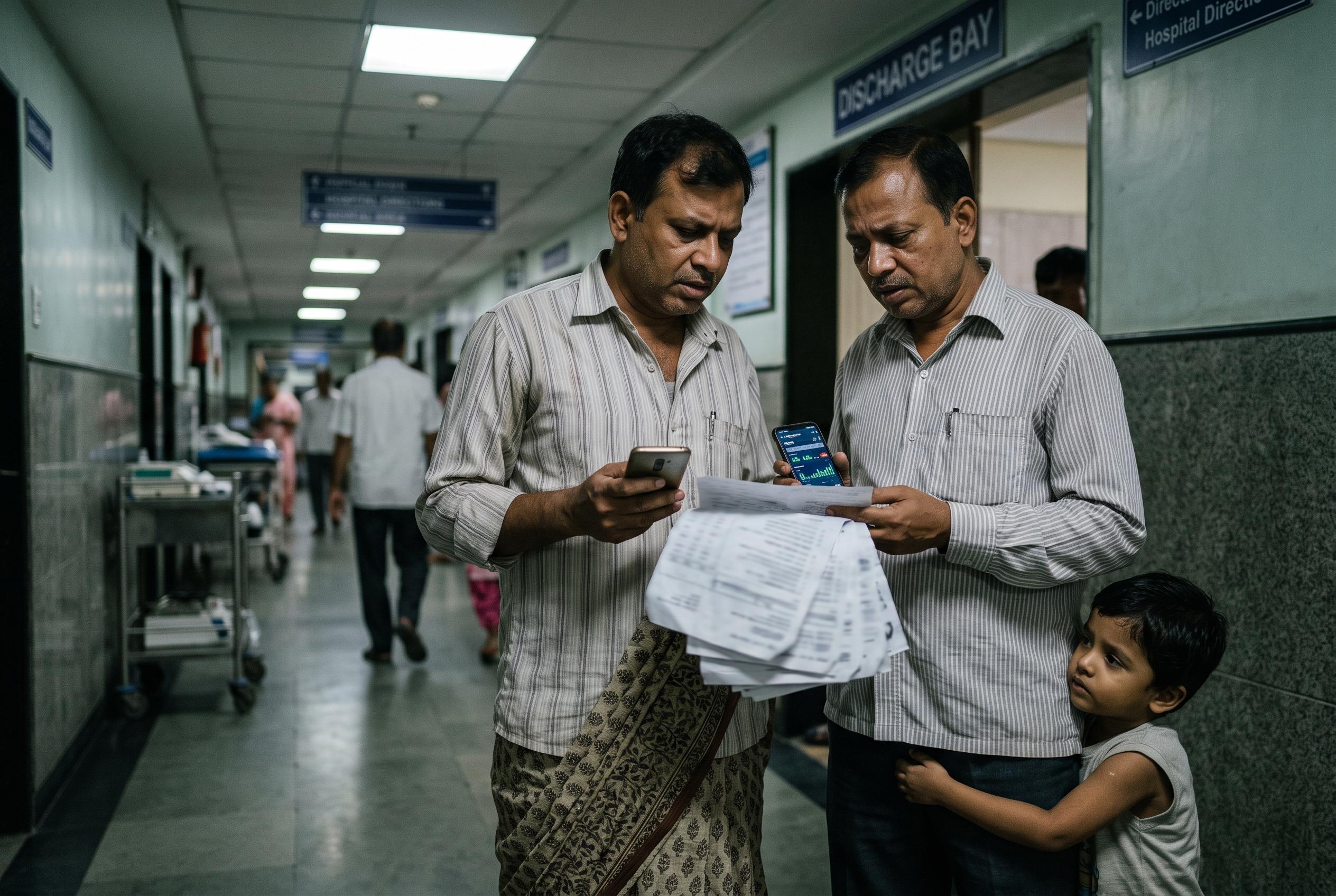

Despite being marketed as a solution to avoid out-of-pocket hospital expenses, cashless health insurance policies in India often fail to cover all costs, resulting in families paying substantial sums at discharge due to exclusions, room-rent rules, and other gaps in coverage.
Cashless health insurance is often sold as a way to remove the worry of hospital bills, but in practice it can still leave families paying substantial sums at discharge. In India, policyholders are increasingly finding that “cashless” does not mean free: exclusions, sub-limits, co-payment clauses and room-rent rules can all create an unexpected bill even when treatment is pre-approved, according to Financial Express and other consumer guides on the subject.
One of the biggest reasons for this gap is the long list of consumables and non-medical items that insurers do not always cover. These can include gloves, syringes, masks, PPE kits, bandages, oxygen masks and other single-use materials. The original article says these items can add up quickly during surgery or an ICU stay, while consumer explainers note that such out-of-pocket costs are a standard feature of many health policies unless a separate rider has been added.
Room-rent caps are another frequent source of frustration. As InvestingPro and New Edge Policy explain, many plans limit the daily room charge in line with the sum insured, and going above that limit can trigger proportional deductions across the wider claim. That means a patient who chooses a pricier private room may end up paying not only the extra room cost, but also a share of surgery, nursing and anaesthesia charges. The article argues that this is one of the least understood clauses in health insurance.
Co-payment and deductibles can deepen the problem. Acko’s health-insurance glossary says out-of-pocket expenses commonly include the portion of a claim the policyholder must bear under these terms, as well as spending that exceeds policy limits. In the case of co-pay, the insured pays an agreed percentage of the claim; with a deductible, the policy starts paying only after the policyholder has covered a fixed amount. These conditions are especially common in senior-citizen policies, pre-existing disease cover and some top-up plans.
There are also several smaller charges that can show up on the final hospital bill but fall outside standard coverage. These may include registration and admission fees, discharge paperwork costs, attendant meals, extra beds, toiletries and certain infection-control or biomedical waste charges. Pre-hospitalisation tests and post-hospitalisation medicines or follow-up care are usually reimbursable, but not through the cashless desk at the time of discharge, which means the patient still needs ready money in the short term.
The practical response, insurers and consumer advisers suggest, is to read the policy closely before buying or renewing it. The article recommends add-ons for consumables, choosing plans without room-rent caps where possible, and checking in advance with the hospital’s TPA desk about what will not be covered. The Economic Times has also reported on the industry’s “Cashless Everywhere” push, aimed at making treatment smoother at more hospitals, but for now the safest approach for consumers is still careful scrutiny of the fine print.
Disclaimer: This article is intended to inform and educate, not to recommend or endorse any financial product, investment or strategy. Please consider your own financial circumstances and seek professional advice where appropriate before making financial decisions.