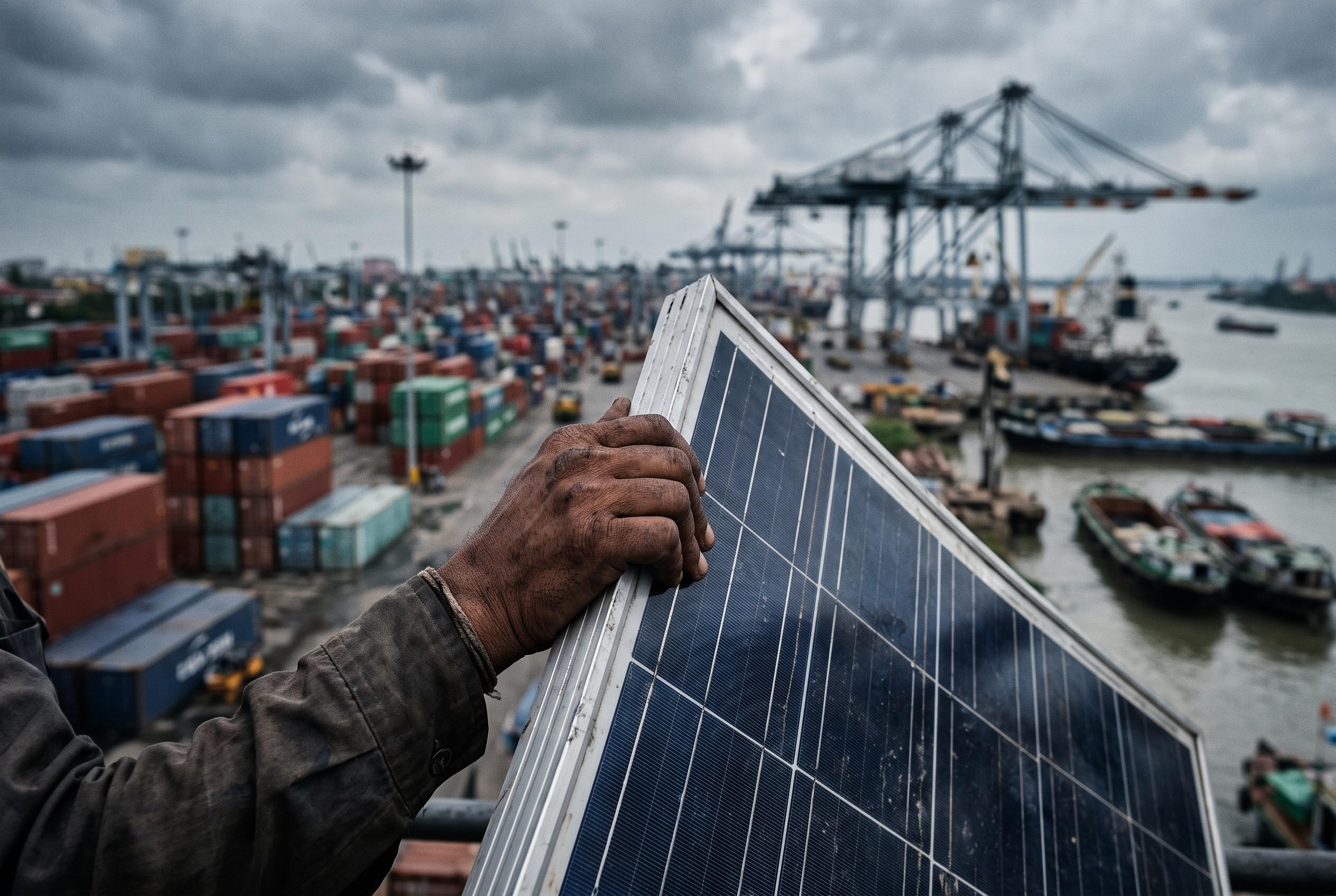

The US Commerce Department’s finalising of steep anti-dumping and countervailing duties on solar products from India, Indonesia, and Laos signals a major reset in the global solar supply chain serving the US, potentially impacting Indian firms like Premier Energies and Waaree Energies.
Premier Energies and Waaree Energies are likely to stay in the spotlight after the US Commerce Department completed steep anti-dumping and countervailing duty determinations on solar cells and modules imported from India, Indonesia and Laos. The ruling, part of the long-running Solar IV trade case, gives Indian suppliers especially little room to absorb the cost hit, with Commerce setting final dumping margins of 123.04% for Indian producers and countervailing duty rates of 126.09%. Indonesian and Lao exporters face similarly heavy penalties, narrowing the scope for manufacturers to shift sales between the three markets.
The decision matters because the United States has become a crucial export destination for Indian solar makers, where realisations have typically been higher than in the home market. That premium has helped support aggressive capacity expansion, but duties of this scale directly squeeze margins and could force companies to rethink pricing, delivery terms and customer mix. Industry watchers will be looking closely at how much of Premier Energies’ and Waaree Energies’ order books are tied to US demand, and whether existing contracts leave the duty burden with the buyer or the seller.
According to reports on the ruling, the Commerce Department’s action follows a petition from the Alliance for American Solar Manufacturing and Trade, whose members include First Solar, Hanwha Qcells and Mission Solar Energy. The group has argued that foreign producers benefited from unfair subsidies and dumped cheap products into the US market. The next key date is October 14, when the US International Trade Commission is due to decide whether domestic producers were materially harmed or threatened with injury. If it votes yes, final duty orders would follow later in the year.
The broader significance is that the case does not merely target India. By including Indonesia and Laos in the same determination, Washington has also closed off alternative manufacturing routes that had been used to serve US buyers after earlier duties on Chinese solar goods pushed production across Asia. That means the ruling is not just a pricing issue for one country’s exporters; it is a wider reset for the global solar supply chain serving the American market.
Disclaimer: This article is intended to inform and educate, not to recommend or endorse any financial product, investment or strategy. Please consider your own financial circumstances and seek professional advice where appropriate before making financial decisions.