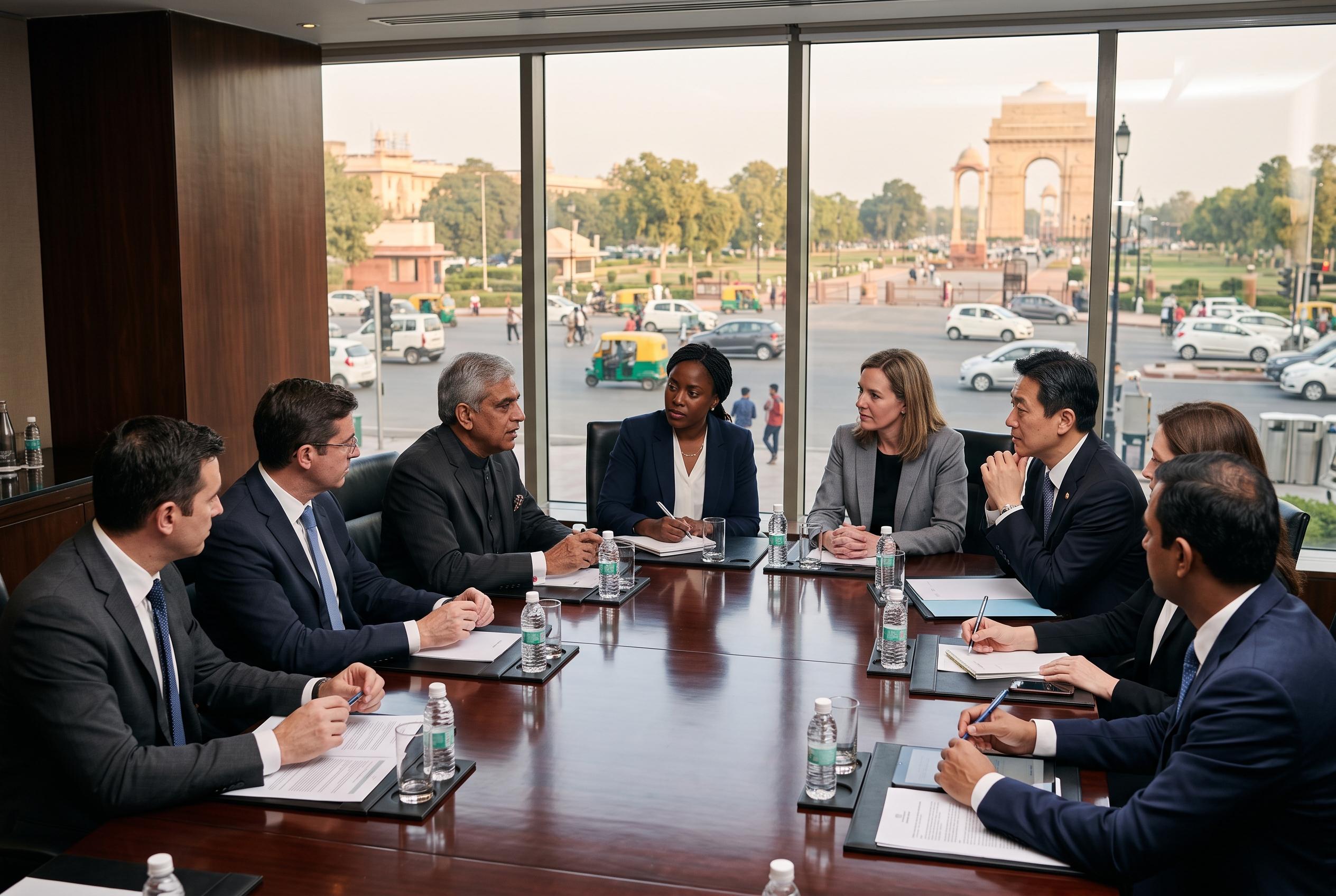

Brazil and India are nearing their trade target of $30 billion ahead of schedule, with significant growth in business collaborations and a shared vision to deepen strategic cooperation beyond diplomacy, as foreign ministers meet in New Delhi.
Brazil and India are moving towards a broader strategic relationship built on trade, investment and shared positions on global governance, Brazilian foreign minister Mauro Vieira said in New Delhi. Vieira said the two governments see room to deepen cooperation well beyond diplomacy, with business links and political coordination now gathering pace.
According to Vieira, bilateral trade, which stood at about $15 billion last year, could reach $20 billion this year. That would put the two countries ahead of the 2030 target of $30 billion set by Luiz Inácio Lula da Silva and Narendra Modi, although Brazilian officials now appear to think that goal could be reached earlier if a series of commercial projects advances as planned. Brazil’s trade agency, ApexBrasil, signed a memorandum of understanding with India’s Confederation of Indian Industry on 27 August to help widen commercial ties and investment flows, with sectors such as pharmaceuticals, bioenergy, biofuels, fertilisers and medical devices identified as priorities.
Vieira also pointed to the growing footprint of Brazilian companies in India, naming Petrobras, Embraer, WEG and Vale. Embraer, he said, is looking at opportunities in both civil aviation and defence, including its KC-390 transport aircraft and Super Tucano light attack aircraft. Separately, Brazilian and Indian business groups have been encouraged to expand cooperation in areas ranging from aerospace and defence to oil and gas, agriculture and equipment.
On BRICS, Vieira praised India’s presidency and said New Delhi had advanced initiatives first pushed during Brazil’s own turns leading the bloc and the G20. He rejected the idea that BRICS is fundamentally anti-Western or anti-American, describing it instead as a forum for negotiation, dialogue and consensus-building. He also dismissed suggestions that discussions about greater use of local currencies amount to an effort to replace the dollar, saying currency choices in trade are often made by companies and the private sector.
Vieira has also stressed the value of BRICS as a venue where countries with sharply different views can still maintain direct contact, including on Middle East tensions. Brazilian reports said he has portrayed the bloc as a place to narrow disagreements rather than deepen them. He further argued that the New Development Bank can give developing countries quicker and more flexible financing for major projects, while Brazil’s wider outreach in Asia, including through ASEAN, fits into a broader effort to strengthen ties across the region.
Disclaimer: This article is intended to inform and educate, not to recommend or endorse any financial product, investment or strategy. Please consider your own financial circumstances and seek professional advice where appropriate before making financial decisions.