

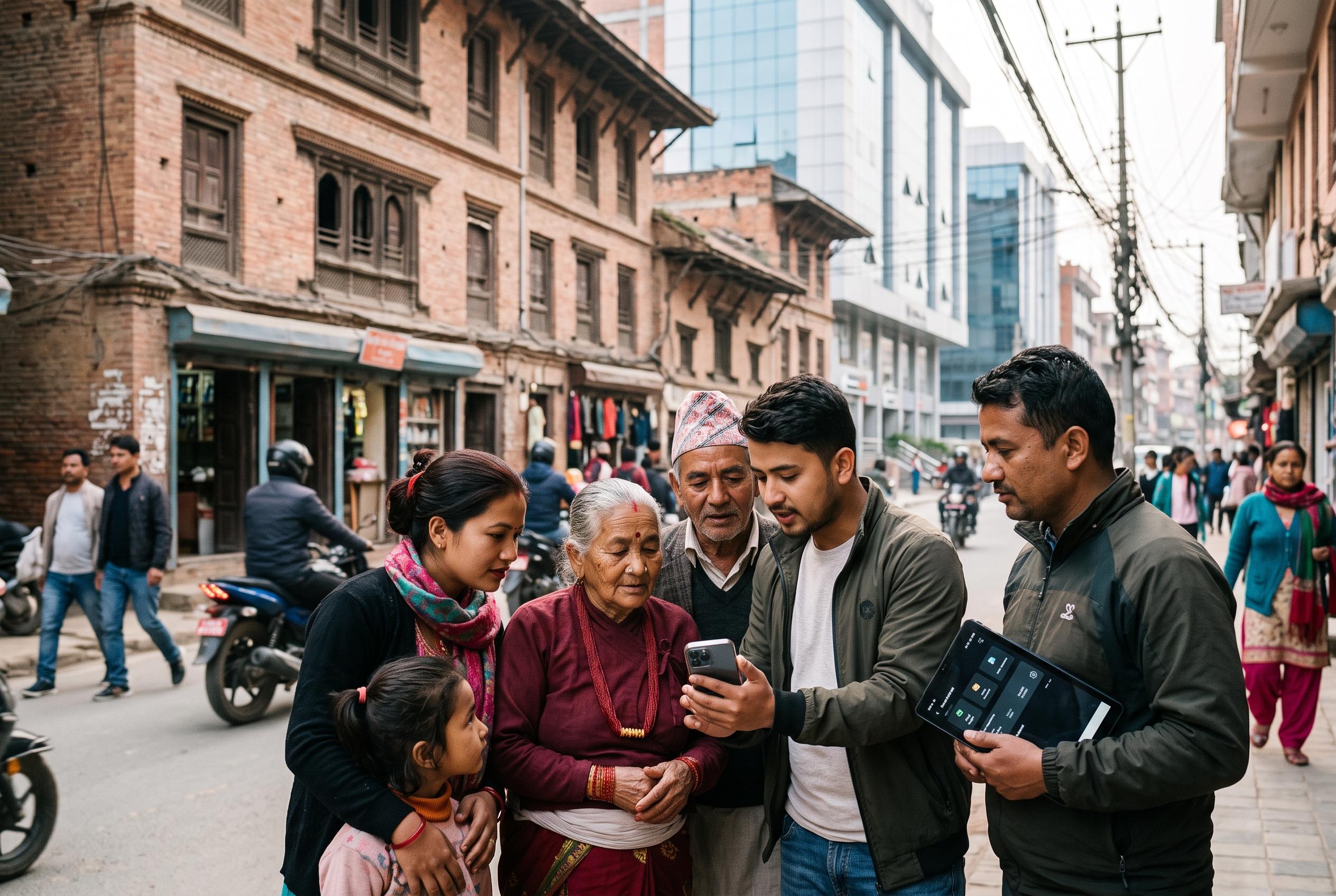

Remittances from Nepali workers abroad now form a vital part of the country’s economy, with a shift towards digital transfer methods and increasing regional disparities in benefit distribution highlighting new challenges and opportunities.
Money sent home by Nepalis working abroad has become one of the country’s most important economic lifelines, shaping everything from household budgets to national foreign exchange reserves. In hill districts and rural towns, those transfers often determine whether families can pay school fees, repair homes or keep food on the table. The shift is no longer just about volume, but also about how quickly and cheaply the money reaches recipients.
Research cited by the Centre for the Study of Labour and Mobility shows why remittances now sit at the centre of Nepal’s economy. The organisation said they amounted to 26.3% of gross domestic product in 2023, with workers abroad sending home about $10.76 billion. That total exceeded the combined value of the country’s foreign aid, tourism income and exports, while the share of households receiving remittances rose sharply over the past three decades.
The scale of the inflows has kept rising. Statista’s data on personal remittances shows Nepal received a record level of inflows in 2024, continuing a long upward trend. Nepali media outlets have also reported that remittance receipts hit NPR 1.112 trillion in the first 11 months of fiscal 2022-23, before climbing further to NPR 1.45 trillion in fiscal 2023-24, underscoring how central overseas labour remains to the wider economy.
A major change has been the move away from informal transfer routes. According to the CESLAM report, informal channels accounted for only 7% of remittance inflows in 2023, down from 30% in 2011, while banks and licensed providers handled most of the rest. That matters because more families now receive funds through regulated systems that are faster and more secure, and because a growing share of the money is used for daily consumption and debt repayment linked to migration costs.
The benefits, however, are uneven. Households in Gandaki, Koshi and Bagmati provinces receive far more on average than those in Sudurpaschim, Karnali and Madhesh, largely because many migrants from the lower-receiving provinces work in India, where wages are lower than in the Gulf or richer destinations such as Australia and Japan. That gap is now being addressed partly through digital payments: in June 2026, Nepal Clearing House Limited and India’s National Payments Corporation launched a real-time remittance corridor linking the two countries’ payment systems, with the aim of reducing cash handling and discouraging hundi networks. Nepal’s central bank says the service is meant to give migrant workers more control and security over their earnings.
Disclaimer: This article is intended to inform and educate, not to recommend or endorse any financial product, investment or strategy. Please consider your own financial circumstances and seek professional advice where appropriate before making financial decisions.



