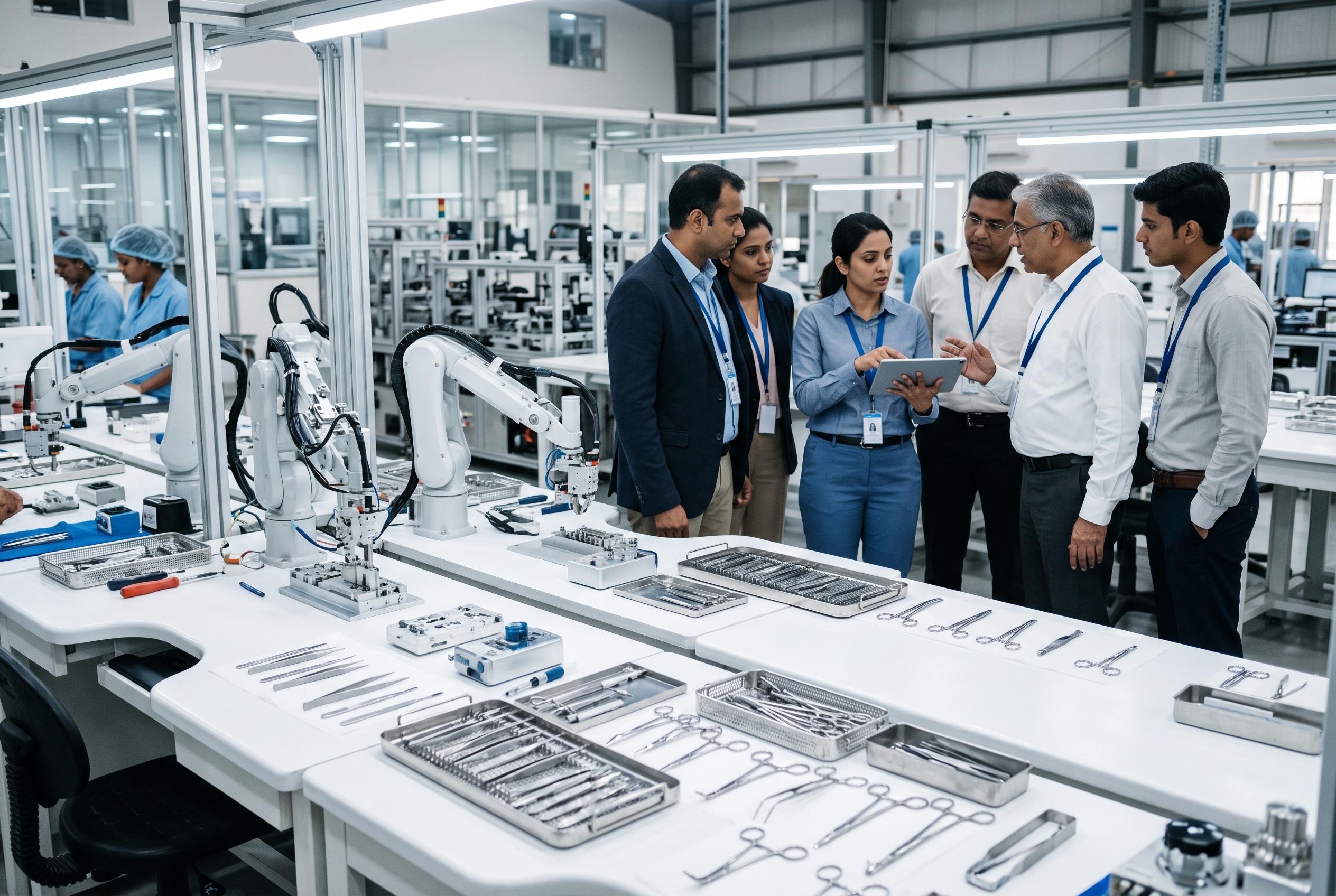

Indian medical device makers welcome recent regulatory reforms but warn that the broader policy framework risks misclassifying engineering products as pharmaceuticals, urging for a dedicated law and regulator to support industry growth.
India’s medical device makers have welcomed some of the latest regulatory easing measures, but they say the wider policy direction still risks treating engineering products like pharmaceuticals.
In a letter dated August 11, 11 national associations asked the government to rethink the Draft Drugs, Medical Devices and Cosmetics Bill, 2026, arguing that devices need their own law and a separate regulator. The groups said the draft relies on drug-centred language and enforcement, even though medical devices depend on engineering, design controls and risk management rather than the chemistry-driven framework used for medicines. They also pressed the health ministry for structured consultation before the Bill is finalised.
That complaint comes as the government has moved to simplify some parts of the Medical Devices Rules, 2017. According to an official release, the amendments expand the list of recognised stringent regulatory jurisdictions for waiving clinical investigations, with the European Union now included. Industry groups including the Association of Indian Medical Device Industry and the Medical Technology Association of India have publicly welcomed that step, saying it should speed up access to proven products.
The new rules also remove the need for a separate loan licence when a manufacturer outsources sterilisation to a facility that already holds a valid licence. That change should cut duplication, paperwork and costs, especially for smaller companies without in-house sterilisation capacity. But the benefit is partly offset by a new requirement to print the sterilisation subcontractor’s details on every package, which industry executives say could create fresh logistical headaches, particularly for exporters and firms working with multiple sterilisation partners.
Rajiv Nath, forum coordinator of AiMeD, has argued that the labelling rule could slow dispatches and reduce flexibility in customer service, while Pavan Choudary, chairman of MTaI, has described the licensing changes and standardised testing fees as sensible in principle but dependent on careful implementation. Both groups want clearer guidance on transition periods, relabelling, fee structures and the duties of device makers versus sterilisation units, along with a stronger post-market surveillance system that can trace defective products without disrupting supply.
The broader industry case is that India cannot become a serious global medtech hub if it keeps relying on what its representatives call pseudo-manufacturing. Nath has said the country needs more value addition, better testing infrastructure and stronger certification, with domestic standards aligned to ISO, CE and USFDA benchmarks. Industry bodies also want a dedicated medical devices law, a specialised scientific review cadre and a proportional penalty regime that distinguishes between technical lapses and genuine safety failures. Their position is that regulation should protect patients without discouraging investment, exports or innovation.
Disclaimer: This article is intended to inform and educate, not to recommend or endorse any financial product, investment or strategy. Please consider your own financial circumstances and seek professional advice where appropriate before making financial decisions.