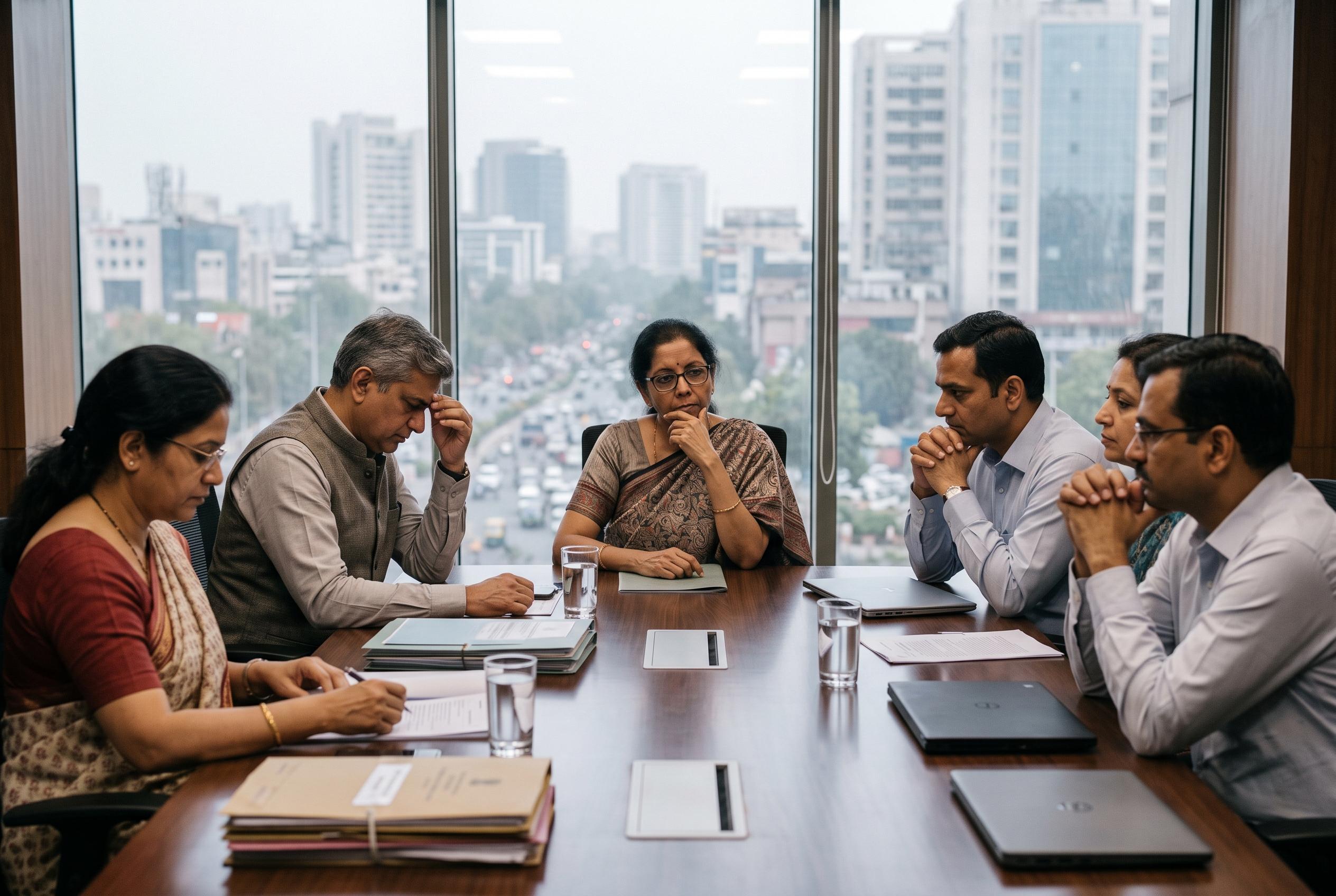

As India prepares for its formal pre-Budget consultations, concerns mount over underutilised schemes and a surge in subsidies, threatening fiscal targets amid ongoing economic challenges.
With formal pre-Budget consultations due to begin in mid-October, India’s finance ministry appears to be sharpening its focus on a familiar weakness: schemes that are approved, funded and then only partly used. The concern is not merely cosmetic. In the 2025-26 fiscal year, the government still met its deficit target of 4.4 per cent of gross domestic product, but it did so after tightening spending more than expected and leaning on stronger-than-budgeted non-tax receipts, including dividends from the Reserve Bank of India and state-run lenders.
That outcome masks a deeper problem. Business Standard said several major programmes across health infrastructure, housing, irrigation, drinking water, rural roads, telecoms, artificial intelligence, semiconductors and production-linked incentives saw only a fraction of their allocations spent. In some cases, the shortfall was severe. The pattern raises three broad possibilities: the schemes may have been poorly designed, the allocations may have been misdirected, or the agencies responsible for execution may simply lack the capacity to absorb the money efficiently.
The issue is even starker at state level. By the end of December 2025, roughly ₹69,000 crore was still sitting unused with states under 53 schemes that each had annual outlays above ₹500 crore, according to the article. That helped force a downward revision in the year’s spending plans. A similar story played out in 2024-25, when about ₹1.6 trillion remained unspent with states and Union territories at the end of December 2024, prompting a sharp cut in revised allocations for a similar group of schemes.
The finance ministry’s push for more realistic spending estimates appears aimed at preventing that cycle from repeating. The timing matters because the next budget is being prepared against the backdrop of the West Asia crisis and its effects on oil costs and public finances. Provisional figures for the first four months of 2026-27 suggest spending is already running ahead of plan, with total expenditure up about 13 per cent year on year to ₹17.62 trillion, compared with a full-year budgeted increase of 8 to 9 per cent.
The biggest pressure point is subsidies. While capital spending has risen strongly, that is not necessarily the main worry because it makes up a relatively small share of total outlays. The more troubling development is the jump in fertiliser, food and petroleum subsidies, which rose 35 per cent in the April-July period to ₹1.53 trillion, well above the pace implied by the Budget. Even so, stronger tax receipts have offered some cushion. Net tax revenue is up more than 27 per cent to ₹8.4 trillion, while non-tax revenue has also improved. If that trend holds, the government may still manage to preserve its fiscal target, but only if spending is kept on a tighter leash in the months ahead.
Disclaimer: This article is intended to inform and educate, not to recommend or endorse any financial product, investment or strategy. Please consider your own financial circumstances and seek professional advice where appropriate before making financial decisions.