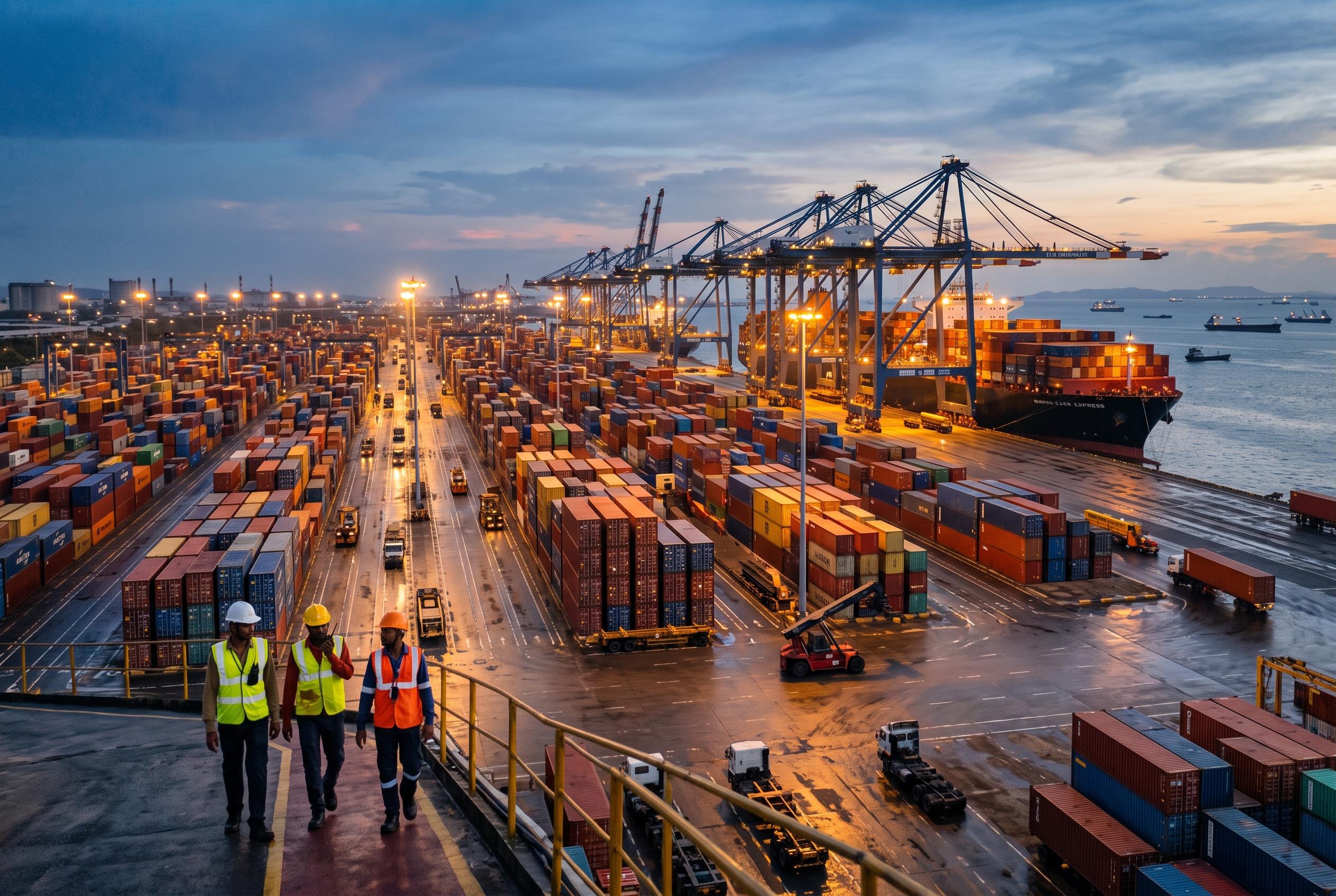

Adani Ports reports record August cargo handling, highlighting robust Indian infrastructure activity despite complex inland logistics and mixed sector signals, with key players like Larsen & Toubro and UltraTech Cement showing varied momentum.
Adani Ports and Special Economic Zone’s August cargo filing has given investors a fresher read on India’s infrastructure cycle than the flat market performance of several sector heavyweights. In an operational update lodged on 2 September, the company said it had handled 50 million metric tonnes of cargo in August 2026, the highest monthly throughput in its history and 19 per cent more than a year earlier. By Thursday, 3 September, the figures had become the clearest new evidence that freight demand through India’s port network is still expanding even as global shipping routes remain unsettled.
The significance lies not only in the headline number but in the run-rate behind it. According to Business Standard, APSEZ moved 43.1 million tonnes in April, 48.3 million in May, 46.8 million in June and 46.3 million in July before reaching the August peak. That left cumulative cargo at 234.4 million tonnes for the first five months of FY27, up 16 per cent year on year. The same report placed the record against an economy that grew 7.8 per cent in the April-June quarter, with manufacturing up 9.2 per cent and services 10 per cent, suggesting the port data is tracking wider industrial strength rather than a one-month anomaly.
The cargo mix adds another layer. Dry cargo rose 25 per cent in August and container volumes 15 per cent, with commodities such as coal, iron ore, limestone and other minerals contributing to the increase. Business Standard said international assets including North Queensland Export Terminal in Australia and Colombo West International Terminal in Sri Lanka added to the gains, while Mundra, Krishnapatnam and Dar es Salaam also recorded growth. ET Supply Chain went further, arguing that the real strategic shift is in transhipment: Vizhinjam and Colombo are emerging as key nodes, helping APSEZ capture cargo flows that might otherwise have passed through rival regional hubs. That helps explain why the company keeps framing the business less as a port owner and more as a broader logistics platform, with a long-term goal of handling 1 billion tonnes a year by FY31.
There is, however, a less tidy story once the cargo leaves the quay. Rail volumes reached 54,131 TEUs in August, up 6 per cent from July, but ET Supply Chain reported that cumulative rail logistics volume for the year to date was 250,461 TEUs, down 33 per cent on the same period last year. That split matters. It suggests APSEZ’s waterfront operations are running well ahead of its inland logistics network, even though the company’s strategic pitch rests on tying ports, rail and transhipment more tightly together. For investors, that makes August’s record a strong signal on throughput, but not yet a clean all-round read-through for every part of the logistics chain.
Larsen & Toubro presents a different version of the same infrastructure story: less immediate excitement in the share price, but substantial evidence of future work already booked. In its Q1 FY27 earnings-call transcript, the company said its order book stood at Rs 7.79 trillion at the end of June, up 27 per cent from a year earlier, with international projects accounting for 52 per cent of the total. The same transcript said slow-moving orders made up less than 1 per cent of the book, a detail that points to unusually good backlog quality for a contractor of L&T’s size. It also showed a changing domestic mix: the combined share of central and state government work in the domestic order book fell to 30 per cent from 39 per cent a year earlier, implying a bigger role for other clients and a somewhat broader demand base than the standard public-capex narrative suggests.
UltraTech Cement, by contrast, shows why investors are still cautious about converting infrastructure optimism directly into sector-wide share gains. In its 20 July results statement, the company reported Q1 FY27 net sales of Rs 24,465 crore and profit after tax of Rs 2,604 crore, with domestic sales volumes up 13.1 per cent to 39.2 million tonnes and capacity utilisation at 81 per cent. Moneycontrol said earnings before interest, tax, depreciation and amortisation rose to Rs 5,146 crore, while operating EBITDA per tonne edged up to Rs 1,214. The same report noted that cement producers had raised prices at the start of the April-June quarter in response to higher fuel and packaging costs, and that analysts were looking for industry demand growth of about 7.5 per cent in the quarter. UltraTech also said the turnaround at India Cements was gathering pace, with normalised profit after tax of Rs 52 crore against a loss of Rs 183 crore a year earlier, aided by 18.5 per cent volume growth.
Taken together, the numbers make the bullish case for India’s infrastructure build-out look more durable than straightforward. APSEZ is showing scale, cargo diversity and growing transhipment relevance. L&T is carrying a very large, internationally weighted order book with little evidence of meaningful slippage. UltraTech is still posting healthy volume and profit growth, but it remains more exposed than the others to shifts in fuel, packaging and pricing discipline. The next test is whether these operational signals start to line up more neatly: stronger inland logistics conversion at APSEZ, steady execution against L&T’s backlog, and post-monsoon cement demand strong enough to absorb new capacity without squeezing margins again.
Disclaimer: This article is intended to inform and educate, not to recommend or endorse any financial product, investment or strategy. Please consider your own financial circumstances and seek professional advice where appropriate before making financial decisions.