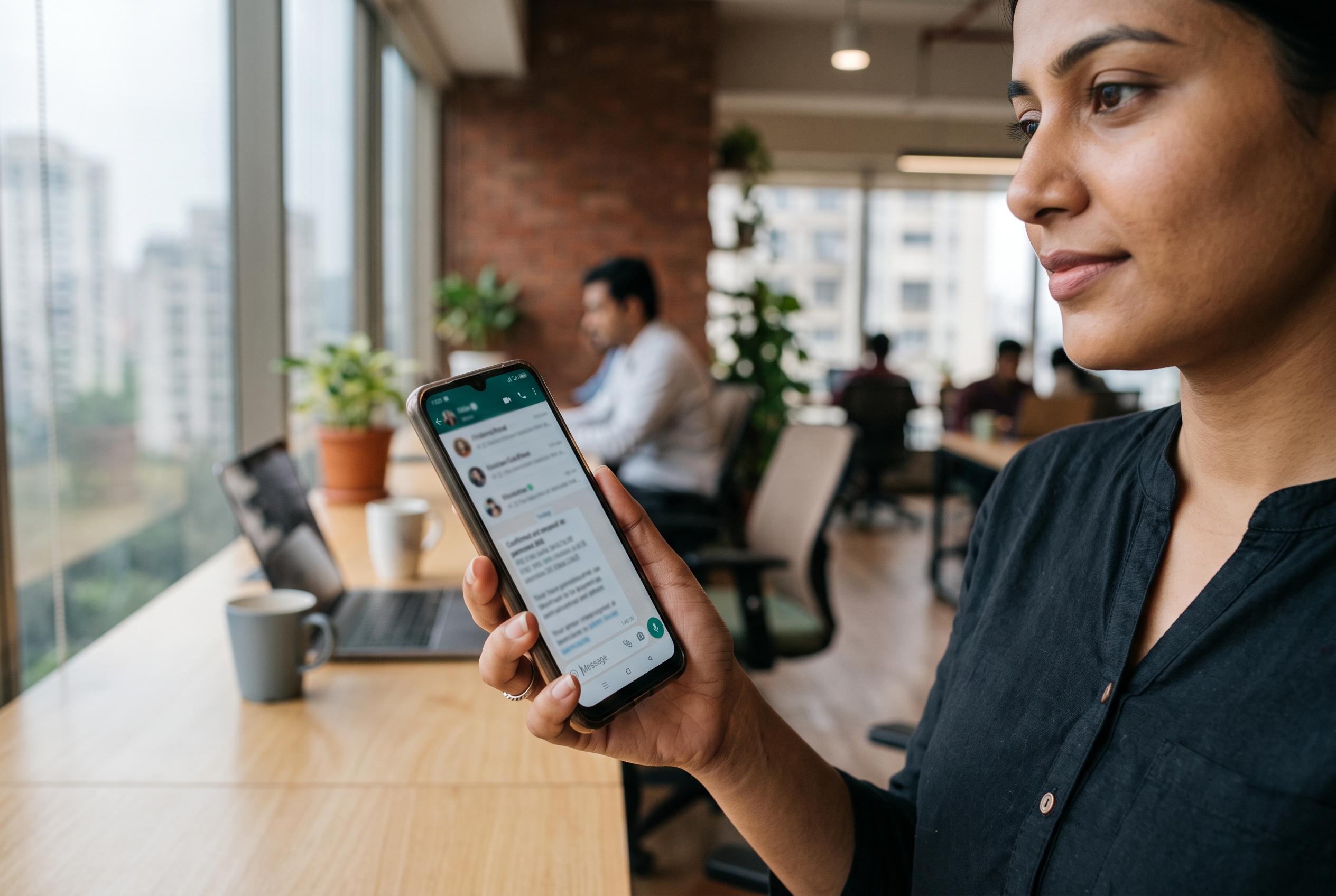

Meta’s messaging app launches a new bill-pay feature in India, allowing users to settle utilities and expenses seamlessly within chats, signalling a significant shift in the country’s digital payments ecosystem.
WhatsApp has opened a new front in India’s payments battle by starting a bill-pay service inside its messaging app, letting users settle everything from electricity and water charges to credit-card dues without switching to a separate payments platform. The move, announced on 3 September 2026, lands as India’s digital-payments market continues to swell and as Meta looks for ways to turn WhatsApp from a communications tool into a hub for everyday transactions.
According to Meta’s India announcement, the service runs on Bharat Connect, the BBPS network, and links users to 22,722 billers spanning 30 categories. Meta said the rollout had begun but would reach people gradually, with availability for Android and iOS users across India expected over the coming weeks. Moneycontrol reported that the range goes beyond core utility payments to include options such as mobile and DTH recharges alongside insurance premiums, loan repayments and FASTag top-ups.
The feature sits behind the ₹ icon at the top of the WhatsApp home screen. Guides published by The Indian Express and Gadgets 360 said the process is designed to be simple: choose a bill category, pick the biller, enter the account details, review the amount fetched by the system and then complete the payment. At launch, users can pay through UPI, debit cards or credit cards, according to Meta and Gadgets 360.
Meta is also trying to make the product useful for repeat household tasks rather than a one-off payment button. The company said bills would be pre-fetched, previously used billers would appear on the payments home screen for faster access, and people would be able to keep more than one account under the same provider. Moneycontrol said that could help users pay for family members or for multiple properties from one place, while the most-used categories are meant to surface automatically inside the app.
In its launch statement, Meta framed the service as an answer to the clutter of maintaining several payment apps and keeping track of due dates across them. Arun Srinivas, Meta India’s managing director and country head, said the company wanted paying a bill on WhatsApp to feel “as effortless as sending a message” and promised “No more juggling apps or tracking multiple due dates.” The launch builds on a wider in-app payments push that has already included metro ticket bookings and prepaid mobile recharge services in India.
That strategy is backed by rising usage, even if WhatsApp remains far smaller than India’s largest payments apps. Business Standard reported that WhatsApp processed 167.89 million transactions worth ₹12,957.07 crore in July, making it the country’s eighth-largest UPI app by volume and putting it ahead of Cred and Amazon Pay. Moneycontrol, using June figures, said WhatsApp Pay handled 150 million transactions, up from 37 million in June 2024, with its market share by volume rising to about 0.7 per cent from 0.27 per cent over that period.
The broader backdrop helps explain why Meta is adding more payment routines now. The Economic Times said UPI set another high in August 2026, processing 24.51 billion transactions, up 3.6 per cent from July, with total value at Rs 29.82 lakh crore. Against that scale, bill payments offer a high-frequency use case that could pull more people into using WhatsApp not just for person-to-person transfers, but for regular monthly spending that many already handle through apps such as PhonePe, Google Pay, Paytm and BHIM.
For users, the immediate change is practical rather than dramatic: the service is not arriving for everyone at once, but it is being folded into a screen many Indians already use daily. The Indian Express said the in-app flow centres on the same ₹ shortcut now used for other services, while Meta has said access will widen over the next few weeks. If the rollout sticks, bill settlement may become one more routine task absorbed into the chat app, alongside messaging, tickets, recharges and shopping.
Disclaimer: This article is intended to inform and educate, not to recommend or endorse any financial product, investment or strategy. Please consider your own financial circumstances and seek professional advice where appropriate before making financial decisions.