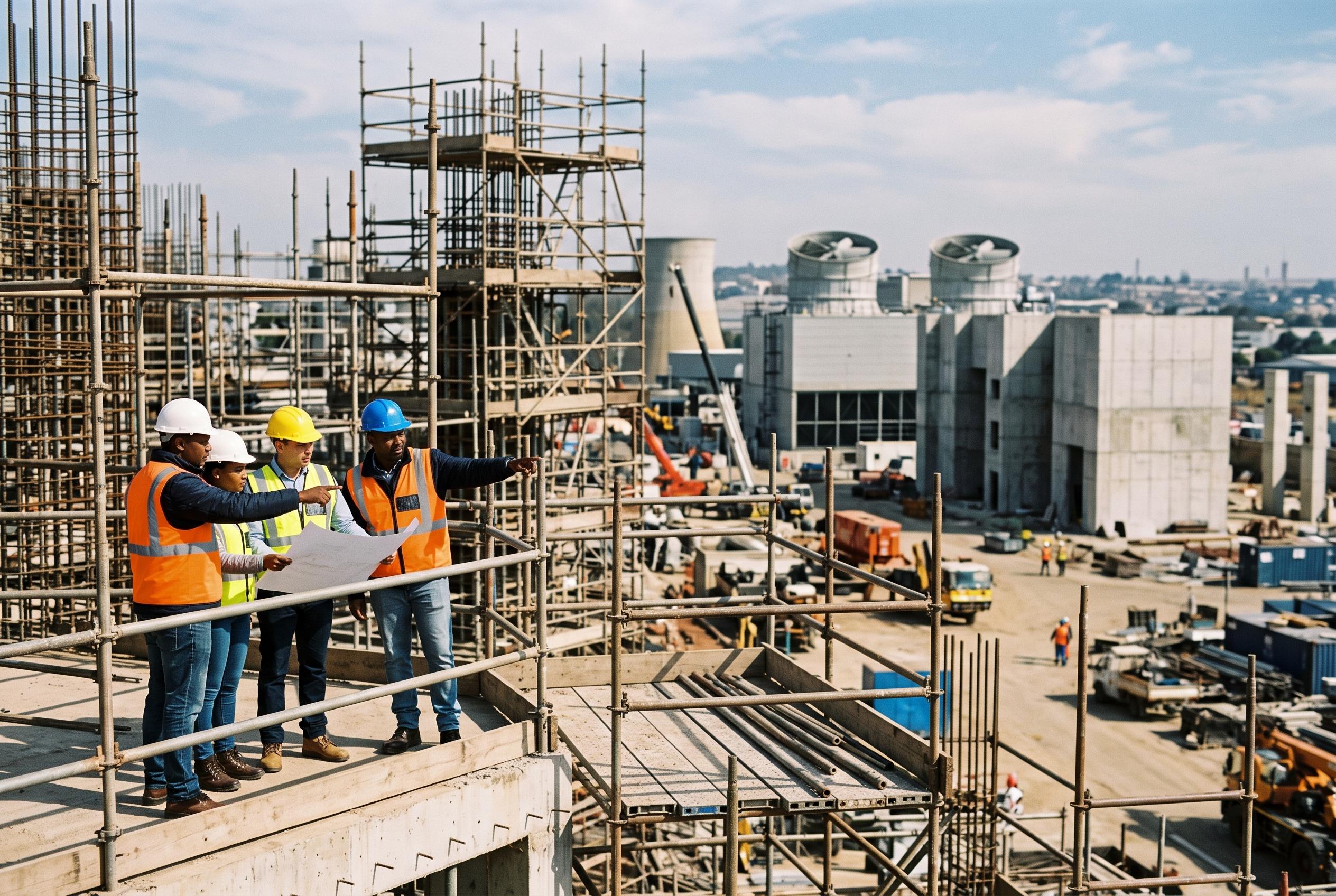

Technocraft Industries benefits from a sustained rise in US demand for scaffolding linked to AI and industrial megaprojects, signalling a recovery in large-scale U.S. infrastructure investments and long-term growth prospects beyond short-term trends.
Technocraft Industries has told investors that one of the more unusual beneficiaries of America’s AI spending boom may be its scaffolding business, with management saying construction linked to AI chip plants, semiconductor facilities and conventional energy projects has kept U.S. demand strong since January 2026. On the company’s August earnings call, executives said they were confident scaffolding volumes could at least be sustained, and possibly improved, over the next two quarters, even as the business runs close to full tilt.
That does not make Technocraft a chip story in any direct sense. The Mumbai-based group is a diversified manufacturer, and the link to semiconductors is through temporary works used during major industrial construction. In the latest quarter, management said steel scaffolding contributed Rs.240 crore of revenue and the Mach One aluminium formwork arm added Rs.165 crore. Executives also said stronger U.S. demand had lifted both sales quantities and realisations on a year-on-year as well as quarter-on-quarter basis.
The more immediate issue is whether the company can physically supply much more. Navneet Kumar Saraf said on the official transcript that the aluminium extrusion plant is running at 100% capacity, scaffolding at about 95%, and Mach One at roughly 75% to 80%. Even so, management said it would not need to start from scratch if demand justified expansion. The company already has space and infrastructure at plants in Mumbai and China, and Saraf said extra scaffolding capacity could be brought on line in about three months. At the same time, Technocraft told analysts there is no major new capital expenditure planned for the current year beyond maintenance spending.
Management’s confidence rests on the view that this is not a fleeting burst of orders. In remarks carried both in the company transcript and an earnings-call mirror published by EarningsAPI, Saraf said the current U.S. work is tied to “significant long-term CAPEX projects” and “not some one-off short-term projects”. He also pointed to the company’s active U.S. subsidiary and nationwide distribution reach as reasons Technocraft had been able to capture that demand. The U.S. tailwind is not confined to scaffolding: the engineering services business, the company said, has also been helped by buoyant outsourcing demand, AI-based vision systems, embedded systems, industrial automation and plant engineering work.
That makes the current quarter look more like a recovery maturing than a sudden change in direction. In Technocraft’s official February 2026 conference-call transcript, management described July to November 2025 as a bruising stretch for U.S. scaffolding demand, blaming delayed capital spending and uncertainty over tariffs. Saraf said sales in that period were running at about half the average levels seen in 2024. By December, however, volumes had returned to earlier levels, January was close behind, and the company said previously delayed U.S. projects were beginning to get the green light. The same discussion also showed how exposed the business remained to trade-policy interpretation, especially tariffs applied under Section 232.
An even earlier company call, published in August 2025, shows the roots of this story. Asked then which U.S. customers were holding back, Saraf said the biggest delays were coming from industrial-services sectors such as LNG, power, petrochemicals and refineries, as well as some high-tech projects including semiconductor plants. His message at that stage was that customers were postponing purchases rather than scrapping projects altogether. In retrospect, that matters: the current improvement appears to be less a new market opening up than a backlog of large industrial jobs finally moving ahead.
Technocraft had already been presenting that argument to investors before the latest quarter. In a transcript of the company’s third-quarter fiscal 2026 call published by AlphaStreet, management said future opportunities in developed markets such as the U.S. would be driven by energy investment and by spending on high-tech facilities, including semiconductor plants. In the same discussion, Saraf said the company expected scaffolding and formwork revenue to cross Rs.2,000 crore over the next three years, while engineering services could outstrip its own estimates as the business moved further into prototyping and manufacturing automation.
The latest quarter also had other moving parts that complicate any effort to reduce Technocraft to a single AI-related theme. Guidance.fyi’s summary of the August call highlighted a record drum-closure EBIT margin of about 43%, alongside management’s view that a sustainable level remained above 30% rather than at that peak. The same summary pointed to a defence order book of roughly Rs.20 crore to Rs.21 crore, including JT Cooler and missile-canister work. It also quoted management saying, “Our focus is not rapid expansion of volume, but more sensible expansion.” That may be the most revealing line of all. Technocraft’s indirect exposure to U.S. chip and data-centre construction is real, but whether it produces another leg of earnings growth will depend less on the AI label than on capacity additions, project timing and a trade environment the company still regards as volatile.
Disclaimer: This article is intended to inform and educate, not to recommend or endorse any financial product, investment or strategy. Please consider your own financial circumstances and seek professional advice where appropriate before making financial decisions.