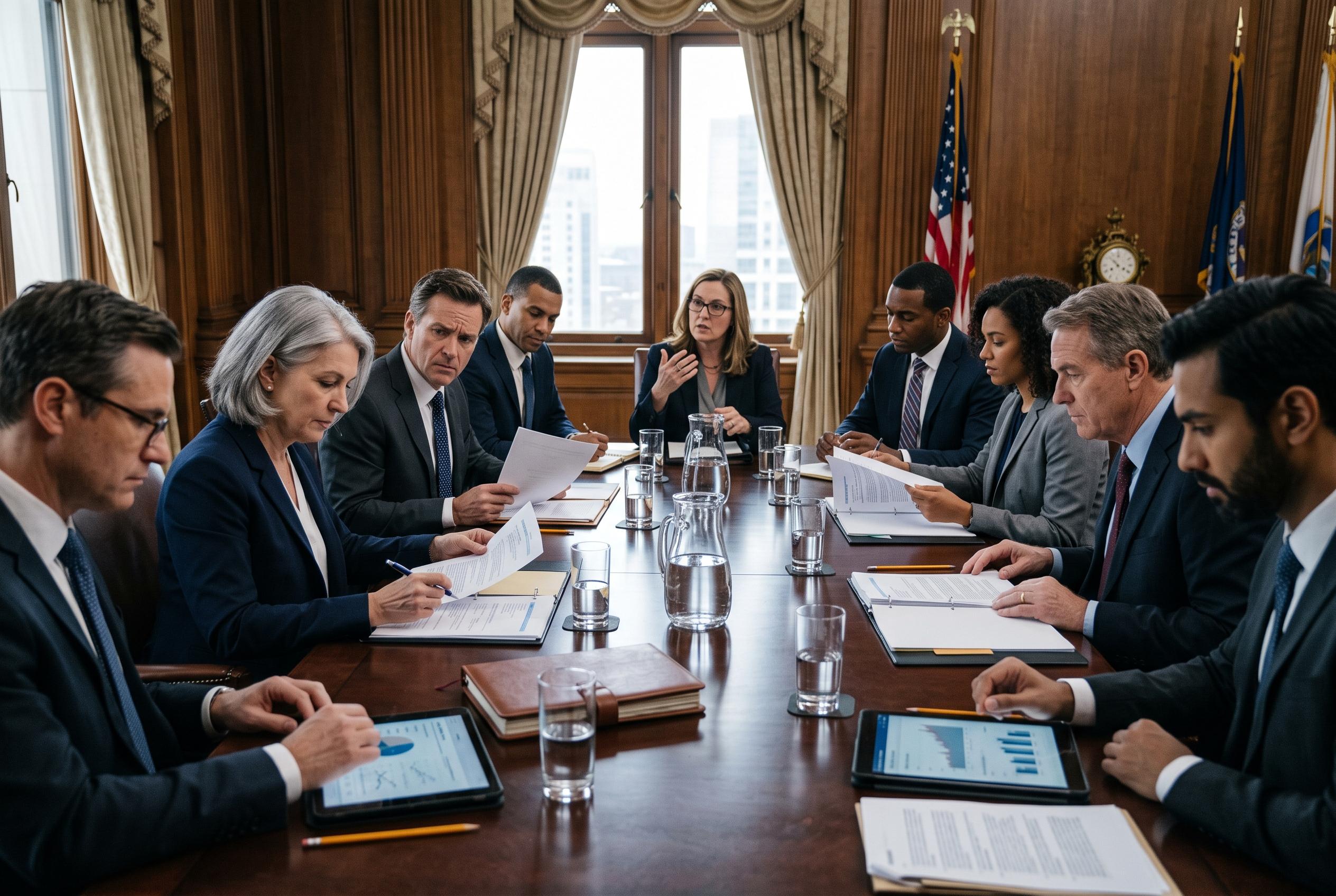

A robust US labour market report and escalating Middle East tensions have heightened expectations of a September interest rate hike, as oil prices surge and inflation concerns mount ahead of the Fed’s policy decision.
A stronger-than-expected US labour-market report on Friday has sharpened the question hanging over Kevin Warsh’s Jackson Hole appearance: whether the Federal Reserve now feels compelled to raise interest rates this month after renewed fighting with Iran pushed energy costs back into the inflation debate. The Bureau of Labor Statistics said employers added 162,000 jobs in August, well above forecasts, while unemployment held at 4.1 per cent. By the end of Friday, traders were assigning a 60.4 per cent chance to a September rate rise, according to AP’s account of CME FedWatch data, up from lower readings earlier in the week. (apnews.com)
That pressure had been building since the start of the week, when fresh US strikes on Iranian rocket launchers in the Strait of Hormuz reignited fears about oil supply. AP reported that Brent crude rose 2.7 per cent on Monday to settle at $90.49 a barrel after having traded below $80 earlier in August, while the S&P 500 fell 0.3 per cent, the Dow Jones Industrial Average lost 0.7 per cent and the Nasdaq slipped 0.1 per cent. The same report said the United Arab Emirates intercepted an Iranian drone over its waters on Monday, underlining how quickly the confrontation was broadening. By Tuesday, AP said Brent had climbed another 4.6 per cent and US crude had closed above $90 for the first time in more than a month. (apnews.com)
The importance of the oil move extends well beyond commodity desks. AP said the Strait of Hormuz normally carries about one-fifth of the world’s oil shipments, and that disruption there has made everything from fuel to shipped goods more expensive. In August, according to AAA figures cited by AP, the US national average for petrol stayed above $4 a gallon every day of the month, making it the costliest August at the pump on record. That has weighed on household spending and confidence, and made the Fed’s job harder just as policymakers were trying to judge whether inflation was easing or merely pausing. (apnews.com)
Warsh’s speech in Wyoming did not contain an explicit commitment to act, but it was read in markets as a clear warning that patience was running short. AP reported that he pointed back to the Fed’s 28-29 July meeting, when officials who voted to leave rates unchanged did so because they wanted more information before deciding whether a policy change was advisable. He also said underlying inflation had not “meaningfully improved”, even though petrol prices had come off their peaks. AP said the speech was largely praised by economists and other policymakers at Jackson Hole, though it also drew criticism and pushback during the conference. (apnews.com)
Reuters’ market reporting filled in why traders reacted so forcefully. It said the implied chance of a September hike had jumped to more than 60 per cent from 41.4 per cent a week earlier, after a run of mixed data that included a relatively mild July consumer-inflation reading but a hotter-than-expected Personal Consumption Expenditures report, the Fed’s preferred price gauge. Bank of America economists said Warsh had effectively increased the pressure on himself to follow through unless the data turned sharply weaker. Thomas Kikis of Standard Chartered told Reuters that Warsh “took any chance of a (rate) cut off the table”. Before Friday’s payrolls figures, Kyle Rodda of Capital.com had already warned that the jobs report was likely to be “the highlight of the trading week” because of the uncertainty over policy. (m.za.investing.com)
The broader political and institutional backdrop makes the next decision more delicate. The Economic Times reported that the Fed’s policy rate has been held in a 3.50 per cent to 3.75 per cent range since December, and that three of the central bank’s 12 voting policymakers dissented at the July meeting in favour of tighter policy. The same report said investors earlier in the week were already pricing roughly a two-to-one chance of a quarter-point increase at the 15-16 September meeting. Robert Tetlow, a former senior Fed adviser, warned that Warsh would face difficulties “if the data for August do not line up well with the decision” taken later this month. (economictimes.indiatimes.com)
There is, however, still a live argument inside the Fed and around it for waiting. AP reported on Thursday that Governor Christopher Waller said next week’s inflation figures would largely determine whether he backed a hike, and that he would be “inclined” to keep rates unchanged if price pressures continued to cool. The Economic Times also quoted Dana Peterson, chief economist at the Conference Board, saying “We believe the Fed can hold” because “We are starting to see some demand erosion.” That leaves policymakers trying to weigh an inflation rate still running at 3.7 per cent on the Fed’s preferred measure against signs that some of the earlier price surge may yet fade without another tightening move. (apnews.com)
The next tests are now close enough to define the story. The Bureau of Labor Statistics is scheduled to publish August producer-price data on 10 September and consumer-price data on 11 September, just before the Fed meets on 15-16 September. If those reports show that higher oil and transport costs are still feeding through the economy, Warsh may have little room to step back from the message investors heard at Jackson Hole. If inflation cools again, he will have to explain why a speech that drove up yields, strengthened expectations of tighter policy and unsettled equities was not, in the end, a prelude to action. (bls.gov)
Disclaimer: This article is intended to inform and educate, not to recommend or endorse any financial product, investment or strategy. Please consider your own financial circumstances and seek professional advice where appropriate before making financial decisions.