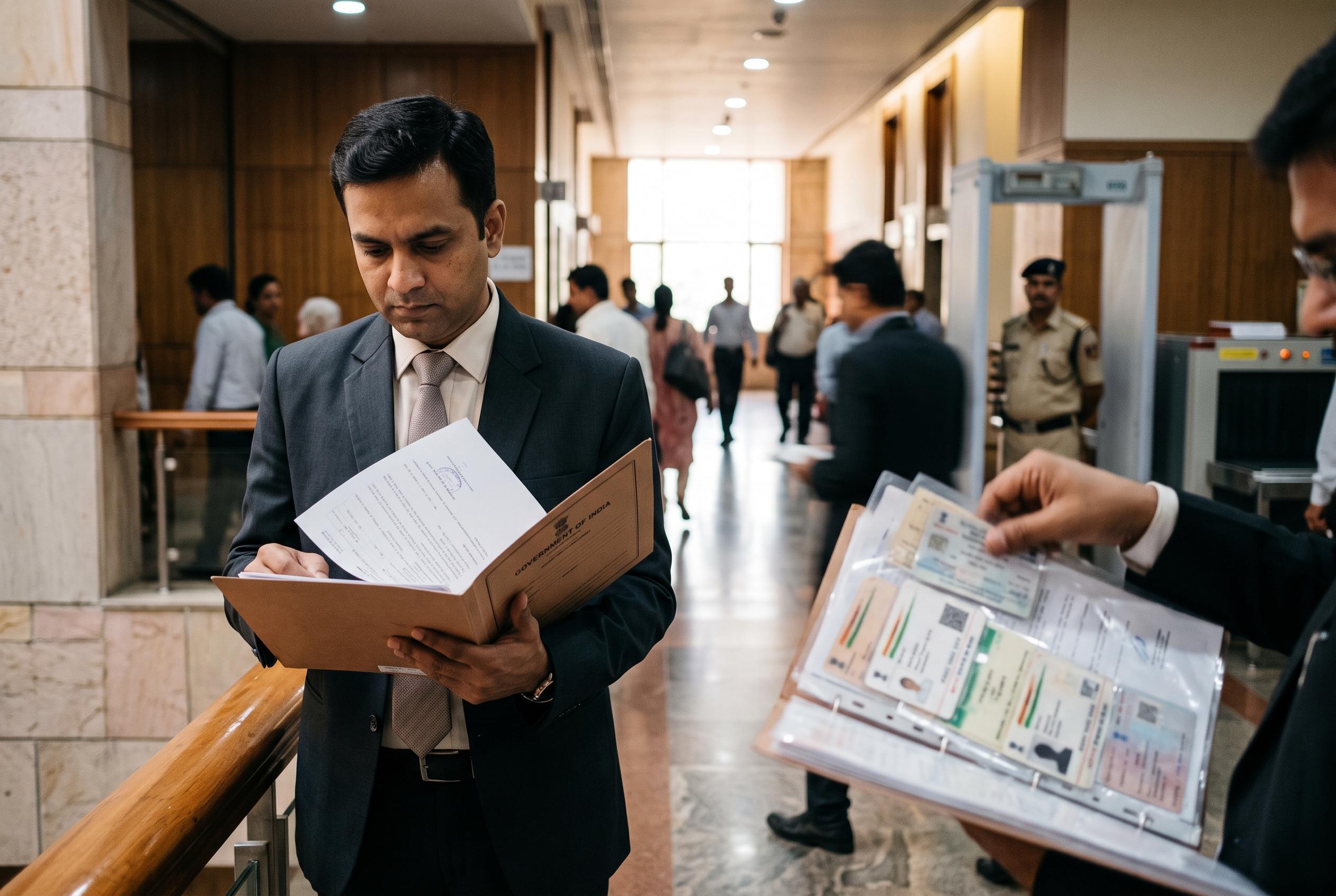

The Delhi High Court has called for immediate measures to prevent fraudulent GST registrations using misused PAN and Aadhaar details, warning of continued risks to individuals and revenue losses amid widespread misuse.
The Delhi High Court has given the Centre and Delhi Police one last chance to come up with a workable system to stop fraudulent Goods and Services Tax registrations made by misusing PAN and Aadhaar details, after hearing fresh claims that innocent people are being pulled into tax disputes for businesses they never opened. The case comes as the court considers allegations that false registrations have become widespread since the GST regime began in 2017, leaving victims exposed to liabilities and the government facing revenue losses, according to Business Standard and Bar and Bench.
A bench of Justices Anil Khetarpal and Shail Jain was hearing two petitions, including one filed by Neha, who said another person had used her PAN and Aadhaar to obtain GST registration without her knowledge. Bar and Bench reported that Neha alleged the fake registrations were used in an attempt to divert more than ₹4.46 crore from her bank account, while the high court said the authorities had not disputed that such abuse was a persistent problem. The judges also said nearly nine years had passed since GST was introduced, yet the system still had not been secured against identity misuse.
To address the gap, senior advocate Tarun Gulati suggested a series of safeguards, including facial recognition for every applicant against the Aadhaar database, a short video verification step, storage of the IP address and device location used to file an application, and physical checks of the proposed business premises before registration is granted. Other ideas include alerting PAN holders immediately when their details are used for GST registration, sharing data in real time between the GST and income tax departments, and building risk flags for PAN-Aadhaar mismatches and first-time use of identity details.
The court also noted concerns that the Delhi Police officer assigned to assist it appeared unfamiliar with the scale of the issue, despite its seriousness. It then gave the Commissioner of CGST, the Commissioner of DGST and the Commissioner of Delhi Police a final opportunity to produce an effective answer, warning that it would otherwise have no choice but to issue appropriate orders. The matter has been listed for 8 September. Responding to the order, Ikesh Nagpal of AKM Global told Business Standard that the court was rightly pushing institutions towards a coordinated fix that would alert people immediately and stop suspicious registrations before they cause harm. A separate Delhi High Court order this month, in a fake GST case, underlined the wider judicial concern over the damage such fraud can inflict on victims and on the economy.
Disclaimer: This article is intended to inform and educate, not to recommend or endorse any financial product, investment or strategy. Please consider your own financial circumstances and seek professional advice where appropriate before making financial decisions.