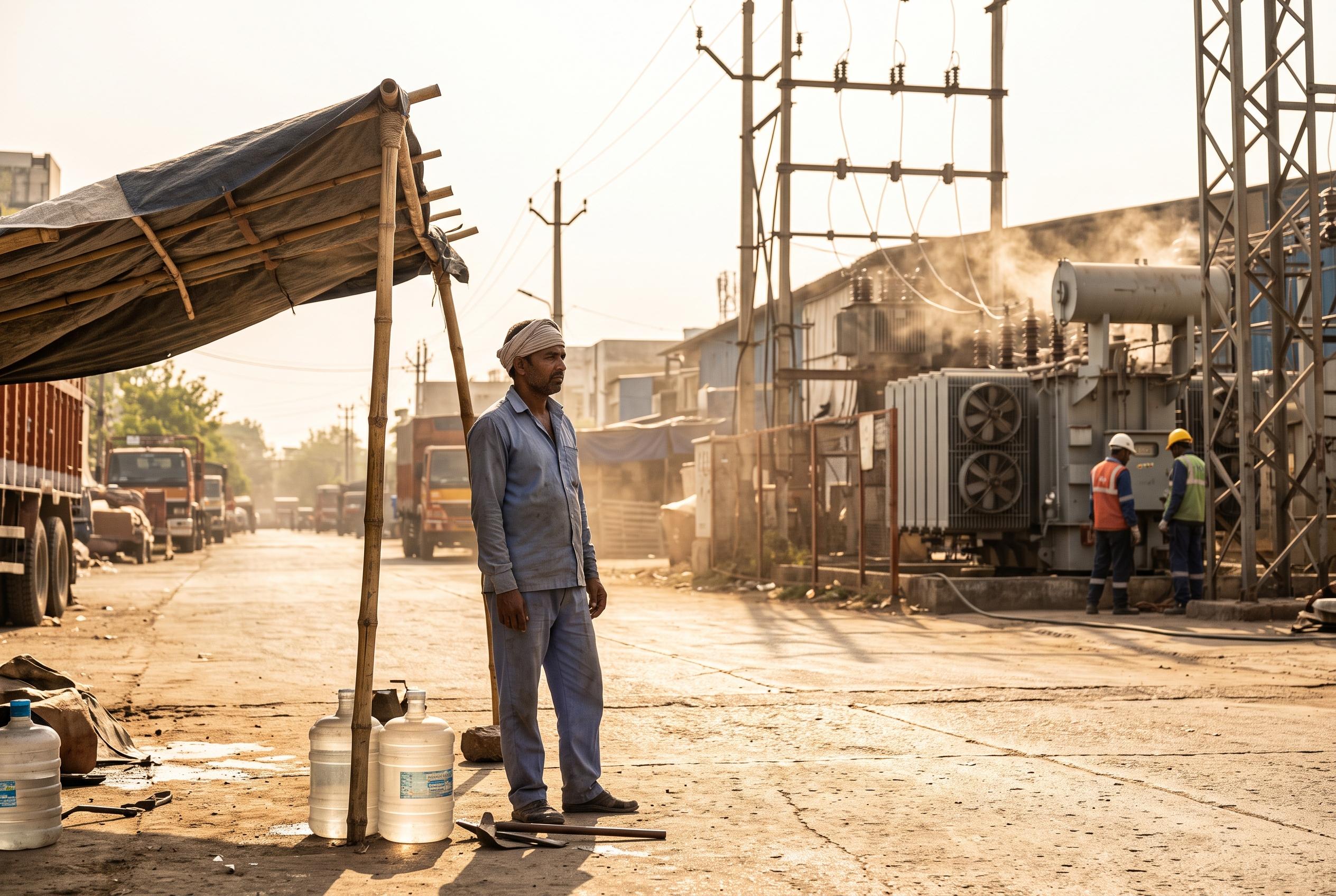

Rising temperatures in India are increasingly damaging the economy, affecting sectors reliant on outdoor labour and escalating demand on energy systems, with vulnerable communities bearing the brunt of the heat crisis.
Extreme heat is no longer just a seasonal nuisance in India. It is becoming a drag on output, a strain on households and a growing burden on the power system, with the costs falling unevenly across workers, firms and consumers.
The World Bank said in July that extreme heat is already costing South Asia the equivalent of nearly 31 million full-time jobs each year, and warned that the region’s economy could be nearly 7% smaller by 2050 without stronger adaptation. In India, the effect is most acute in sectors that cannot easily move indoors, including agriculture, construction and transport, where workers face slower pace, shorter hours and lost income when temperatures surge.
The heat also drives up demand for cooling. As more households and businesses turn to fans, coolers and air conditioners, electricity use rises sharply, adding pressure to grids already stretched during the hottest periods. The International Energy Agency has said cooling accounted for about 60 gigawatts of peak power demand in India in 2024, and could reach about 140 gigawatts by 2030 if current trends continue.
That burden is not shared equally. Higher-income households can often afford air conditioning and the electricity costs that come with it, while poorer families and informal workers may have far less protection. The World Bank has singled out low-income households and informal workers as especially exposed, because they are more likely to keep working outdoors or live in homes with limited cooling.
Businesses face a similar divide. Firms that operate outside or rely on manual labour can lose productive hours, while shops, offices and factories may see higher electricity bills and extra spending on cooling and maintenance. Smaller companies are often least able to absorb the hit, which means some costs are passed through to consumers in the form of higher prices for food, transport and other services.
The policy challenge, analysts say, is not simply to expand cooling but to make it more efficient and less costly to the wider economy. Better building design, shaded public spaces, heat-resilient infrastructure, early-warning systems and more efficient air conditioners could reduce the damage. The International Energy Agency has estimated that if all new air conditioners sold in India by 2030 were highly efficient, the rise in peak electricity demand could be cut by about 20%. For India, the question is no longer whether heat has an economic cost, but how much of that cost the country can afford to bear.
Disclaimer: This article is intended to inform and educate, not to recommend or endorse any financial product, investment or strategy. Please consider your own financial circumstances and seek professional advice where appropriate before making financial decisions.