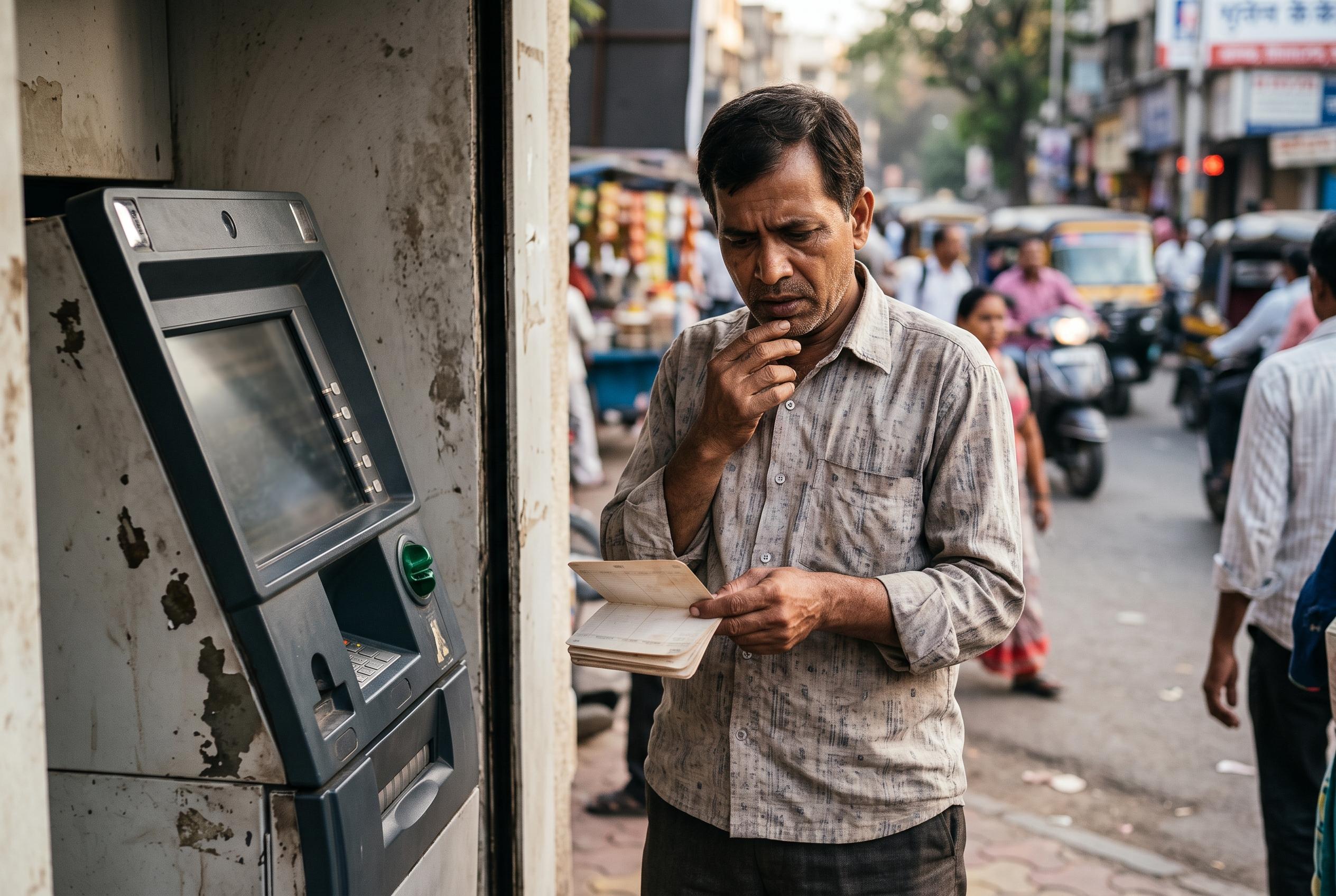

State Bank of India to revise its Basic Savings Bank Deposit account rules from October 1, now counting ATM and Aadhaar-enabled transactions within the free withdrawal limit, potentially increasing charges for many customers.
State Bank of India will change the charging pattern on some Basic Savings Bank Deposit accounts from October 1, meaning many customers could reach the free withdrawal limit sooner than before. According to reporting by Business Standard and Mint, the bank will still allow four free cash withdrawals a month, but ATM and Aadhaar-enabled Payment System transactions will now be counted within that total. After the fourth withdrawal, SBI will charge ₹15 plus GST for each additional cash withdrawal.
The practical effect is that a customer who uses an SBI ATM twice and AEPS twice in the same month may already have used up the entire allowance. Any later cash withdrawal, including one at a branch, would then attract the fee. That marks a more significant change for many low-balance customers than the charge itself, because the bank is broadening the set of transactions that count towards the monthly cap.
The Basic Savings Bank Deposit account was created to support financial inclusion and does not require a minimum balance. It is designed for customers who want access to core banking services without the conditions attached to regular savings accounts, although it comes with limits such as no cheque book and restricted withdrawal rules. SBI also says a customer cannot keep a BSBD account alongside a standard savings account at the same time.
This is not the first time SBI has revised the fee structure for these accounts. Trade Brains and other reports say the bank introduced a similar charge in 2021, after Reserve Bank of India rules issued in 2013 allowed banks to treat withdrawals beyond four a month as a chargeable value-added service. The latest adjustment continues that approach, while shifting more transactions into the count that determines when fees begin.
Disclaimer: This article is intended to inform and educate, not to recommend or endorse any financial product, investment or strategy. Please consider your own financial circumstances and seek professional advice where appropriate before making financial decisions.