

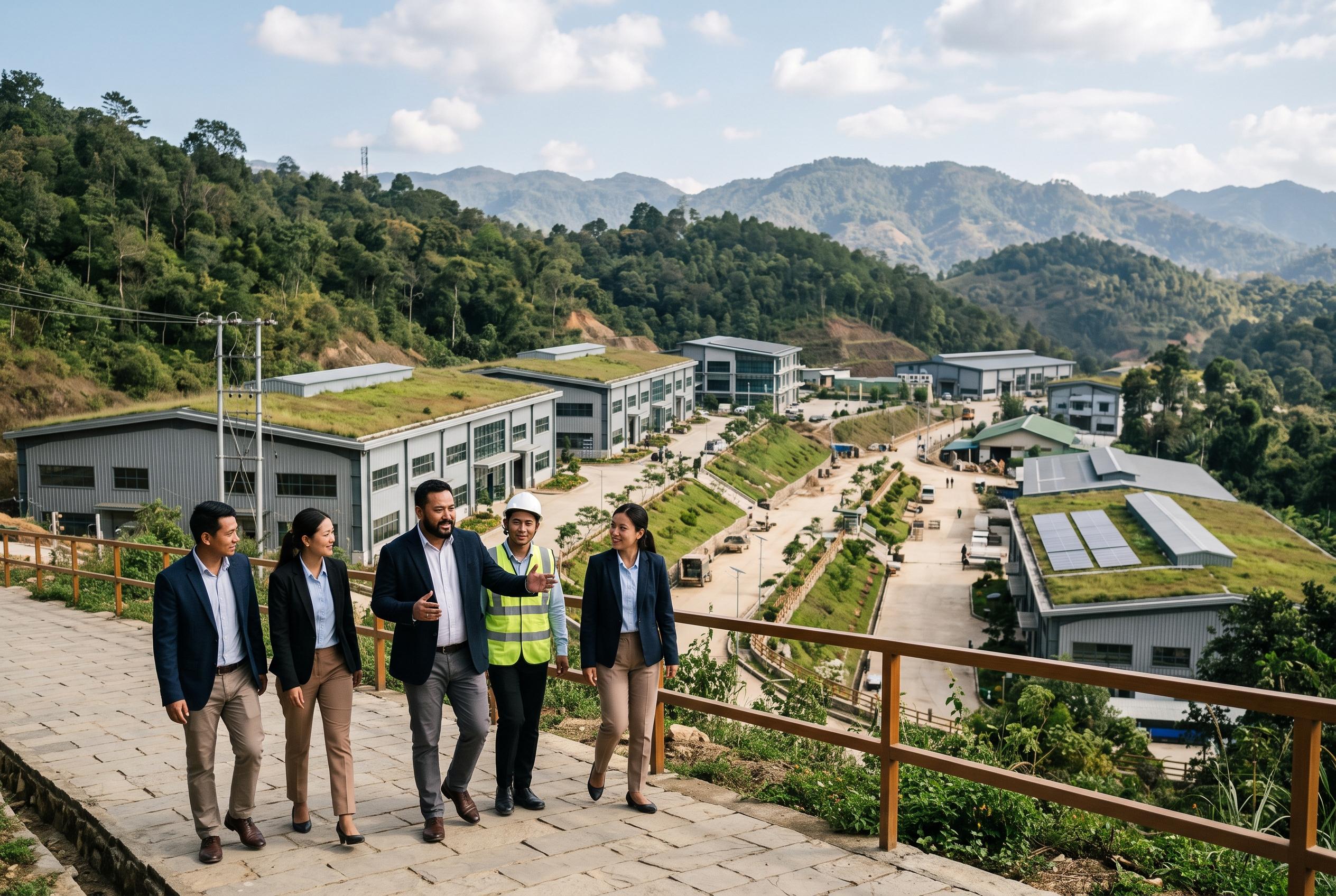

Nagaland has introduced a comprehensive new industrial and investment policy 2025, aiming to attract investors, simplify procedures, and bolster job creation through targeted incentives and infrastructure development.
Nagaland has formally moved to replace its two-decade-old industrial framework with a new policy that promises to make the state more attractive to investors, entrepreneurs and manufacturers. The Nagaland Trade, Investment and Industrial Policy 2025 was notified on May 8, and the state government says it is intended to simplify procedures, improve infrastructure and build a more competitive industrial ecosystem. The policy is designed to support job creation, raise incomes and strengthen Nagaland’s wider economy. According to the state’s official notification, it will run for five years unless revised sooner.
At the heart of the new framework is a broad push towards enterprise creation and expansion, with a particular emphasis on small businesses, start-ups, women entrepreneurs and people with disabilities. The policy lists agro-processing, bamboo products, minerals, textiles, electronics, pharmaceuticals, tourism, health, renewable energy and skilling among its priority areas. It also points to industrial land banks, single-window clearances, logistics upgrades, cold-chain infrastructure and sector-specific clusters as part of the state’s strategy to improve the ease of doing business. Industry Department material shows that Nagaland is also relying on investor facilitation through a dedicated promotion cell and district-level support structures.
The incentive package is substantial. Eligible manufacturing and service units can tap capital investment support under the Union’s UNNATI 2024 scheme, while small and medium enterprises registered under the state policy may qualify for a 30% state capital investment subsidy, subject to a ceiling of Rs 10 crore. The policy also offers soft loans at 6% for technology upgrades and expansion, with earmarked support for women and people with disabilities. Additional measures include an interest subvention scheme, state GST reimbursement for qualifying new units, assistance for quality certification and trade fair participation, and support for power infrastructure.
The rules, however, are not automatic. The policy generally requires beneficiaries to be based in Nagaland, hold Udyam registration and employ at least five people, including a minimum of 50% indigenous residents of the state. Public sector undertakings are excluded, and cash transactions are ineligible for incentives. The guidelines also say support received under UNNATI 2024 cannot be duplicated, meaning the state benefit may only bridge the gap if central support has already been granted. The overall incentive cap is set at Rs 10 crore per unit, subject to conditions.
Implementation will move through a layered approval process, beginning with online applications and district-level scrutiny before proposals reach state committees for final clearance. The government has also set up a Screening Committee to oversee fair selection of beneficiaries, according to the official notification. Operational guidelines took effect from May 8 and are meant to stay in force for five years. For Nagaland, the key test now is whether the new policy can move beyond paper promises and generate the investment, formal jobs and industrial base it is meant to produce.
Disclaimer: This article is intended to inform and educate, not to recommend or endorse any financial product, investment or strategy. Please consider your own financial circumstances and seek professional advice where appropriate before making financial decisions.



