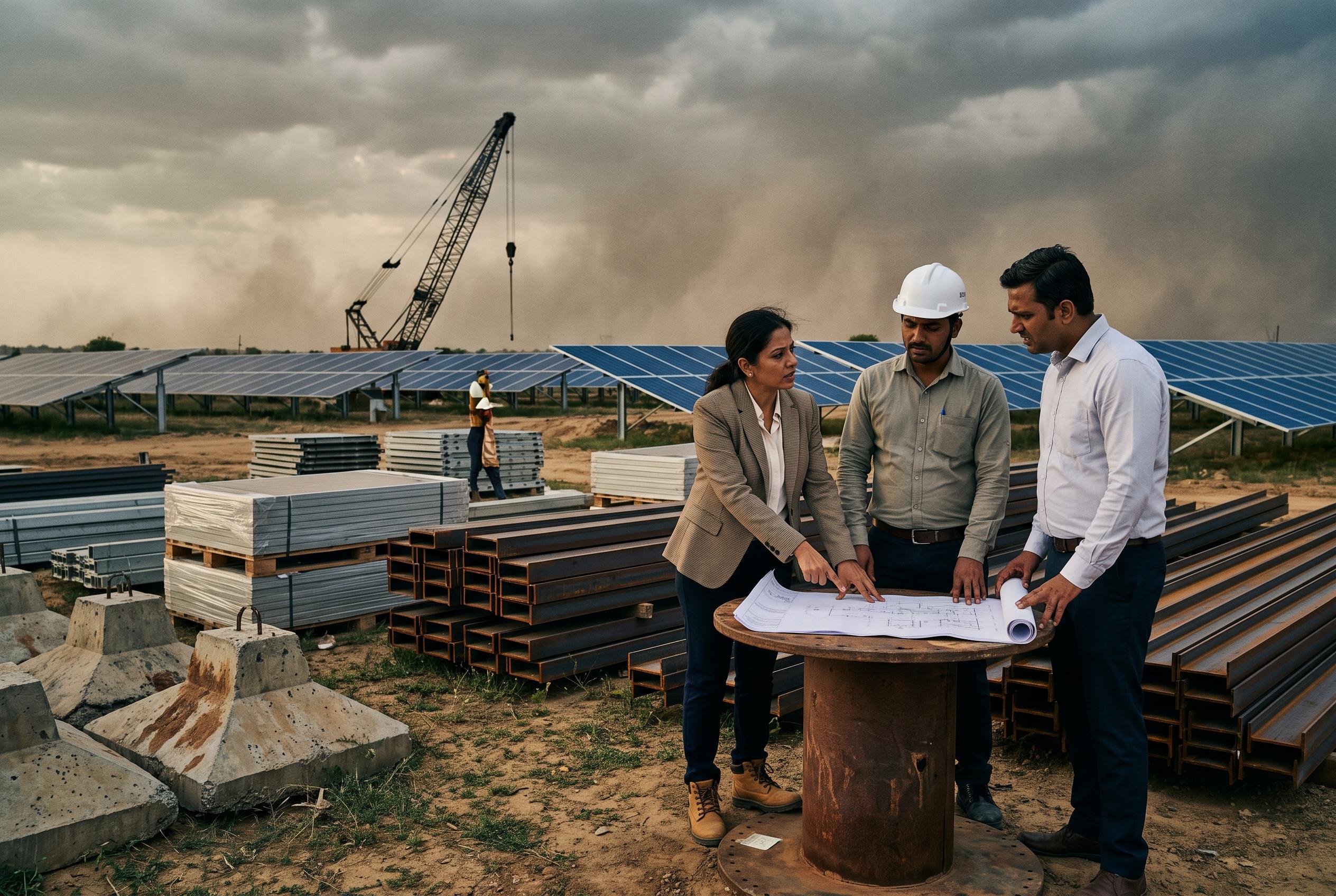

As commodity prices and geopolitical disruptions challenge India’s solar industry, policy adjustments and infrastructure developments are shaping a complex landscape for growth and investment in 2026.
India’s solar sector is facing a more complicated cost environment in 2026, with Mercom India reporting that higher commodity prices, a softer rupee, policy uncertainty and geopolitical disruption are all pushing up expenses across the supply chain. For manufacturers, that is tightening margins; for developers, rising module and equipment prices are making project maths less attractive.
At the same time, the market is not uniformly under pressure. Mercom India says access to finance is improving for commercial and industrial customers, as banks widen lending options for rooftop solar and other clean-energy projects. Higher grid tariffs are also supporting rooftop economics, giving businesses a stronger incentive to generate their own power.
Policy changes are adding another layer of movement. The Ministry of New and Renewable Energy has temporarily deactivated 66 vendors under the PM Surya Ghar: Muft Bijli Yojana for failing to clear a backlog of consumer applications for rooftop systems, a sign that execution remains a problem even as demand grows. Separately, the ministry has extended an exemption from ALMM List-II requirements for solar cell use in net-metering and open-access projects until December 31, 2026, offering short-term relief to parts of the sector.
Regulators are also trying to ease rooftop adoption. The Karnataka Electricity Regulatory Commission has widened net metering for distributed solar PV projects to all consumer categories and lifted the cap to 1 MW from the 500 kW level suggested in draft rules. In Delhi, the electricity regulator has streamlined the approval process with a two-stage, fully online system and tighter deadlines for connectivity decisions, measures that could speed up installations.
There are further signs of ambition on the policy side. The Gujarat Electricity Regulatory Commission has cut the banking charge for green energy open-access users to ₹1 per kWh from September 1, 2026, to March 31, 2027. In Tamil Nadu, officials are targeting a 50% renewable share in the power mix by 2031, supported by solar and wind build-out, battery storage, pumped storage, grid upgrades and more rooftop incentives. Meanwhile, REC Power Development and Consultancy has named the winner of an interstate transmission project meant to evacuate 14 GW of renewable energy from Gujarat, underlining the scale of infrastructure now being built to move clean power into the grid.
Disclaimer: This article is intended to inform and educate, not to recommend or endorse any financial product, investment or strategy. Please consider your own financial circumstances and seek professional advice where appropriate before making financial decisions.