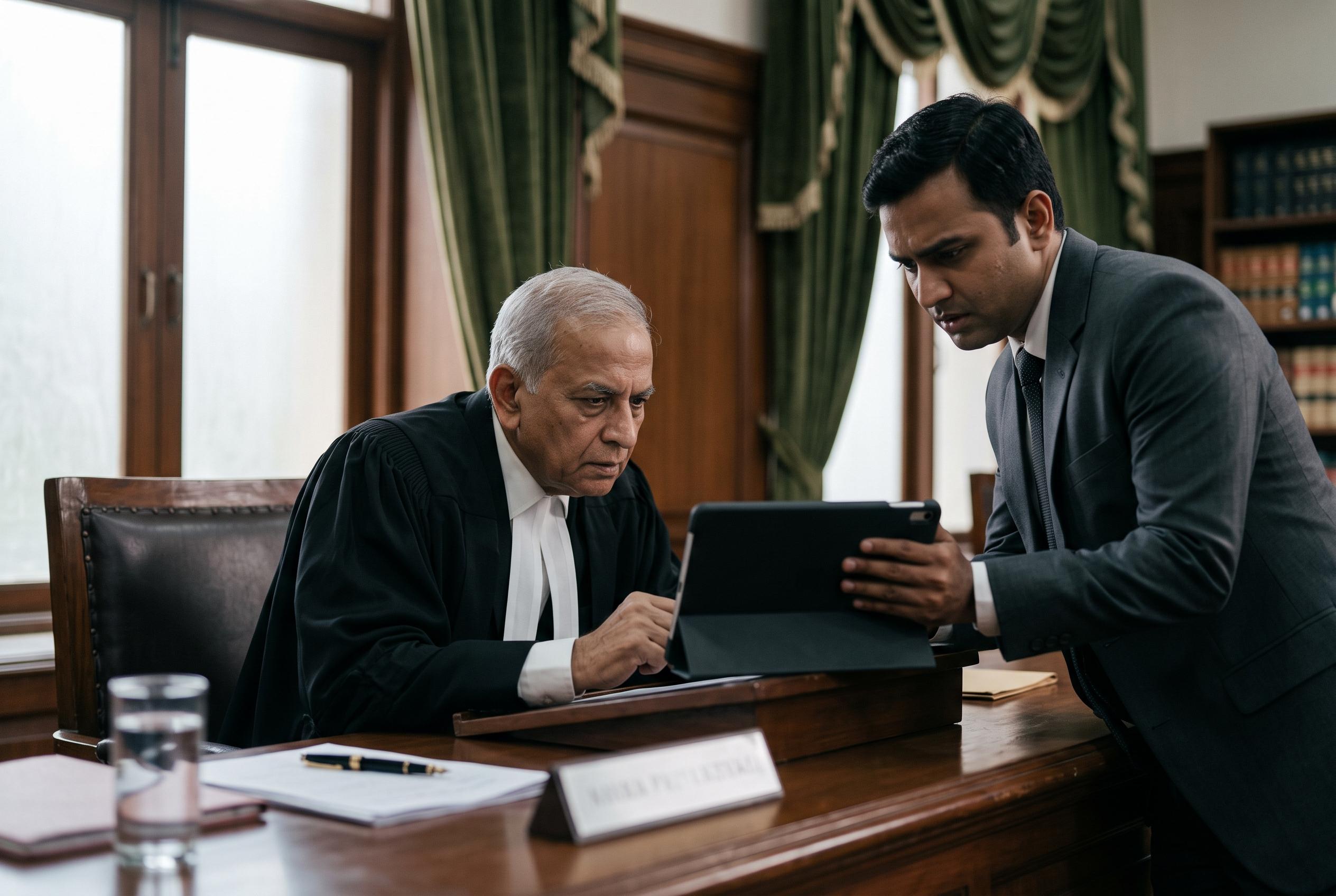

The Gujarat High Court has criticised tax officials over the use of AI in quasi-judicial decisions, emphasising that AI-generated material must be verified to uphold legal accountability and prevent contempt of court.
The Gujarat High Court has pulled up state tax officials over the use of artificial intelligence in quasi-judicial work, warning that failure to follow safeguards could amount to contempt of court. In a judgment delivered on 20 August, a bench of Justice AS Supehia and Justice Vaibhavi D Nanavati said the instructions already issued on 18 August must be followed scrupulously after a State Tax Officer admitted using AI while preparing an order and relying on judgments that were either irrelevant or did not exist. According to Bar and Bench, the court said any breach of those directions would be treated seriously.
The ruling came in proceedings involving Faiz Enterprise, where the court quashed GST cancellation and appellate orders after finding that the officer had relied on AI-generated case law without properly checking its accuracy. LiveLaw reported that the bench concluded the order had been built on unverified material, while other accounts said the cited authorities included incorrect references and decisions that could not be traced. The court’s intervention underscores a broader concern in tax adjudication: decisions affecting businesses and taxpayers must rest on independently verified legal research, not machine-generated summaries alone.
In the case, the tax officer later filed an affidavit and offered an unconditional apology, acknowledging that artificial intelligence had been used to identify the judgments cited in the order, according to reports of the hearing. The court nonetheless treated the issue as more than a procedural lapse, making clear that quasi-judicial officers remain personally responsible for the reasoning and authorities they rely on. Legal publications said the bench stressed that adjudication cannot stand where an officer substitutes independent legal analysis with untested AI output.
The decision is likely to resonate beyond Gujarat, as tax departments across India increasingly experiment with AI tools for research and drafting. But the judgment draws a firm line between assistance and delegation: technology may support legal work, but it cannot replace verification, judgement or accountability. For tax officers, the message is plain: if AI is used, its output must be checked with the same care as any other legal source.
Disclaimer: This article is intended to inform and educate, not to recommend or endorse any financial product, investment or strategy. Please consider your own financial circumstances and seek professional advice where appropriate before making financial decisions.