

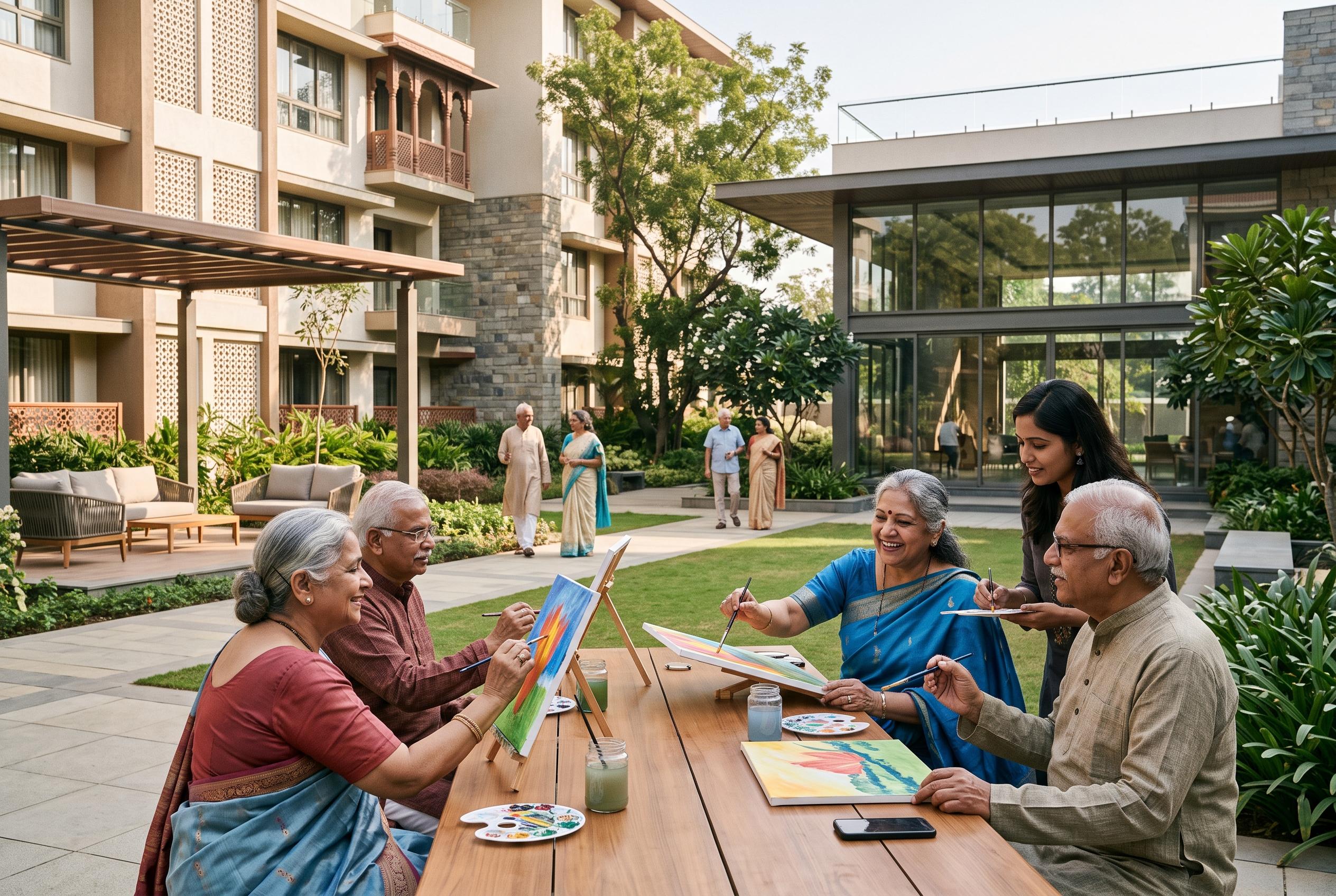

With ageing demographics, urbanisation, and evolving family structures, India’s senior living industry is transitioning from niche to mainstream, driven by new housing models, technological advances, and a growing ‘silver economy’.
India’s senior living sector is moving from niche idea to mainstream housing choice as ageing, urbanisation and changing family structures reshape retirement. What was once seen as a last-resort option is increasingly being treated as a lifestyle decision, with older Indians looking for independence, security and community rather than dependence on children or extended family. The shift is drawing attention from developers and investors as well as from families searching for more structured care. According to the Times of India, the market is expected to top ₹1 lakh crore by 2030.
The scale of the opportunity is underscored by a sharp mismatch between demand and supply. Colliers has estimated that India’s senior living market is already worth about ₹30,000 crore and could reach roughly ₹70,000 crore by 2028 before crossing ₹1 lakh crore by 2030. Another industry estimate cited by RealtyNInfra put organised supply at only about 25,000 units, compared with demand for 20 lakh to 22 lakh units, while developers and operators have announced more than ₹13,000 crore of investment since 2025.
This gap is being felt most visibly in the housing market, where purpose-built communities are appearing in prime urban locations and quieter satellite towns alike. The southern cities of Bengaluru, Chennai, Coimbatore and Kochi have emerged as early centres of activity, while Delhi-NCR, Pune, Mumbai and Ahmedabad are also seeing interest in age-friendly townships. Smaller cities such as Dehradun, Jaipur, Chandigarh and Lucknow are gaining appeal because of cleaner environments, connectivity and access to healthcare.
The appeal is not simply architectural; it is social and practical. Senior living communities are designed to support daily life with features such as step-free access, wider doorways, grab rails, emergency alert systems, on-call medical help and organised maintenance. Residents are also drawn to the prospect of shared routines, with yoga, meditation, clubs, indoor games and cultural activities helping to reduce isolation and create a more active retirement.
Financial confidence is also changing the market. Many retirees now have pensions, provident fund savings and long-term investments that allow them to pay for specialised housing without relying entirely on their children. Developers are responding with two broad models: outright purchase and rental or lease arrangements, giving seniors more flexibility over how they commit capital and how easily they can move later.
Technology is adding another layer to the sector’s growth. AI- and Internet of Things-based systems are being used to monitor falls, send alerts and support tele-consultations, while some operators are also introducing robotic assistance and personalised nutrition plans. With India’s elderly population set to expand sharply over the coming decades, the senior living market is increasingly being viewed not just as a housing story, but as part of a much larger “silver economy” built around health, wellness and long-term care.
Disclaimer: This article is intended to inform and educate, not to recommend or endorse any financial product, investment or strategy. Please consider your own financial circumstances and seek professional advice where appropriate before making financial decisions.



