

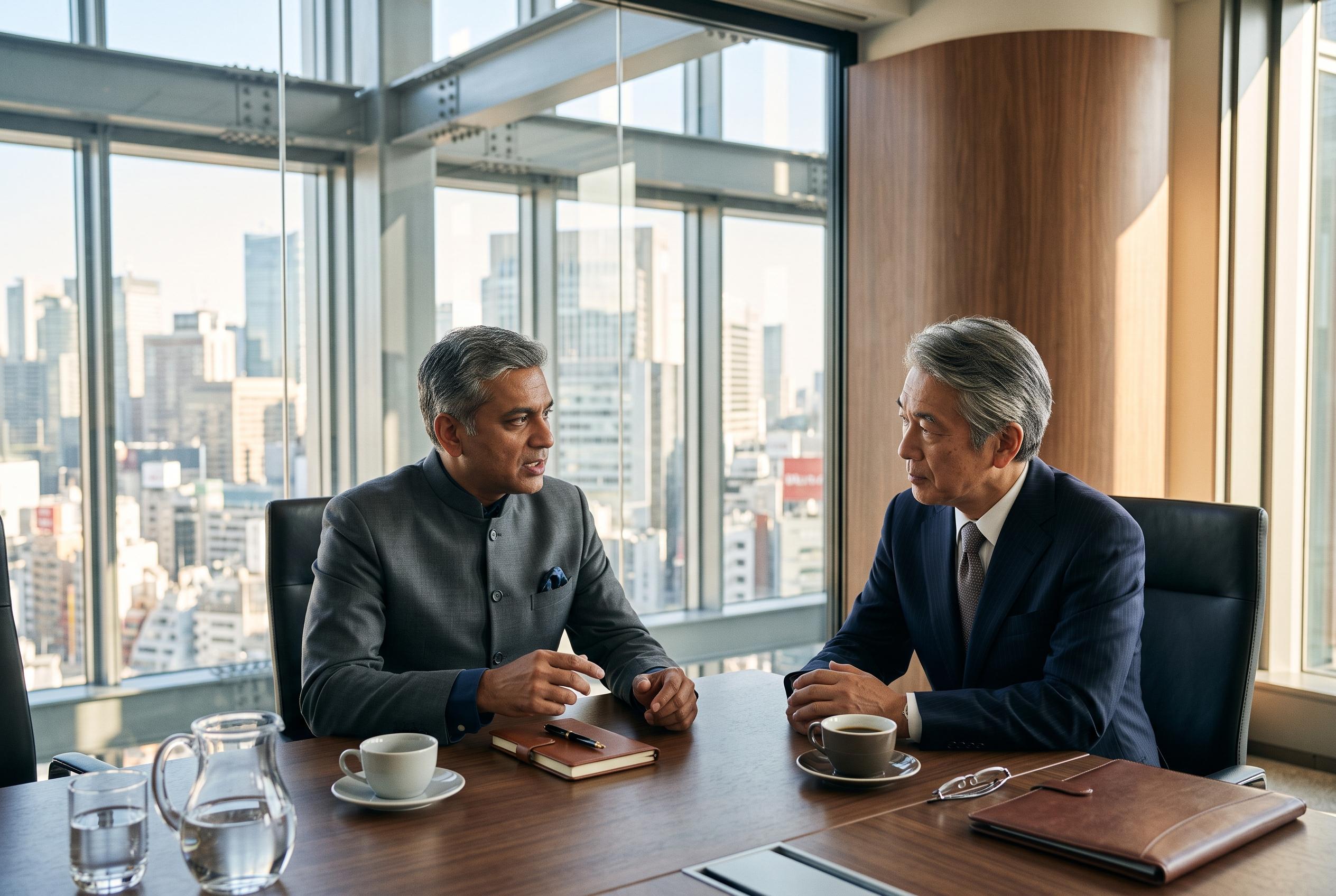

India plans to revise its rules within two months to attract more foreign industrial investment, with a focus on semiconductor and auto manufacturing, while strengthening economic ties with Japan and advancing AI cooperation.
India will alter regulations and draft new rules within two months to address concerns raised by companies looking to manufacture in the country, Commerce and Industry Minister Piyush Goyal said in Tokyo, signalling a fresh push to court foreign industrial investment. Speaking at a fireside chat with Nikkei Asia editor-in-chief Akito Tanaka, Goyal said two large companies had raised issues during meetings earlier in the day, one linked to semiconductor equipment manufacturing and the other to automotive components, and that their concerns were resolved quickly during the discussion.
Goyal said the government would move quickly where investor demands were reasonable and justified, but drew a line at requests tied to imports from countries he described as supplying goods at predatory prices. He did not name the firms involved, nor did he specify which regulations would change. According to reports by The Economic Times and The Print, the government is also working to simplify the Bureau of Indian Standards framework and approval process, including for some suppliers, as part of its wider effort to make manufacturing in India easier.
The minister used the trip to argue that India and Japan are natural economic partners, with Japan contributing technology and established business practices while India offers a large domestic market and a young workforce. He said India should not be viewed as a secondary market for Japanese firms, but as a standalone partner with its own strengths. Goyal also pointed to free trade agreements and India’s scale as reasons Japanese manufacturers could produce in India and serve other markets from there.
Artificial intelligence was another focus of the discussions. Goyal said India and Japan were in active dialogue on working together as trusted partners, including on how to prevent AI from being weaponised or monopolised. He said the two countries were discussing a “full stack approach” spanning large language models, AI applications, equipment, semiconductors, compute infrastructure, data centres and energy needs. He is leading a delegation of nearly 200 business representatives through Tokyo, Nagoya and Osaka, with the mission covering manufacturing, semiconductors, clean energy, steel, automobiles, financial services, healthcare and start-ups. Government data cited in the reports shows bilateral trade between Japan and India stood at $27.47 billion in fiscal 2025-26, with Japanese exports to India at $21.43 billion and imports at $6.04 billion.
Disclaimer: This article is intended to inform and educate, not to recommend or endorse any financial product, investment or strategy. Please consider your own financial circumstances and seek professional advice where appropriate before making financial decisions.



