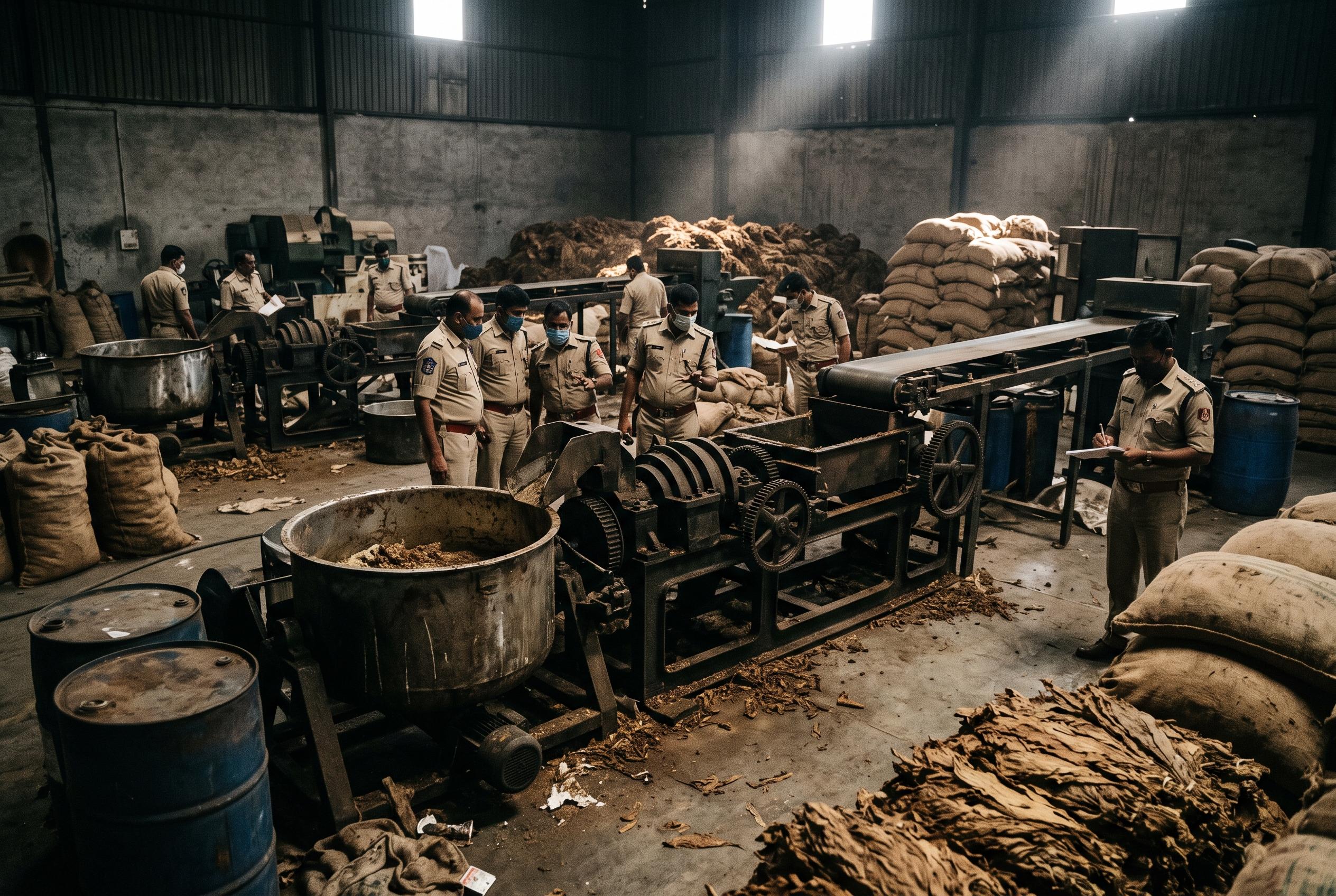

Officers in Hyderabad have dismantled a clandestine unit producing pan masala and tobacco, uncovering a Rs 160 crore evasion linked to unregistered machinery and unpaid taxes, as enforcement intensifies under new capacity-based levies.
Officers from the Hyderabad CGST Zone have uncovered what they described as a clandestine pan masala and tobacco unit on the city’s outskirts, with officials estimating duty and cess evasion of about Rs 160 crore.
Acting on specific intelligence, investigators searched a tin-shed facility in Medchal-Malkajgiri district on August 20 and found 40 undeclared Form-Fill-Seal packing machines, according to official accounts reported by several outlets. They also said about 56 workers were on the shop floor at the time, and that the premises were being used to make and pack branded and unbranded pan masala, as well as scented jarda.
The search led to the seizure of roughly 5,500 kg of finished pouches, ready-to-dispatch consignments valued at Rs 76 lakh, and raw materials including about 2,015 kg of pan masala mixture and 810 kg of tobacco. Officers also took away packing material, two vehicles allegedly used to move the goods, and documents said to be linked to the operation.
According to the CGST Zone, the unit was operating without registration and was clearing finished products without paying GST, the Health Security and National Security Cess and central excise duty. A person described as the organiser of the operation was arrested on August 21, produced before the Special Judge for Economic Offences in Hyderabad and sent to judicial custody for 14 days.
The case comes as India’s pan masala and tobacco sector is now subject to a capacity-based levy regime that took effect on February 1, 2026. Under that framework, monthly cess on pan masala is tied to the number, type and capacity of packing machines installed, while a similar excise system applies to chewing tobacco, jarda and gutkha. Officials said the enforcement drive is aimed at stopping manufacturers from concealing machinery and production in order to reduce their tax liability.
Disclaimer: This article is intended to inform and educate, not to recommend or endorse any financial product, investment or strategy. Please consider your own financial circumstances and seek professional advice where appropriate before making financial decisions.