

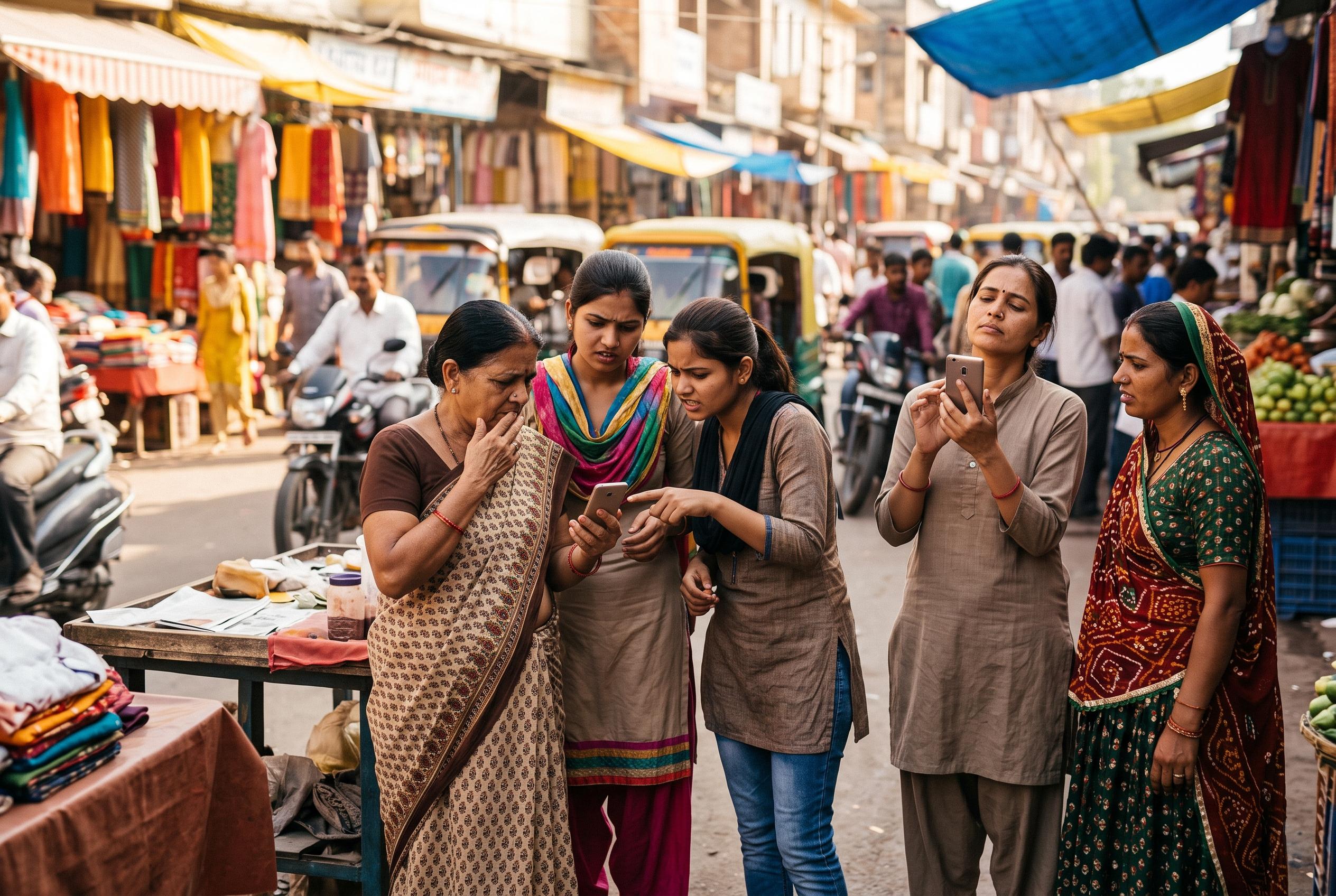

A study highlights the gender gap in India’s rapid digital payments expansion, revealing social and structural barriers preventing women from fully accessing and trusting the UPI system, despite its widespread adoption.
At a tea stall on Hyderabad’s Jubilee Hills Road No. 10, Pujari Lakshmi accepts digital payments from customers buying items worth as little as ₹2, yet she still does not know how to use the UPI app on her own phone. According to The Hindu, her husband or children usually handle transactions for her, a small scene that captures a bigger problem: India’s fast-growing instant payments system is not reaching many women in the informal economy on equal terms.
A study by Hyderabad-based NGO Yugantar, published in CSI Transactions on ICT by Springer Nature, followed 40,552 women across 13 districts in Telangana and two in Andhra Pradesh between 2023 and 2025. It found that adoption of the Unified Payments Interface is shaped not only by access to a smartphone, but also by confidence, trust, social expectations and who controls the money. The researchers identified three broad groups: active users, women blocked by social or structural barriers, and women who deliberately avoid UPI because they distrust it or fear losing financial control.
The findings come as UPI has become the backbone of India’s digital payments system, accounting for about 70% of total digital payments in 2023-24, up from 17% in 2018-19, according to the report cited by The Hindu. The Ministry of Finance said in March that total digital payment transactions rose from ₹8,839 crore in 2021-22 to ₹18,737 crore in 2023-24. Yet the study suggests that the gains from that expansion have not been shared evenly, especially among women from low-income households and marginalised communities.
The programme behind the research, Digital Budget Rani, introduced two kinds of UPI use: smartphone apps and 123PAY, an interactive voice response system designed for people who struggle with app-based payments. That distinction mattered, the study found, because technology built around users’ circumstances can reduce barriers more effectively than simply handing them a phone. Earlier work in the programme had found that nearly all participants had mobile phones and about 70% had bank accounts, yet fewer than 10% made digital transfers. The researchers caution, however, that their findings relate to first-time adoption, not long-term usage.
Disclaimer: This article is intended to inform and educate, not to recommend or endorse any financial product, investment or strategy. Please consider your own financial circumstances and seek professional advice where appropriate before making financial decisions.



