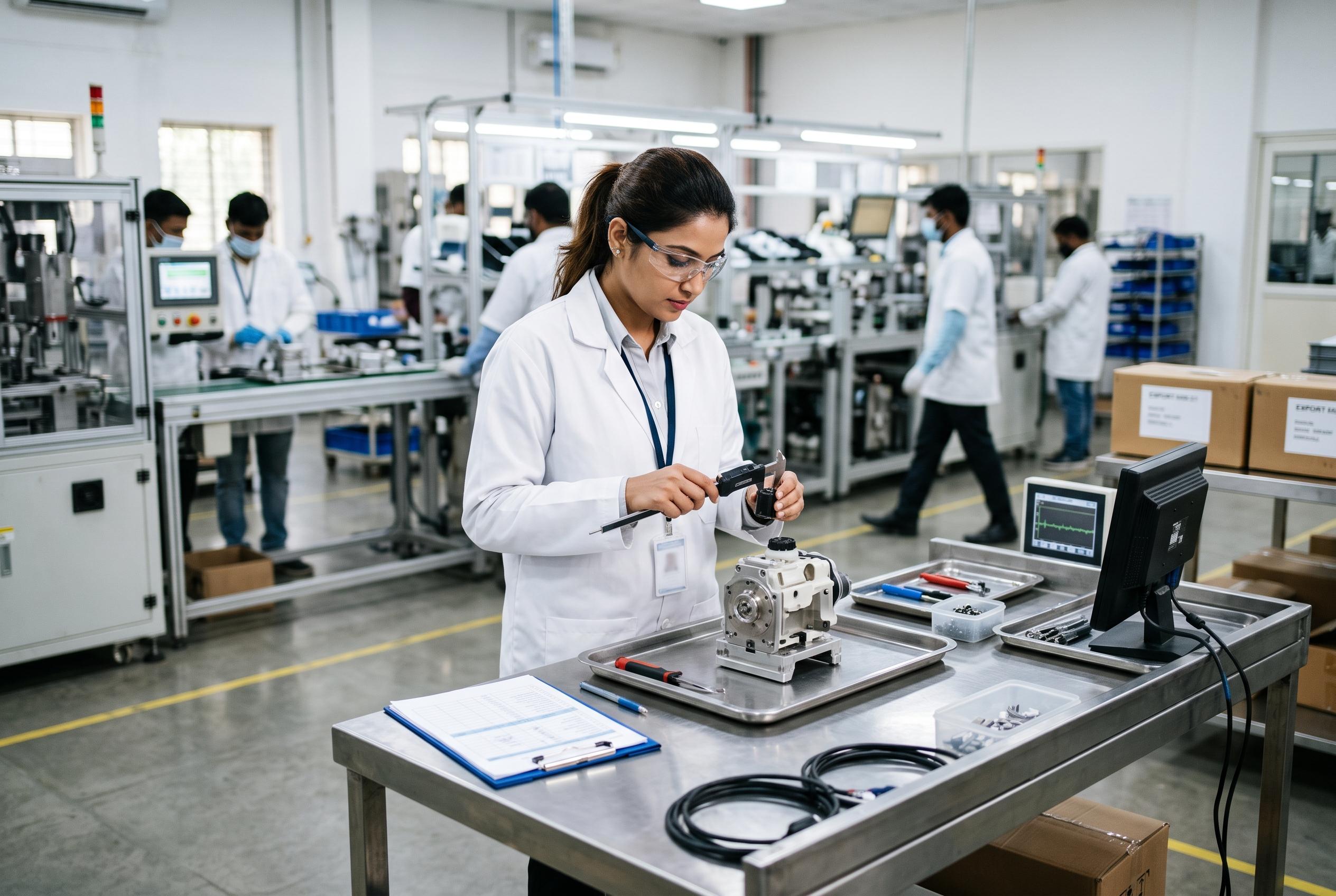

India is moving beyond pharmaceuticals to become a global hub for medical technology, with government incentives and rising exports signalling a new phase of self-reliance in medical devices and digital health systems.
India’s effort to broaden its healthcare self-reliance is moving beyond pills and vaccines and into the more complex world of medical technology. For years, the country’s strength lay in making low-cost generics and supplying huge volumes of vaccines. Now, the focus is shifting to the machines, implants, diagnostics and digital systems that modern treatment depends on.
The scale of the challenge remains clear. Medical devices account for roughly 60% of domestic consumption through imports, and India brought in devices worth Rs 1.37 lakh crore in 2024-25, against exports of Rs 42,360 crore. Yet the gap is narrowing. Government figures show medical-device exports rising from $2.9 billion in FY2021-22 to $4.1 billion in FY2024-25, a sign that local manufacturing is beginning to gain traction.
Industry leaders say the change is not just about replacing foreign products with Indian ones. Sudhir Srivastava, founder, chairman and chief executive of SS Innovations International, said the next phase of healthcare self-reliance must include equipment, devices and digital systems, from diagnostics and imaging to robotics and AI-enabled tools. He argued that the real goal is to build domestic capability while staying linked to global markets and technology flows.
That view is increasingly reflected in policy. The government’s production-linked incentive scheme for medical devices has a budget of ₹3,420 crore and runs from FY2022-23 to FY2026-27. According to official updates cited by Medical Buyer, 22 greenfield projects had been commissioned by September 2025, with production covering 55 products, including MRI and CT machines, mammography systems, linear accelerators, C-arm X-ray equipment, MRI coils and ultrasound machines. The broader aim is to reduce import dependence while creating a stronger manufacturing base.
For investors and manufacturers, the opportunity is larger than import substitution. Mayur Sirdesai of Somerset Indus Capital Partners said the sector needs patient capital because products can take years to clear technical, clinical and regulatory hurdles. Pooja Ravindra Rokde of Star Bio Pharma Global said India already has the ingredients for a wider medtech ecosystem, including engineering skills, scientific expertise and a growing start-up base. The long-term test is whether those strengths can be combined into a globally competitive industry that makes healthcare more accessible at home and, eventually, sells more abroad.
Disclaimer: This article is intended to inform and educate, not to recommend or endorse any financial product, investment or strategy. Please consider your own financial circumstances and seek professional advice where appropriate before making financial decisions.