

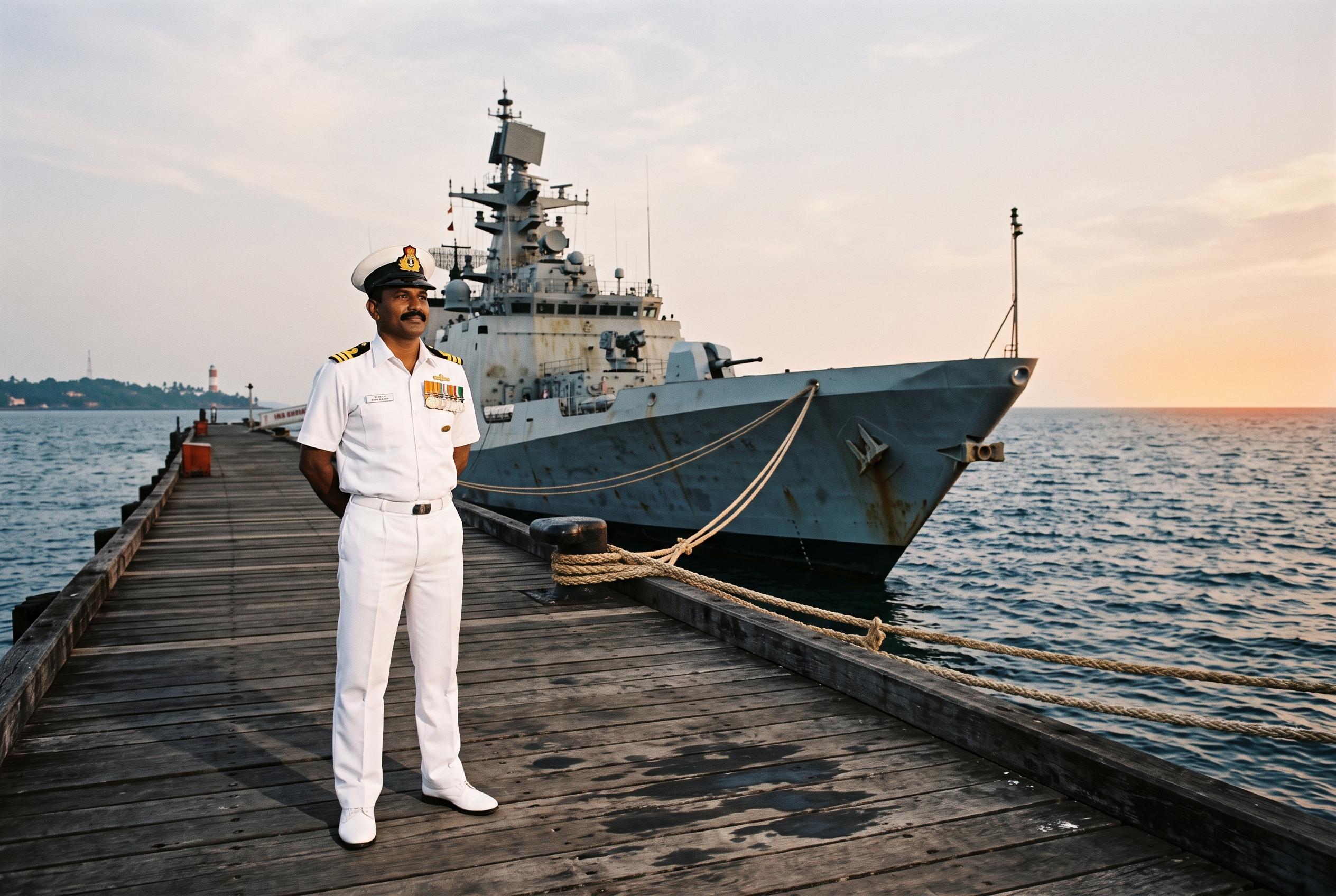

India is rapidly rebuilding its navy and maritime infrastructure, leveraging its rich seafaring history to counter modern threats and protect vital trade routes in the Indian Ocean.
India’s long coastline has always shaped its strategic imagination. In an essay on maritime security, former diplomat Pinak Ranjan Chakravarty argues that the country’s peninsular geography gave it a natural advantage in reaching both the Persian Gulf and South-East Asia, and helped build one of the world’s oldest seafaring traditions. Archaeological evidence from sites such as Golbai Sasan in Odisha and Lothal in Gujarat points to early shipbuilding, coastal trade and sophisticated port infrastructure dating back thousands of years.
Chakravarty says this maritime culture deepened through the ancient and classical periods. He points to references in the Rig Veda, the Maurya Empire’s formal oversight of navigation and port activity, and Kautilya’s detailed treatment of maritime affairs in the Arthashastra. Trade with Rome and the wider ancient world also left its mark, including inscriptions found in Egypt and coin hoards unearthed in southern India. In his telling, India’s naval reach peaked again under the Chola dynasty, whose fleets moved across the Indian Ocean and helped spread Indian religious and cultural influence.
That tradition was later weakened by European colonial power. According to the essay, the British monopolised maritime trade, controlled key ports and reduced India to a supplier of labour and raw materials, even as shipbuilding continued under colonial rule. When India became independent in 1947, it inherited a small navy and was forced to defend a vast coastline, island chain and network of waterways with limited resources. Chakravarty argues that land wars in the following decades kept attention and money focused on the Army and Air Force, slowing naval expansion.
From the 1990s onwards, however, India began to rebuild its maritime posture. The navy took part in peacekeeping, evacuation operations and anti-piracy patrols, while economic growth channelled more money towards ports, shipbuilding and sea power. Chakravarty says this shift reflected a broader recognition that around 90% of India’s trade moves by sea, leaving the country highly exposed to disruption in major shipping lanes such as the Strait of Hormuz. He also notes that Indian seafarers make up a substantial share of the global merchant fleet and have been caught in attacks on ships in the Red Sea and Gulf region.
The article places this warning in a wider picture of climate risk, illegal migration, trafficking, piracy, illegal fishing, pollution and seabed mining. It argues that the Indian Ocean Region is central to global commerce, carrying large shares of oil, bulk cargo and container traffic, yet lacks strong enough policing structures. To meet that challenge, India has moved from the SAGAR doctrine, or Security and Growth for All in the Region, to MAHASAGAR, which Chakravarty describes as a broader approach linking security with economic diplomacy, technology, sustainability and maritime awareness.
India’s practical answer has included exercises, fleet reviews and shared monitoring arrangements. The essay says the 2016 International Fleet Review brought together dozens of navies, while the MILAN exercises have expanded in scale and participation. The Information Fusion Centre in the Indian Ocean Region now works with partner countries and organisations to track shipping, piracy and other unlawful activity. Chakravarty concludes that India is trying to close gaps in infrastructure, sustainability and maritime workforce strength as it builds a blue-water navy with greater reach and deterrent power.
Disclaimer: This article is intended to inform and educate, not to recommend or endorse any financial product, investment or strategy. Please consider your own financial circumstances and seek professional advice where appropriate before making financial decisions.



