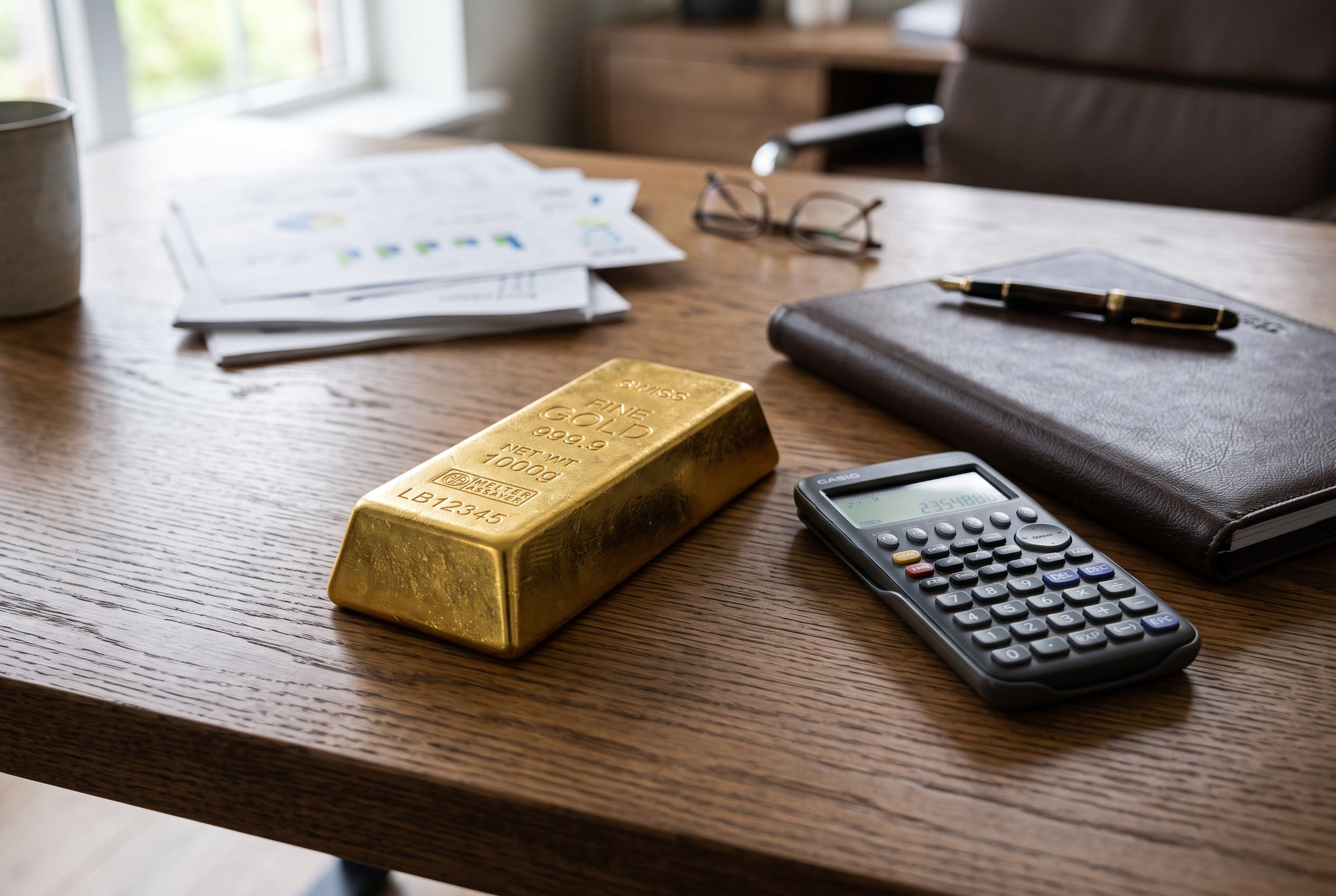

While both metals have recovered from this year’s downturn, investors are now weighing gold’s safety against silver’s growth potential, with market signals favouring gold as a more reliable hedge amid economic uncertainty.
Gold and silver have both recovered from this year’s sharp pullback, but the rebound has not erased the bigger question for investors: which metal now offers the better mix of safety and upside? The answer may depend less on absolute price levels than on the relationship between the two metals, with the gold-silver ratio offering a useful guide to how markets are pricing fear and optimism.
According to the Motley Fool article, the ratio now sits around 67, with gold near $4,400 an ounce and silver around $66. That is below the extremes reached in periods of acute stress, when investors rushed towards gold and the ratio widened sharply. During the pandemic panic in 2020, it climbed above 110, while it reached about 80 during the Great Recession. The argument is that a ratio below 70 can leave room for gold to outperform if the economic outlook worsens.
Recent market moves have also mattered. Axios reported on August 13 that gold had climbed to its highest level in more than two months, touching $4,465 an ounce after recovering from a slump linked to the war with Iran. The outlet said sentiment improved after a dovish surprise from the Federal Reserve in late July, while a large Chinese purchase of gold in July added support. CBS News, meanwhile, said that as of July 27, both metals were still well below their January peaks, at about $4,102 for gold and $59 for silver.
That makes the choice between the two metals partly a question of market regime. Analysts at SPAR Gold describe the gold-silver ratio as a broad measure of investor caution, with higher readings typically associated with risk aversion and lower ones with more confidence. PreciousMetalPrices.com places the long-term average closer to 60:1, suggesting the current reading is not especially cheap or expensive by historical standards, even if it remains elevated relative to some modern periods.
Silver still has a case, particularly because demand can be driven by both investment flows and industrial use. J.P. Morgan Global Research has forecast that silver could average $81 an ounce in 2026, citing strong demand from technology sectors. But for investors looking mainly for a hedge against turbulence, gold remains the cleaner refuge. On that basis, the Motley Fool argues that the SPDR Gold Shares exchange-traded fund remains the more compelling option today, not because it is stable, but because it tends to benefit more when fear rises.
Disclaimer: This article is intended to inform and educate, not to recommend or endorse any financial product, investment or strategy. Please consider your own financial circumstances and seek professional advice where appropriate before making financial decisions.