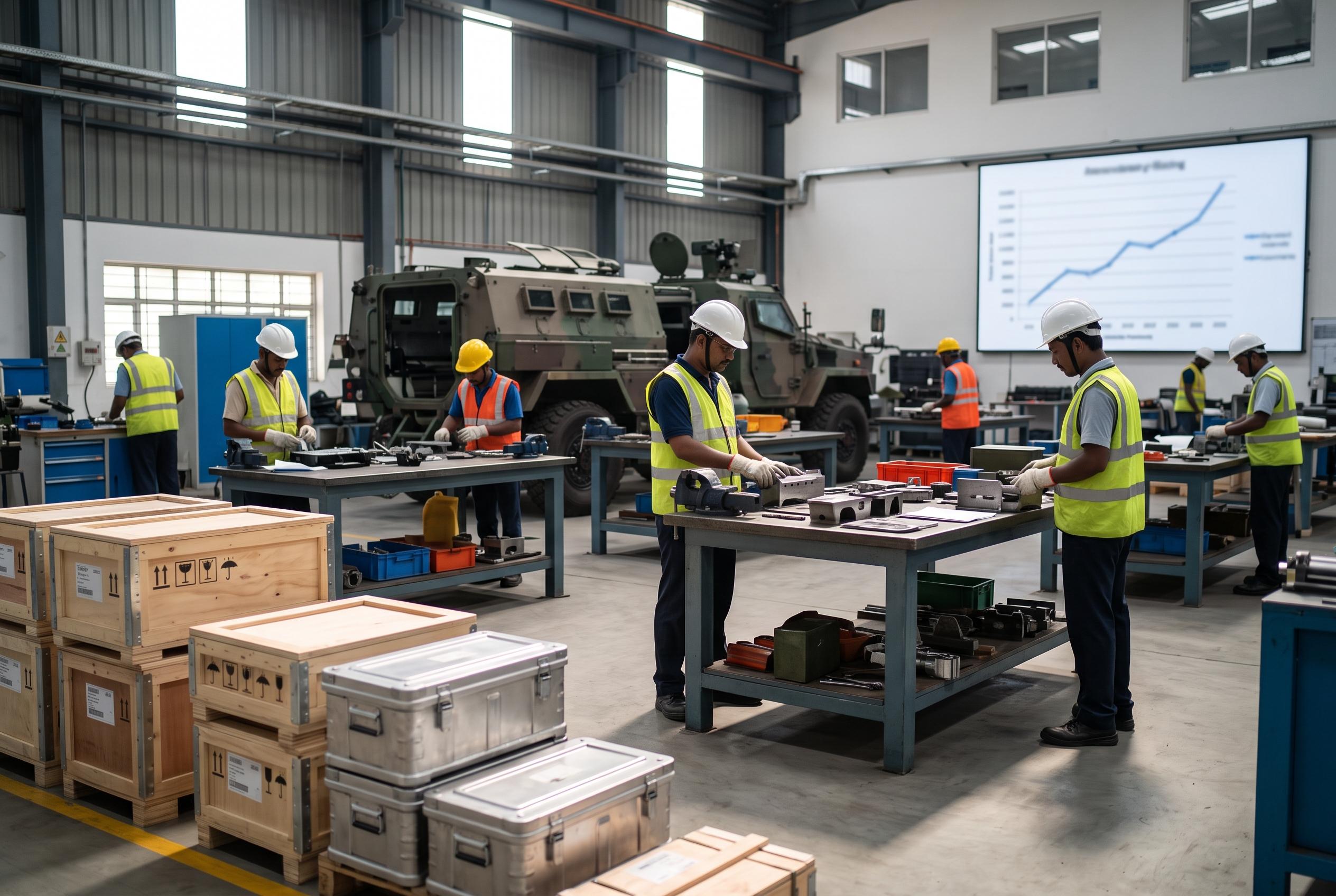

India’s defence industry has transformed from reliance on imports to a burgeoning hub of domestic manufacturing and exports, with government initiatives driving technological innovation and self-sufficiency.
India’s defence industry has moved a long way from dependence on imports towards a more confident, domestically anchored model, according to a new government backgrounder released by the Press Information Bureau. The report says the shift, built around Atmanirbhar Bharat and years of procurement reform, has lifted spending, expanded manufacturing and given Indian firms a far larger role in supplying the armed forces.
The backgrounder says the defence budget has risen from ₹2.53 lakh crore in 2013-14 to ₹7.85 lakh crore in 2026-27, while capital expenditure has more than doubled over the same broad period. It adds that indigenous defence production hit a record ₹1.78 lakh crore in 2025-26, compared with ₹46,429 crore in 2014-15, showing how much more of the sector’s output is now being built at home.
Exports have also surged. According to the PIB report, India’s defence exports climbed from ₹686 crore in 2013-14 to ₹38,424 crore in 2025-26, reaching more than 80 countries. The private sector accounted for a growing share of that business, while defence public sector undertakings remained a major force in overseas sales. The government now wants annual defence production to reach ₹3 lakh crore and exports to touch ₹50,000 crore by 2029.
The expansion has been supported by policy changes aimed at widening the domestic industrial base. The Defence Acquisition Procedure 2020, Positive Indigenisation Lists and the iDEX innovation scheme have all been used to steer orders and research towards Indian companies. India Brand Equity Foundation says the government has also raised procurement from local industry, strengthened DRDO funding and widened participation by start-ups, MSMEs and academia, while defence research support has been opened to industry for a quarter of the R&D budget since 2022-23.
Technology development has become a central part of the effort. The PIB backgrounder says iDEX had engaged 676 start-ups, MSMEs and innovators by March 2026, producing 551 design and development contracts. It also cites the ADITI scheme and the Technology Development Fund as tools for backing advanced systems, while DRDO’s testing infrastructure is now more accessible to domestic manufacturers. The report says technology transfers, indigenisation lists and the SRIJAN platform have helped deepen supply chains and reduce reliance on foreign sourcing.
The transformation is not limited to factories and paperwork. The government says the Army has indigenised most of its ammunition variants, while the Navy has commissioned new warships and submarines with high domestic content. Recent missile tests, air-defence work and hypersonic research point to a broader effort to build capability across land, air and maritime domains. For policymakers, the message is clear: India is trying to move from being a major buyer in global arms markets to becoming a serious defence producer and exporter in its own right.
Disclaimer: This article is intended to inform and educate, not to recommend or endorse any financial product, investment or strategy. Please consider your own financial circumstances and seek professional advice where appropriate before making financial decisions.