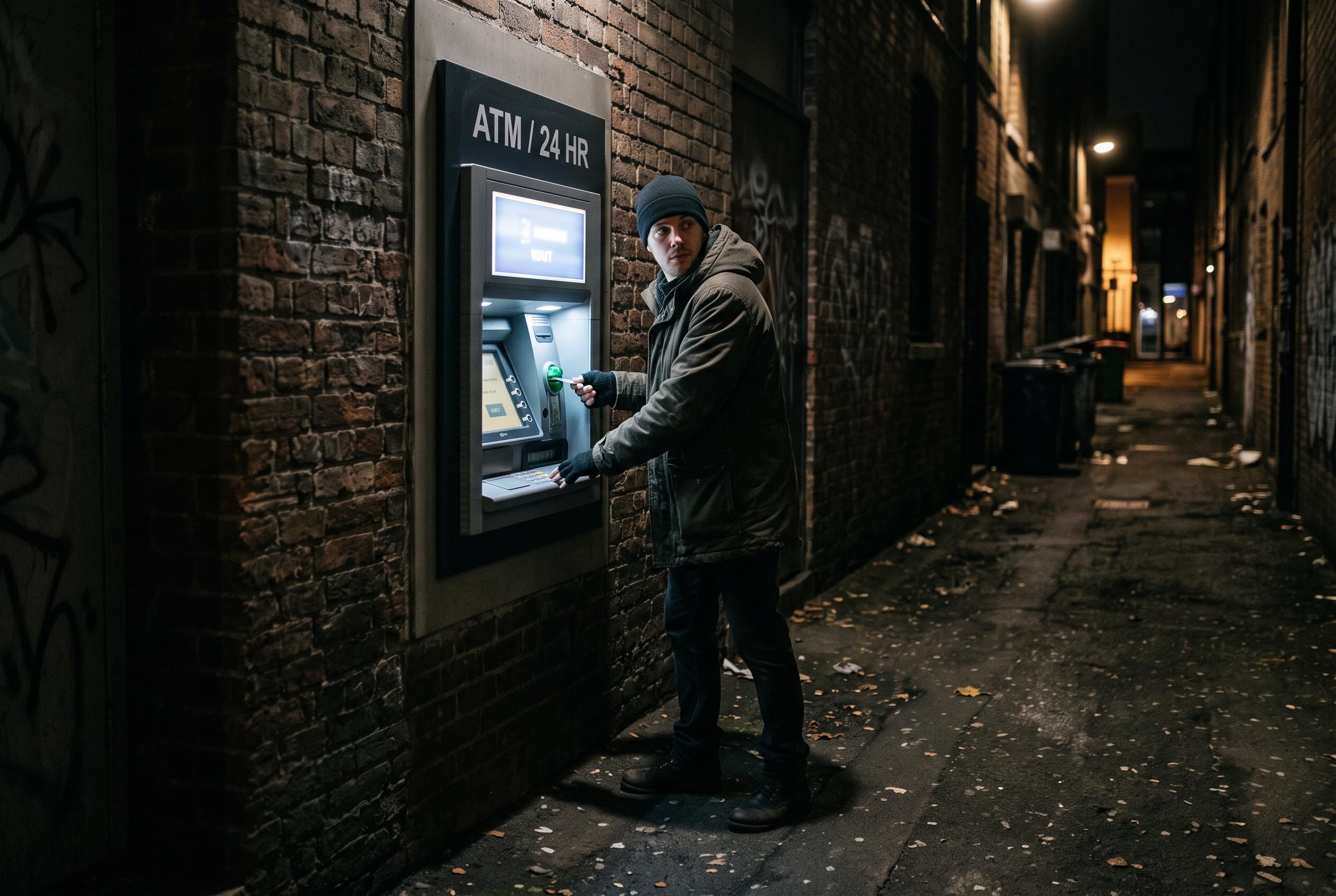

Consumers are increasingly vulnerable to advanced ATM scams, including cash traps and card skimming, with experts warning that a moment of distraction can lead to significant financial loss.
ATM users face a growing range of fraud risks, from hidden devices that trap cash to equipment that copies card data, and consumer-security guidance says a few seconds of inattention can be enough to lose money. The Turkish report warns that one of the newer tricks involves a so-called cash trap, in which criminals fit a device over the part of the machine that dispenses notes so the money never reaches the customer.
In that scam, the ATM completes the transaction and sends the cash into the dispensing area, but the notes remain caught behind the attachment. The victim often assumes the machine has failed and walks away. That is the moment fraudsters are waiting for, according to the report, because they can return to remove the device and collect the trapped cash.
Security guidance from Chase says users should not leave the machine if cash is not delivered as expected, and should contact the card issuer or bank immediately. The FBI also says skimming devices are commonly installed on ATMs and other payment terminals to steal card information and PINs, and notes that the crime costs consumers and financial institutions more than $1bn a year.
The risk is not limited to cash traps. The Turkish report also describes skimming, where criminals attach hardware to the card slot and use concealed cameras or other tools to capture PINs. Chase advises customers to check for loose, bulky or mismatched parts on the machine, while the Michigan Department of Attorney General recommends watching for tampering and using contactless or cardless options where possible.
Experts say the safest response is to stay alert at the machine, shield the keypad when entering a PIN, and avoid using an ATM that looks damaged or altered. If a transaction appears to go wrong, users should not assume the problem will sort itself out; they should report it straight away and, if needed, alert the authorities.
Disclaimer: This article is intended to inform and educate, not to recommend or endorse any financial product, investment or strategy. Please consider your own financial circumstances and seek professional advice where appropriate before making financial decisions.