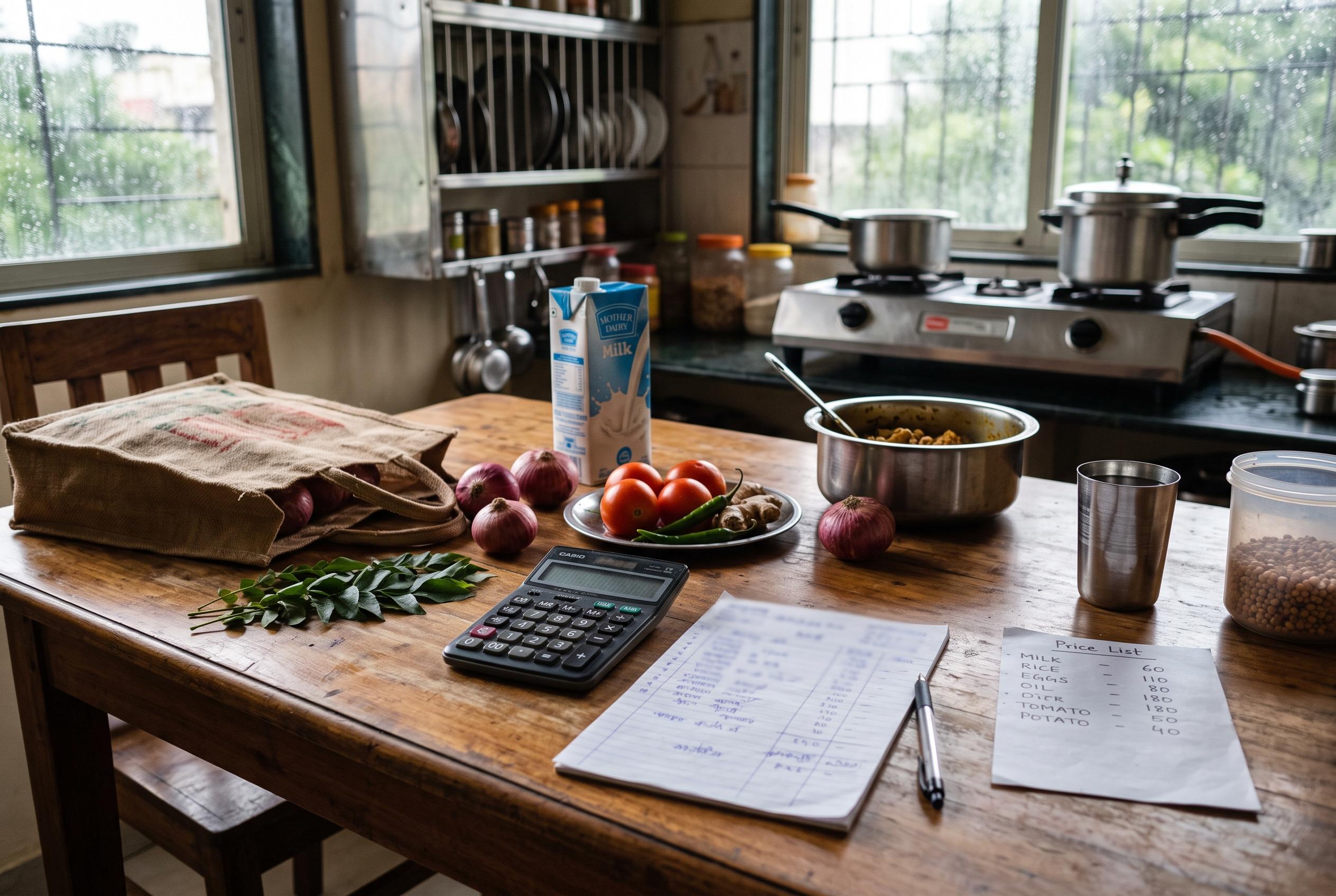

Variations in India’s monsoon rainfall, ranging from drought to heavy floods, are causing unpredictable swings in food prices, affecting everything from vegetables and milk to packaged goods and household expenses amid ongoing climate shifts.
Monsoon weather can do more than shape harvests.It can ripple through vegetable markets, milk supplies and the cost of everyday packaged goods, tightening household budgets when supplies are disrupted and easing pressure when crops and logistics recover. India’s latest food inflation figures underline why the weather remains closely watched: the Consumer Food Price Index rose 5.52% year on year in July 2026, up from 5.32% in June, even as some vegetables became cheaper. According to reports from India Today and Business Standard, both weak and excessive rainfall can unsettle food prices in different ways, depending on the crop and the region.
Vegetables tend to react fastest because many are perishable and have short growing cycles. When rain is too scarce, soil moisture falls and output can suffer. When it is too heavy, fields can flood, harvesting becomes difficult and produce may not reach wholesale markets on time. The result can be sharp swings in prices. In July, potato, pea and tomato prices fell year on year, but ginger, garlic and onion all rose strongly, showing how uneven the impact can be.
Milk is affected less directly, but rainfall still matters. Dairy production depends on fodder and feed, and poor rain can reduce green fodder while excessive rain can damage fodder crops or make transport more difficult. As Business Standard noted, the effect on milk prices usually works through higher input costs rather than an immediate weather shock. That means dairy inflation depends not just on rain, but also on feed availability, procurement costs and broader market conditions.
Packaged food and household staples are influenced in a more indirect way. FMCG companies rely on farm commodities such as cereals, edible oils and sugar, so bad weather can lift their raw material costs. Flooded roads and transport delays can also raise logistics expenses. Still, higher costs do not automatically feed straight through to retail prices, because companies may absorb some of the pressure, change sourcing or adjust production.
Cooking oil remains especially important for consumers because it is bought regularly and is tied to both local and global markets. The monsoon can affect oilseed output, but imports, commodity prices and trade conditions also play a major role. Refined oil prices rose 13.35% year on year in July, adding to food spending pressure even as some other items softened.
The current monsoon has also shown how intense rain can cause local disruption even without triggering across-the-board inflation. On August 17, the India Meteorological Department said a depression over coastal West Bengal and adjoining areas was expected to move across parts of Gangetic West Bengal, Jharkhand and Bihar, with heavy to very heavy rain forecast across parts of eastern and central India and isolated extremely heavy rain in Gangetic West Bengal and Odisha. For consumers, the main lesson is that food inflation is shaped by a chain of events, from rainfall and crop damage to transport, storage, stocks and market arrivals, not by the weather alone.
Disclaimer: This article is intended to inform and educate, not to recommend or endorse any financial product, investment or strategy. Please consider your own financial circumstances and seek professional advice where appropriate before making financial decisions.