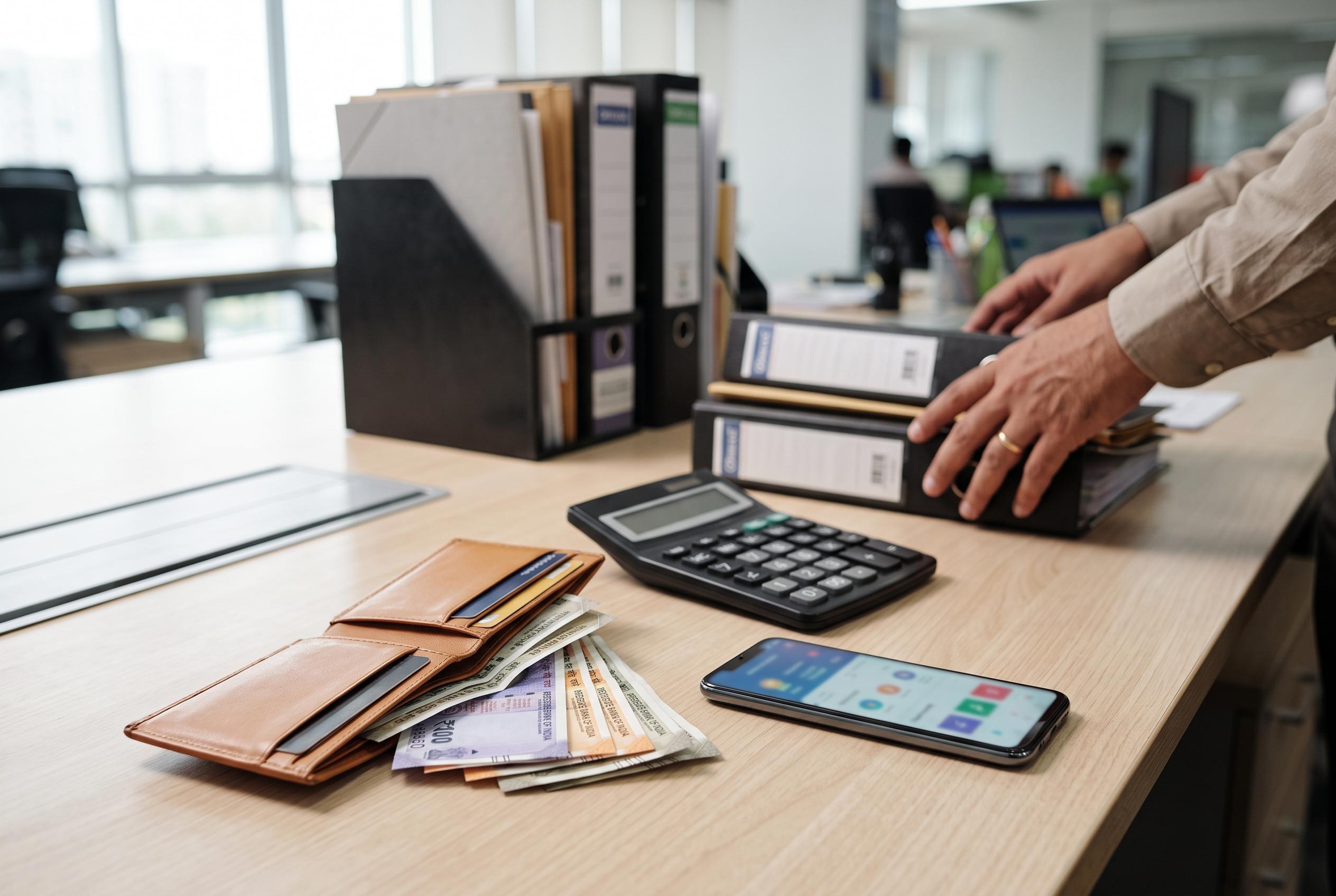

Despite the rise of digital wallets and UPI, large cash deposits remain common in India. New reporting thresholds and stricter rules require taxpayers to maintain proper documentation to avoid scrutiny and penalties.
Even in the age of UPI and digital wallets, large cash balances still surface in ordinary life, whether from a property sale, family savings, wedding gifts or business needs. The key point for taxpayers is that Indian law does not set a hard ceiling on how much cash can be deposited into a bank account. What matters is whether the money can be explained with proper records and a legitimate source, because banks and tax authorities track high-value deposits through reporting rules rather than a simple ban.
For savings accounts, the reporting trigger is widely set at ₹10 lakh in cash deposits in a financial year, counted across one or more savings accounts held by the same person. Banks use the Statement of Financial Transactions framework to send this information to the tax department. Several private banks, including DBS, Federal Bank, ICICI Bank, Kotak Mahindra Bank and Axis Bank, describe the same broad rule: there is no fixed daily prohibition, but once cash deposits cross the annual reporting threshold, the transaction is flagged for tax monitoring.
Current accounts are treated differently because they are generally used for business activity. The reporting threshold is much higher, and banks typically monitor large cash movements in these accounts under separate high-value transaction rules. Time deposits are also watched closely when cash is used to open or add to fixed deposits. In practice, the more cash moves through an account, the more likely it is to be reported and examined if the figures do not match the taxpayer’s declared income.
The reporting system is only part of the picture. Cash deposits that cross the relevant limits can appear in the taxpayer’s Annual Information Statement and related records, where they are compared against the income shown in the return. If a person reports modest income but makes large unexplained cash deposits, the mismatch can trigger scrutiny, notices or further enquiry. That does not mean the money is automatically seized; it means the person may have to prove where it came from.
The rules are also strict on receiving cash in the first place. Under section 269ST of the Income Tax Act, a person cannot accept ₹2 lakh or more in cash in a day from one person, for one transaction, or for one event or occasion. A breach can attract a penalty equal to the amount received. That rule is separate from bank-deposit reporting, but it has the same aim: reducing unaccounted cash circulation.
If the source of the cash cannot be proved, the amount may be treated as unexplained income and taxed at punitive rates under the special provisions for unexplained money. Those provisions can push the effective liability to around 84%, once tax, surcharge, cess and penalty are added, alongside possible interest. No deductions or set-offs are generally available against such income.
For anyone depositing legitimate cash, the practical advice is simple: keep documentary proof, maintain cash books if you run a business, match deposits with your tax return, and avoid breaking up payments to stay below reporting limits. If the tax department asks questions, respond promptly with bank statements, sale deeds, receipts or other evidence. Cash itself is not forbidden, but unexplained cash is where the trouble begins.
Disclaimer: This article is intended to inform and educate, not to recommend or endorse any financial product, investment or strategy. Please consider your own financial circumstances and seek professional advice where appropriate before making financial decisions.