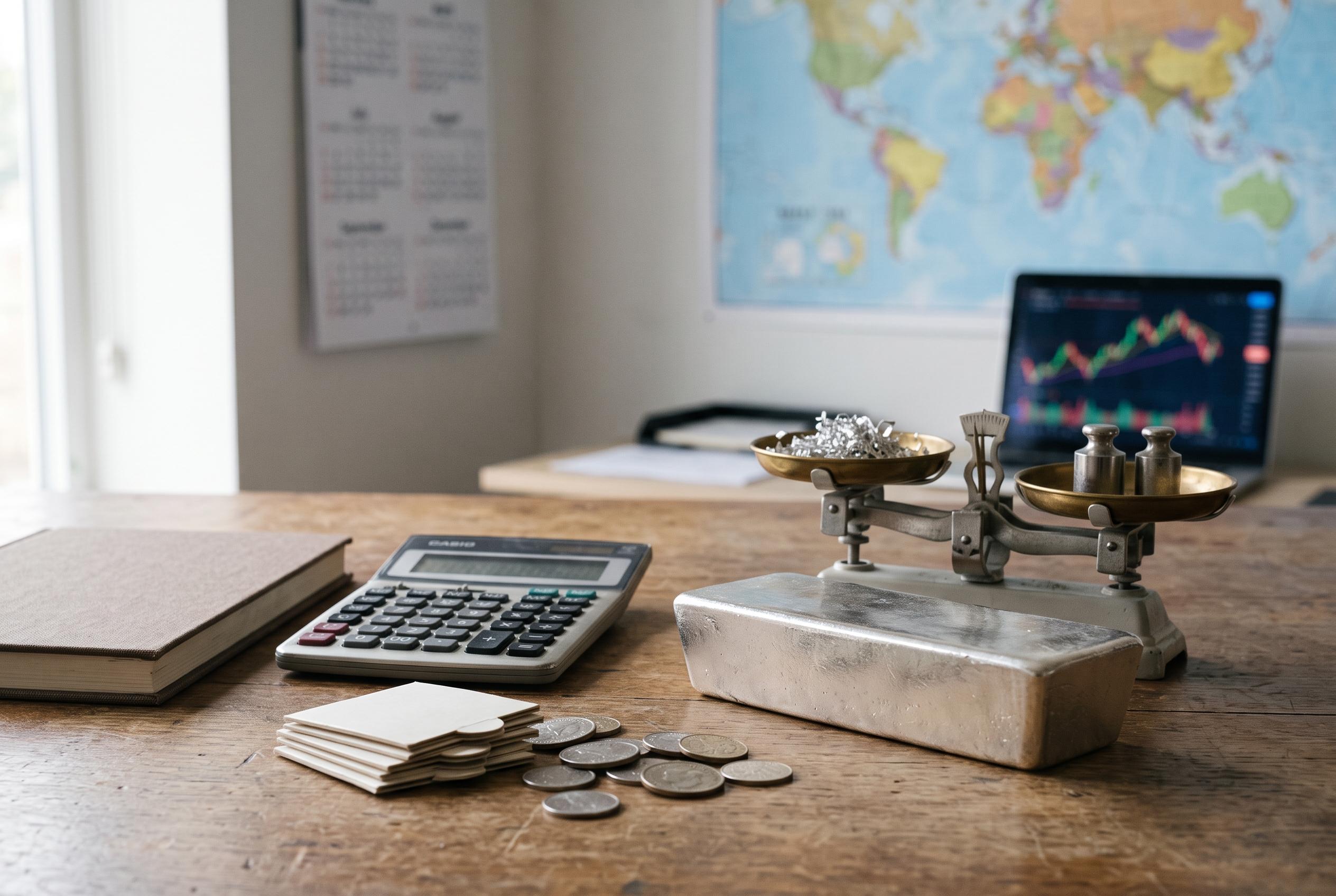

Silver prices across Indian cities vary sharply due to regional factors and lack of a unified benchmark, while international market swings and domestic complexities add to price unpredictability for consumers.
Silver prices in India on Sunday revealed a market with no single agreed number, with quotes varying sharply from one tracker to another and from one city to the next. In Hyderabad, one retail guide put a kilogram at about ₹2,70,900, while Delhi was closer to ₹2,67,000 and a separate rate site suggested ₹2,41,700. The spread was wide enough to confuse anyone trying to treat a published silver quote as a fixed market price.
The problem is that silver does not have the same benchmark structure as gold in India. Industry trackers can therefore diverge by more than 10 per cent on the same day, even when they are all referring to the same metal. The lead article compared three mainstream rate services and found a gap of more than ₹31,000 a kilogram between the lowest and highest figures, underscoring how unreliable a single online quote can be for buyers.
City-level data still shows a clear regional pattern. According to the rates cited in the lead article and Moneycontrol’s city listings, southern markets remain more expensive than northern ones. Chennai was at the top of the range, with Hyderabad and Kerala also carrying a premium, while Delhi, Kolkata and Bengaluru tended to sit at the lower end. The difference appears to reflect local levies, freight costs and stronger ceremonial demand in the south rather than any variation in the metal itself.
International markets were moving on a separate track. The lead article said spot silver ended Friday at $64.96 an ounce, after a weekly gain of a little more than 2 per cent, while gold also firmed on softer US inflation data. Trading on the domestic Multi Commodity Exchange added another layer of complexity, with the September silver contract settling below some retail-linked quotes. That gap is one reason consumers can see one figure on a screen and a different one at a shop counter.
The volatility this year has been extreme. The lead article said silver had climbed to nearly $122 an ounce before dropping sharply, after analysts had earlier been expecting $100 to mark the ceiling for 2026. That swing, combined with a much steeper fall than gold’s, has pushed the gold-to-silver ratio wider and left silver looking cheap relative to gold, though not necessarily supported by a stable floor.
Fundamentally, silver behaves differently because it is both a precious metal and an industrial input. The Silver Institute expects investment demand to rise this year, while also forecasting a sixth straight annual market deficit, a sign that physical supply remains tight. That combination can intensify moves in both directions, especially when financial markets start to reprice interest rates, the dollar or growth expectations.
For Indian buyers, the rupee adds another cost. Import duties, goods and services tax and jewellers’ margins all feed into the final quote, so a futures price and a retail price can differ substantially. The practical advice remains simple: treat any posted silver rate as a guide rather than a promise, check the per-gram figure before committing, and ask separately about making charges.
Disclaimer: This article is intended to inform and educate, not to recommend or endorse any financial product, investment or strategy. Please consider your own financial circumstances and seek professional advice where appropriate before making financial decisions.