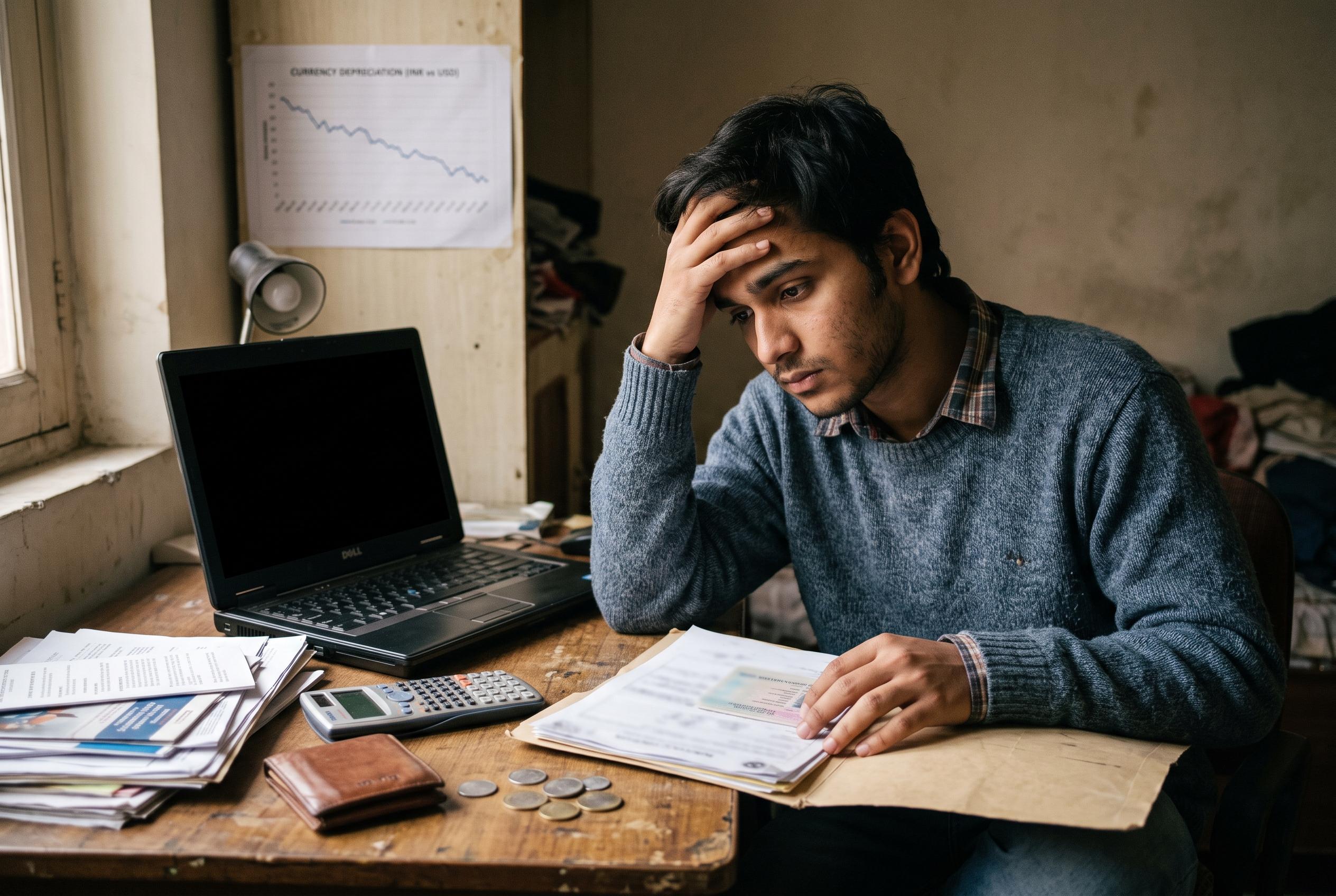

Indian students planning to study abroad face mounting financial risks as visa bottlenecks and a weakened rupee drive students to explore alternative destinations and additional borrowing, reshaping India’s international education landscape.
Indian students heading overseas are facing a sharper financial gamble as visa delays and refusals threaten to strand money already paid for admissions, housing and applications. For families that often have to commit funds before an education loan is approved, the risk is no longer limited to whether a student is admitted, but whether they can actually travel and enrol. According to businessline, students can be asked for deposits of roughly $2,000 to $5,000, with refund rules varying widely by institution.
Joseph, whose name has been changed, said the strain begins almost as soon as an offer arrives. He told businessline that some of the most urgent payments have to be made from family savings because loan approvals often come later, and that even universities advertising partial refunds may not make the process simple in practice. That uncertainty is becoming more costly as visa bottlenecks affect the US, the UK, Canada and Australia.
Education lenders say the problem is now widespread enough to alter study plans. Shivani Mani of GradRight told businessline that among students who have secured US visa interviews, rejections appear to have risen by at least 10 per cent, while about half are still waiting for appointments. With interviews delayed for the fall 2026 intake, many applicants are moving to spring enrolment instead, where universities allow deferrals.
The pressure is being intensified by a weaker rupee, which has pushed up the total cost of studying abroad even before flight tickets and living expenses are added. The Economic Times has reported that students and lenders are responding by reconsidering traditional destinations such as the US, the UK and Canada, while some are turning to other countries altogether. It has also reported that borrowers are increasingly seeking top-up loans when original financing no longer covers rising costs.
That shift is feeding demand for education credit in India, especially among non-bank lenders. Ankit Mehra of Gyandhan told businessline that fewer students may be going overseas overall, but a larger share of them are borrowing. CRISIL Ratings expects Indian non-bank finance companies’ education-loan assets to grow 20 per cent in FY27, while businessline reported that US-linked loan disbursements fell 57 per cent in FY26 and the US share of non-bank education-loan assets dropped from 54 per cent in March 2025 to 43 per cent in March 2026. The UK has held up better, with disbursements rising 24 per cent and its share increasing to 29 per cent, while Germany and Ireland are drawing more interest as students diversify their options.
Disclaimer: This article is intended to inform and educate, not to recommend or endorse any financial product, investment or strategy. Please consider your own financial circumstances and seek professional advice where appropriate before making financial decisions.