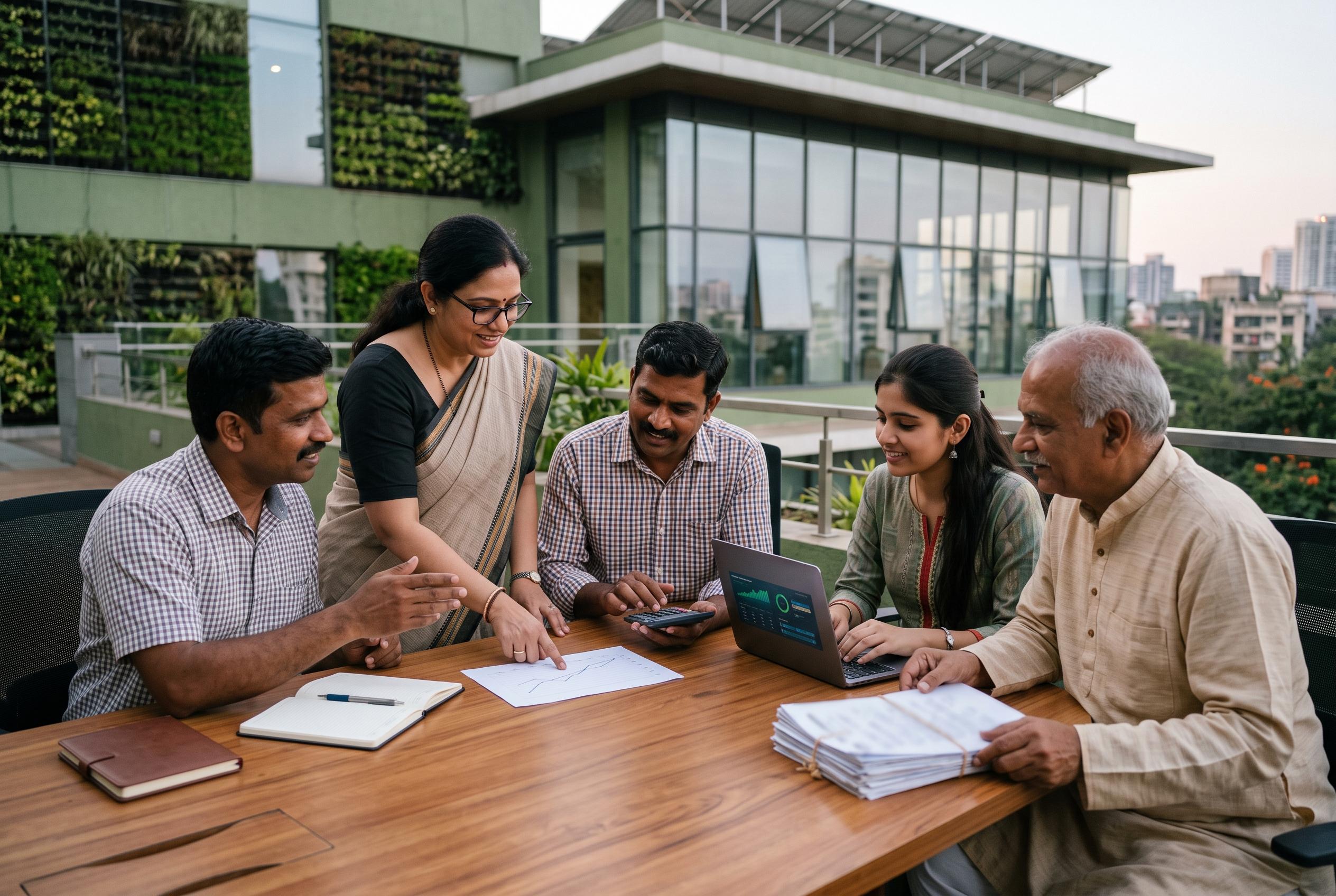

Amid rising inequality, India faces the challenge of ensuring that economic expansion benefits all segments of society while embracing environmentally responsible policies to secure long-term prosperity.
India’s growth story cannot be judged by headline GDP figures alone. The deeper test, the one that determines whether prosperity is durable and broadly shared, is whether economic expansion is also fair, environmentally responsible and capable of improving life for those at the bottom. That argument, rooted in Gandhian ideas such as Sarvodaya, suggests that a country of India’s scale needs development that lifts every section of society rather than concentrating gains among a few.
Recent inequality data underline why that case is gaining urgency. The World Inequality Report 2026 shows that India remains among the world’s most unequal economies, with the top 10% of earners taking 58% of national income while the bottom half receives only 15%. The same reporting indicates that wealth is even more concentrated, with the richest 10% holding about 65% of total wealth and the top 1% controlling around 40%. Those figures point to a structural imbalance that has barely shifted in recent years.
At the same time, there are signs that targeted policy can move the needle. NITI Aayog says 24.82 crore people escaped multidimensional poverty over the past nine years, a decline linked to progress in health, education and living standards. That improvement matters because it shows that growth can translate into better outcomes when it reaches ordinary households. But it also highlights how far India still has to go if it is to turn progress into something more evenly spread and less vulnerable to reversals.
The case for a broader model of development goes beyond income and welfare. It also includes political inclusion, gender equality and stronger local accountability. The argument is that development becomes more sustainable when women have a larger role in decision-making, when power is pushed closer to the village level, and when social audits and public scrutiny help ensure that promises become outcomes. In that framing, equitable growth is not a moral add-on; it is a practical requirement for stable governance and social cohesion.
Environmental strain makes that case even stronger. The article’s wider warning is that growth detached from sustainability can deepen climate risk, worsen resource conflict and leave the poorest most exposed. That concern aligns with global evidence on poverty and climate vulnerability, and with the broader view that economic expansion must be separated from high carbon intensity. For India, the challenge is to keep building on clean energy, public participation and inclusive policy while avoiding a model that enriches the few, exhausts natural resources and leaves the many behind.
Disclaimer: This article is intended to inform and educate, not to recommend or endorse any financial product, investment or strategy. Please consider your own financial circumstances and seek professional advice where appropriate before making financial decisions.