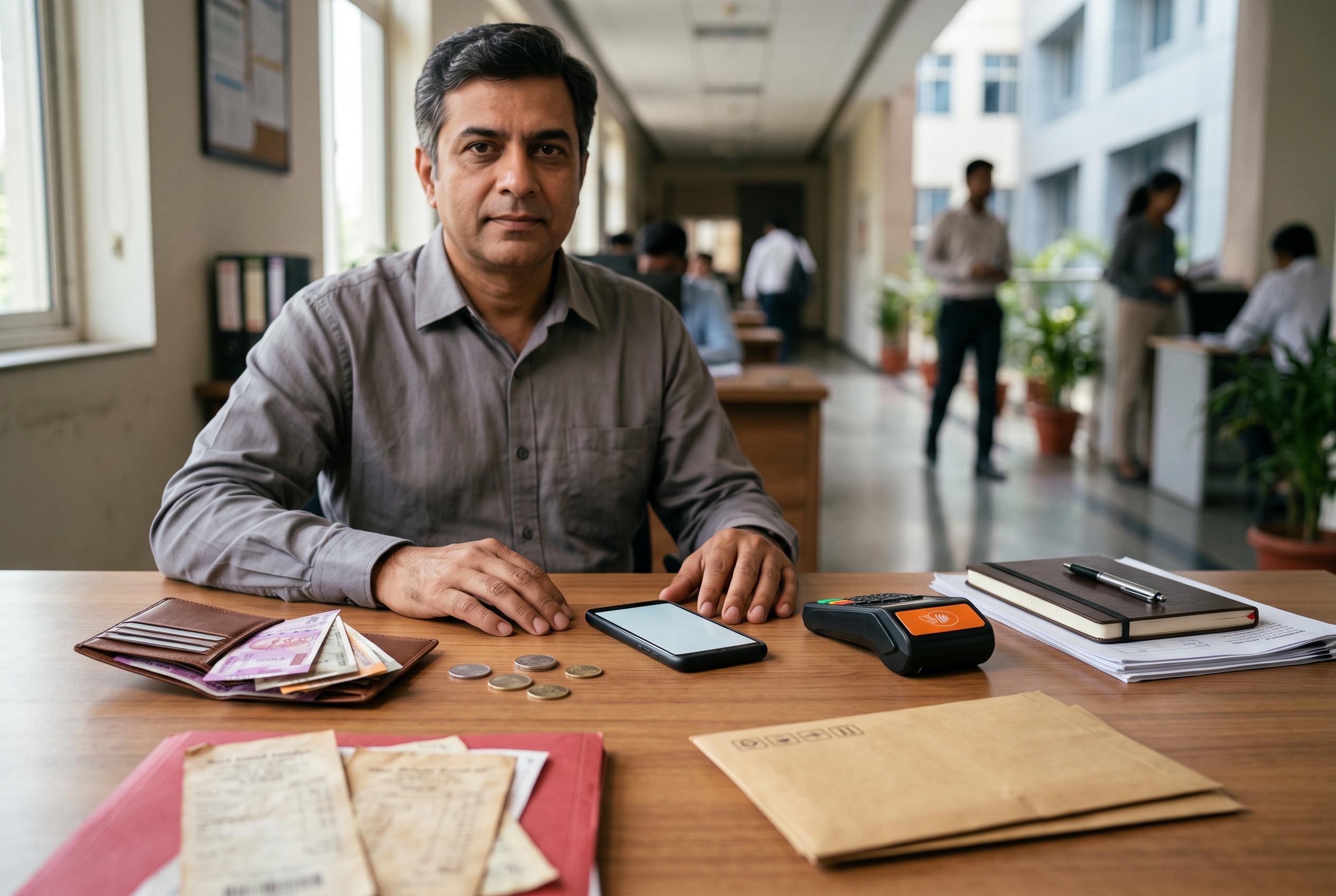

India’s journey to the modern digital payment landscape spans over a millennium, from medieval hundi to the high-tech UPI, shaped by centuries of institutional change and financial innovation.
India’s instant-payment revolution did not begin with smartphones. Long before a tap on a screen could move money in seconds, merchants in medieval India were already using hundi, a credit instrument that allowed funds to be transferred without carrying cash across distance. The Reserve Bank of India says the system dates back to at least the 12th century and was used for remittances, borrowing and trade finance, laying an early foundation for the logic behind modern digital payments.
Formal banking arrived much later, first under British rule and then through a slow expansion after Independence. Banking history sources note the creation of the Bank of Bengal in 1806, the merger of the presidency banks into the Imperial Bank of India in 1921 and the establishment of the Reserve Bank of India in 1935 to issue currency and support monetary stability. After 1947, the push was not only to move money more efficiently but also to bring more people into the system through branch expansion, nationalisation and rural lending schemes.
That wider spread of banking mattered because electronic payments needed an infrastructure of accounts, branches and settlement rails. According to the Reserve Bank of India, branch numbers rose sharply in the decades after nationalisation, while reforms such as the lead bank scheme and regional rural banks helped extend formal finance beyond cities. The move from paper to electronic transfers gathered pace in the 1990s and 2000s with electronic funds transfer, RTGS, NEFT, the Payments and Settlement Systems Act and the creation of the National Payments Corporation of India.
A second layer of change came from financial inclusion. Launched in 2014, the Pradhan Mantri Jan Dhan Yojana was designed to give more people access to bank accounts, deposits, credit, insurance and pensions. Government figures cited in the lead report show that by 22 July 2026 the scheme had reached 58.84 crore beneficiaries, with deposits of ₹3.11 lakh crore and 41.01 crore RuPay debit cards issued, helping create the base on which large-scale digital payments could work.
UPI then turned that base into a mass-market payment system. The National Payments Corporation of India launched the Unified Payments Interface in April 2016 with 21 member banks, building on IMPS for instant transfers and mobile phones for access. By linking multiple bank accounts through a single interface, UPI removed much of the friction from everyday payments. July 2026 figures in the lead report show 23.66 billion transactions worth ₹29.88 lakh crore, underscoring how deeply the system has embedded itself in daily life.
The result is that India’s payment story is not really about one technology, but about a long sequence of institutional shifts. From hundi to presidency banks, from nationalisation to electronic clearing, and from Jan Dhan accounts to UPI, each stage solved the same problem in a new way: how to move value safely, cheaply and quickly across distance. What looks like an effortless payment today is, in truth, the latest chapter in a centuries-old financial evolution.
Disclaimer: This article is intended to inform and educate, not to recommend or endorse any financial product, investment or strategy. Please consider your own financial circumstances and seek professional advice where appropriate before making financial decisions.