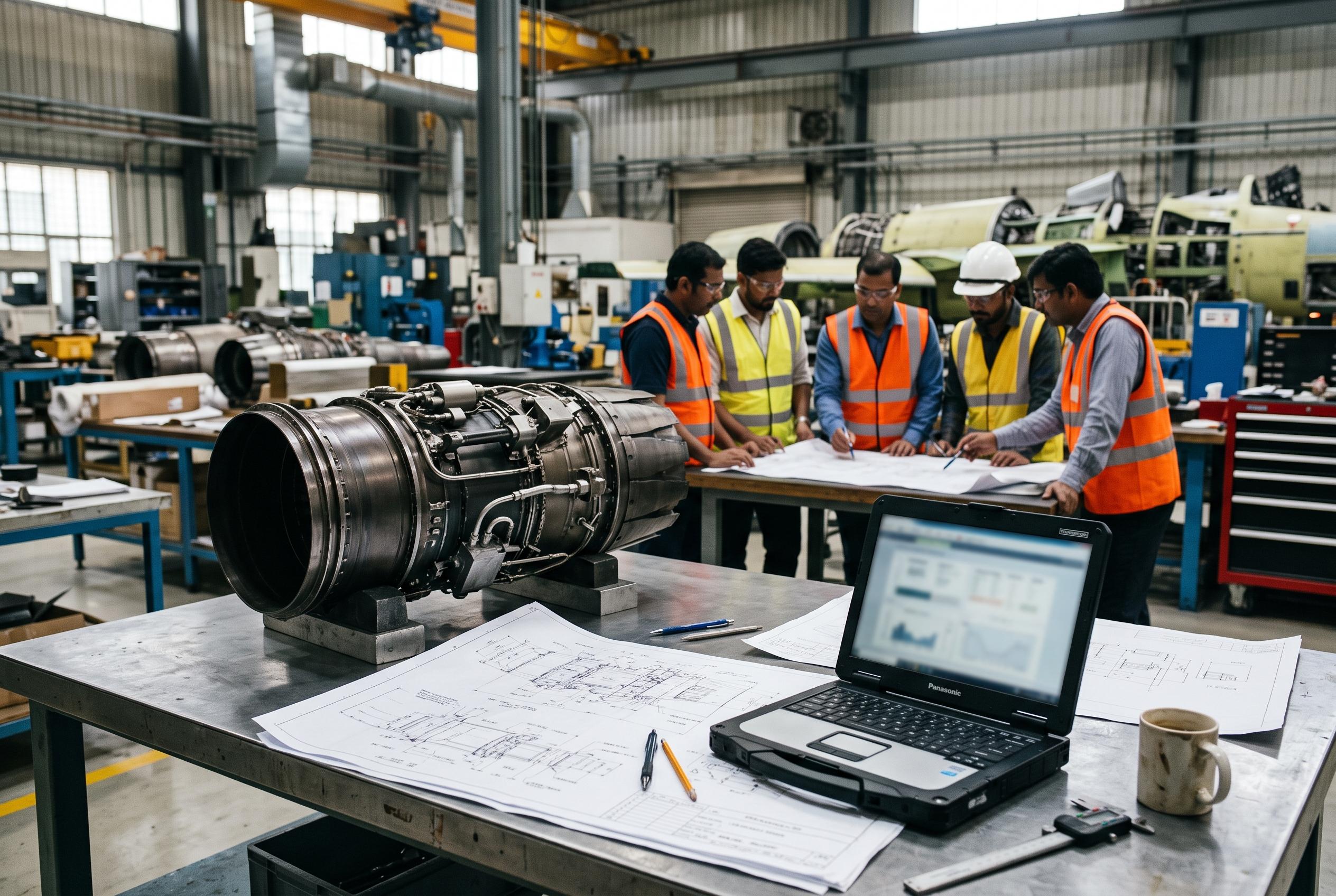

Reliance Industries and Rolls-Royce sign a statement of intent to develop a domestic fighter jet engine for India’s Advanced Medium Combat Aircraft programme, marking a significant step towards self-reliance in defence manufacturing.
Reliance Industries and Rolls-Royce have moved to deepen cooperation on a domestic jet engine for India’s Advanced Medium Combat Aircraft programme, a fifth-generation fighter project that has long exposed the country’s difficulty in building high-thrust military propulsion at home. The two companies signed a statement of intent on 14 August 2026 to work on the design, development and manufacture of an indigenous combat engine, with plans for a dedicated Aerospace Gas Turbine Complex in India.
The proposed facility is intended to act as a centre of excellence for propulsion work, covering design, testing, production, maintenance and support across the engine’s full life cycle. The companies say the arrangement is meant to support India’s push for self-reliance in strategic sectors, echoing the government’s “Atmanirbhar Bharat” policy and its broader drive to localise defence manufacturing and technology transfer.
The announcement also reflects the wider competition that has surrounded the AMCA engine requirement. Reporting from the defence sector has previously linked the programme to other international suppliers, including Safran and General Electric, as India sought a partner capable of helping to deliver advanced engine technology on a timetable that matches the aircraft’s development needs. The emerging Reliance-Rolls-Royce plan appears designed to keep more of the value chain inside India, a point also highlighted in industry commentary that has urged full technology transfer and domestic production capability.
Rolls-Royce has also been reported elsewhere as having secured export permission for combat engine technology transfer to India, underscoring the strategic importance of the deal and the UK government’s willingness to back deeper industrial cooperation. For Reliance, the partnership adds to its role as a private-sector player in defence manufacturing, while for Rolls-Royce it offers access to India’s scale and long-term aerospace ambitions. Anant Ambani said the arrangement was aimed at building an enduring national capability in advanced propulsion, while Rolls-Royce chief executive Tufan Erginbilgiç said it combined the company’s engineering legacy with Indian industrial leadership.
Financial terms, delivery milestones and the final structure of the venture have not yet been set out. Even so, the agreement signals a notable step in a field where India has repeatedly struggled to close the gap between ambition and execution: building a sovereign fighter engine that can power one of its most important next-generation defence projects.
Disclaimer: This article is intended to inform and educate, not to recommend or endorse any financial product, investment or strategy. Please consider your own financial circumstances and seek professional advice where appropriate before making financial decisions.