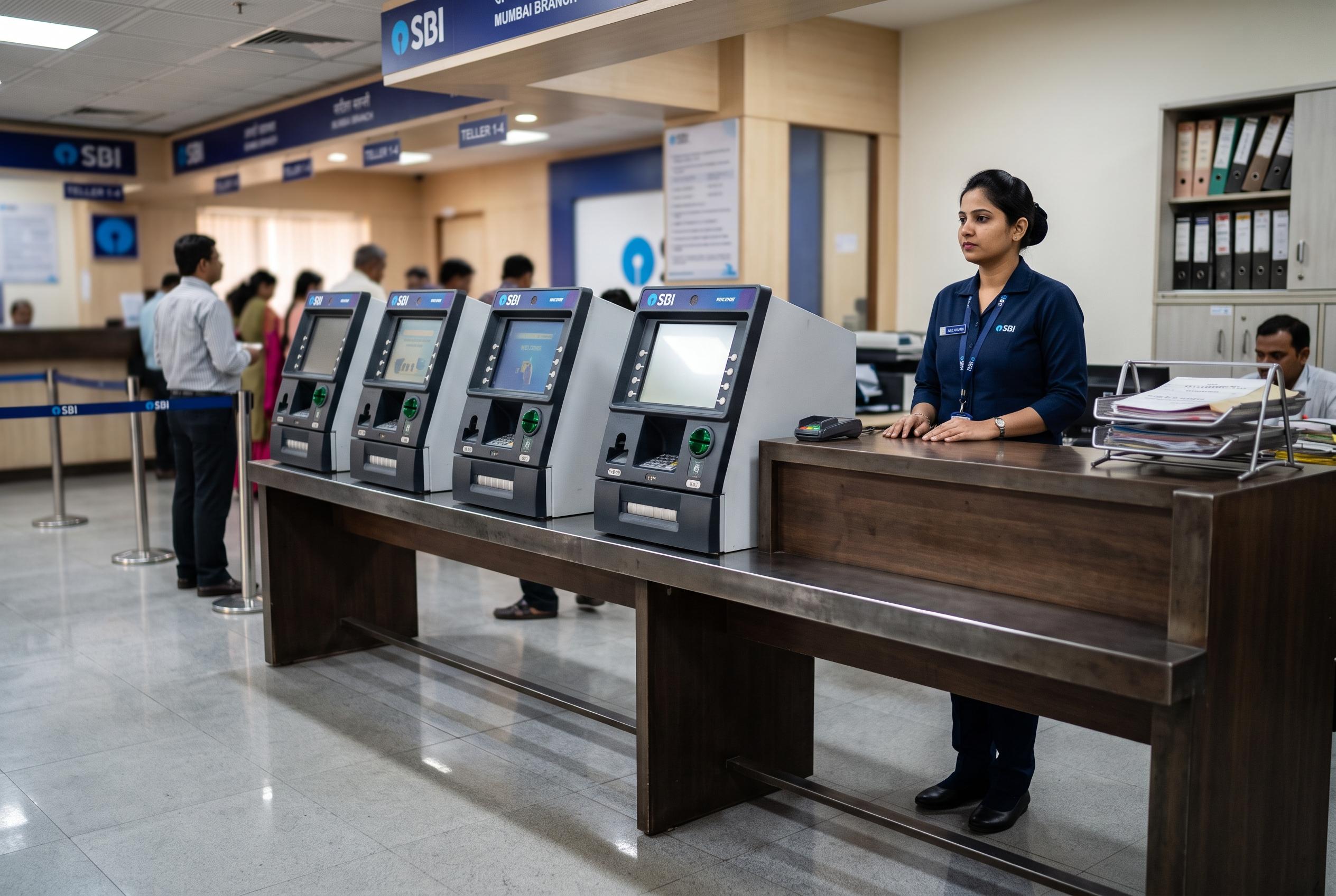

With a vast ATM network remaining underutilised for services beyond cash withdrawals, Indian banks aim to transform their use cases amid shifting customer behaviour and rising digital payments.
India’s banks are trying to squeeze more value from a network of ATMs that is still everywhere, yet increasingly underused for anything beyond cash withdrawals. Industry executives say most machines can already handle fund transfers, utility payments, insurance premiums, mobile top-ups, balance checks, mini-statements, PIN changes, card-limit updates and cheque-book requests, but many of those options remain little known to customers.
Navroze Dastur, regional vice-president for Asia-Pacific and managing director for India at NCR Corporation, told Business Standard that banks need to do more to educate users. An ATM, he said, should not be seen only as a cash dispenser. Rohan Lakhaiyar, a partner at Grant Thornton Bharat, said non-financial functions are more relevant in smaller cities, while customers in larger urban markets increasingly handle those tasks on their phones.
That shift fits a broader change in behaviour. Business Standard reported earlier this year that ATM visits have been falling even as withdrawals per visit have risen, suggesting people are using cash more deliberately. At the same time, the Reserve Bank of India has continued to push financial inclusion through both branch expansion and technology, with bank branches rising to 1.64 lakh at the end of March 2025, according to its latest Trend and Progress report. The central bank said India has expanded traditional channels alongside digital ones, unlike many countries where online banking has led to a retreat in physical access points.
The economics are also changing. Cash-recycler machines, or CRMs, which can both accept deposits and dispense cash, are gaining ground because they reduce manual handling and improve uptime. Industry sources quoted by Business Standard said roughly 30% of the installed ATM base is now made up of recyclers, and about 80% of new installations are of that type. But they cost more than legacy machines, and the incentive to invest is shaped by fees that have not kept pace with operating costs. The interchange fee on ATM transactions stands at Rs 19 and has been revised only three times since 2011, with the latest change taking effect on May 1, 2025.
That leaves banks looking for ways to make the network earn its keep. Even with about 265,000 ATMs installed, around 100,000 of them are branch-based machines, underlining how closely the channel remains tied to the physical banking footprint. With digital payments expanding and cash use becoming more selective, lenders are under pressure to turn ATMs from simple withdrawal points into fuller-service terminals , or justify why so much infrastructure remains devoted to a function many customers now perform elsewhere.
Disclaimer: This article is intended to inform and educate, not to recommend or endorse any financial product, investment or strategy. Please consider your own financial circumstances and seek professional advice where appropriate before making financial decisions.