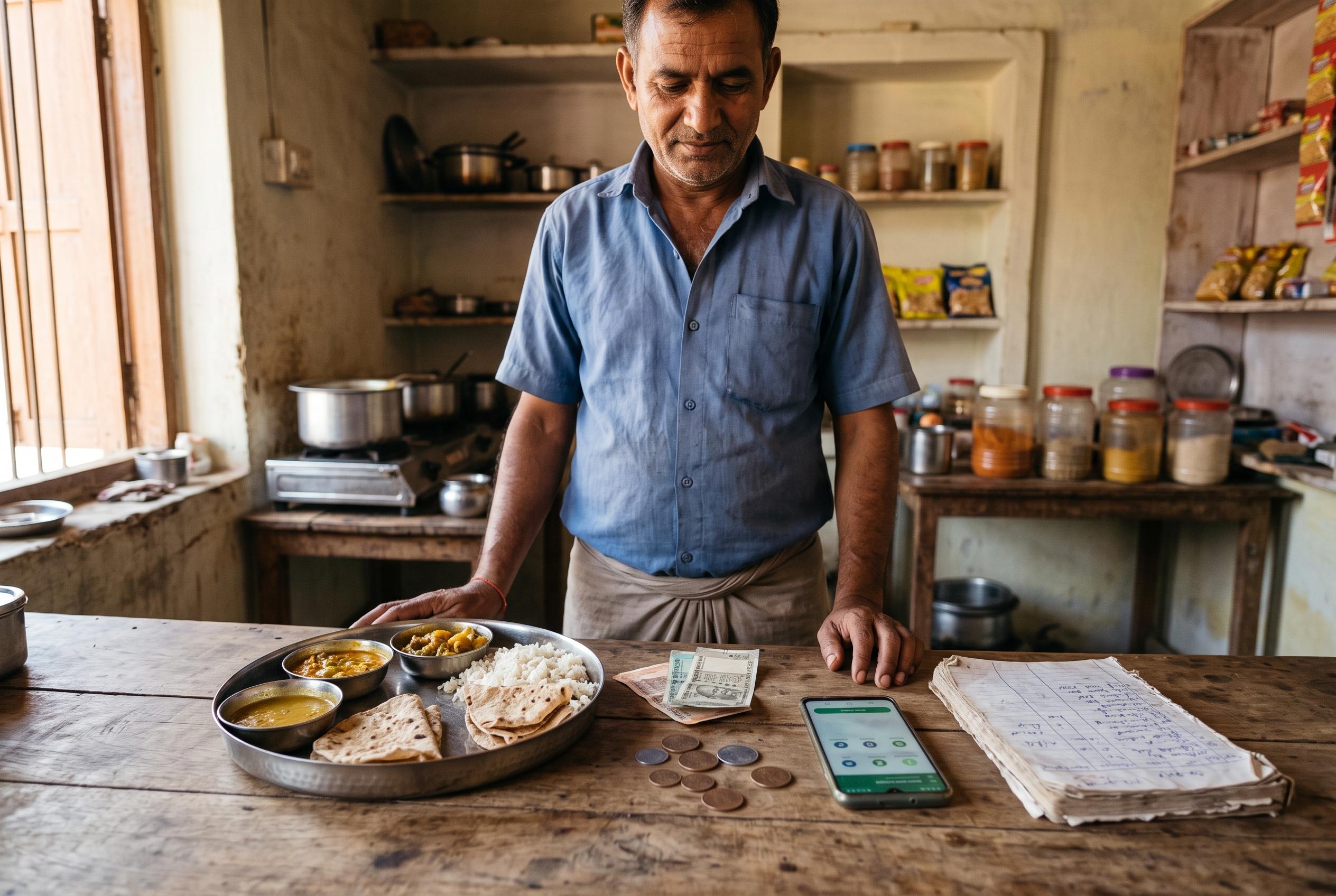

A viral claim of a village thali shop’s ₹1.95 lakh monthly sales highlights the complexities of small business profitability in India amidst rising digital payment scrutiny and formalisation efforts.
A viral account of a village thali shop claiming monthly sales of ₹1.95 lakh has prompted a wider discussion about how small businesses in India really make money. The headline figure sounds striking, but the economics of a micro-enterprise are rarely captured by revenue alone. Analysts and policy writers have long pointed out that India’s small firms often operate with thin margins, limited scale and heavy dependence on informal labour, which can make gross sales look healthier than the final cash left in hand.
That distinction matters because revenue and profit are not the same thing. A shop may bring in steady daily takings, yet still face costs for ingredients, fuel, electricity, water, packaging, repairs and the owner’s own time. Research on micro, small and medium enterprises has repeatedly found that informality can hide these expenses and make true profitability hard to judge. It also means that apparently successful businesses may still struggle to build reserves, access credit or expand in a sustainable way.
The debate is being sharpened by India’s growing use of digital payments. According to The Economic Times, vendors in Bengaluru have faced closer tax scrutiny as UPI transactions leave clearer records of turnover, pushing some small traders back towards cash. That reflects a broader shift: digital payments can make business easier for customers and more transparent for tax officials, but they also increase the chances that informal operators are drawn into the Goods and Services Tax system sooner than they expected.
Studies on GST’s impact on MSMEs suggest that formalisation has brought both benefits and burdens. Greater traceability can improve access to finance and make businesses more visible to lenders, but compliance costs, paperwork and disruptions to cash-based trade can be significant for very small firms. That is why the village shop story resonates beyond one business: it captures both the promise of India’s micro-enterprises and the growing pressure on them to professionalise.
The broader lesson is that India’s small businesses remain central to the economy, but their resilience often depends on keeping overheads low and operations flexible. As the tax net tightens and digital records become more common, the line between informal survival and formal compliance is becoming harder to ignore.
Disclaimer: This article is intended to inform and educate, not to recommend or endorse any financial product, investment or strategy. Please consider your own financial circumstances and seek professional advice where appropriate before making financial decisions.