
The White House has classified India as a major hub in China’s shadow transshipment network, intensifying Washington’s efforts to clamp down on tariff evasion amid India’s push to become a global manufacturing alternative.
India has been pulled into Washington’s latest crackdown on tariff evasion, with the White House identifying the country as a major node in what it calls a global “shadow transshipment” network built around Chinese goods.
According to the White House fact sheet released on Thursday, India has been placed in the top tier of countries with large and varied trade flows that can be vulnerable to rerouting schemes. The administration put India alongside the European Union, Canada, Mexico, Japan and South Korea in a category it described as “Tier-1 Diversified Scale Leader”, saying the risk comes not from trade itself but from the sheer size of legitimate commerce passing through these hubs.
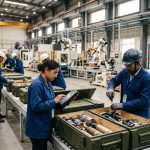
The report said India, Mexico and Vietnam were the three biggest hubs for products traced back to China in 2025, estimating that about $67 billion in goods were transshipped through those countries. It singled out an India route running through Pune, Gujarat and Chennai for pumps and compressors, arguing that some Chinese companies may carry out limited processing in India before shipping goods to the United States and benefiting from lower Indian duties than the tariffs applied to Chinese imports.
Reuters has previously reported similar concerns from U.S. officials about India being used as a transit point for Chinese goods, while the White House says its broader strategy now includes tighter customs enforcement and the use of artificial intelligence to spot suspicious trade patterns. The administration wants those systems to trace goods across complex supply chains and identify products that may have been rerouted through third countries to avoid duties.
For India, the designation lands at an awkward moment. New Delhi has been working to position itself as an alternative manufacturing base for global companies seeking to diversify away from China, even as it comes under closer scrutiny from Washington over the possibility that some supply chains could be taking advantage of the country’s expanding role in world trade.
Disclaimer: This article is intended to inform and educate, not to recommend or endorse any financial product, investment or strategy. Please consider your own financial circumstances and seek professional advice where appropriate before making financial decisions.