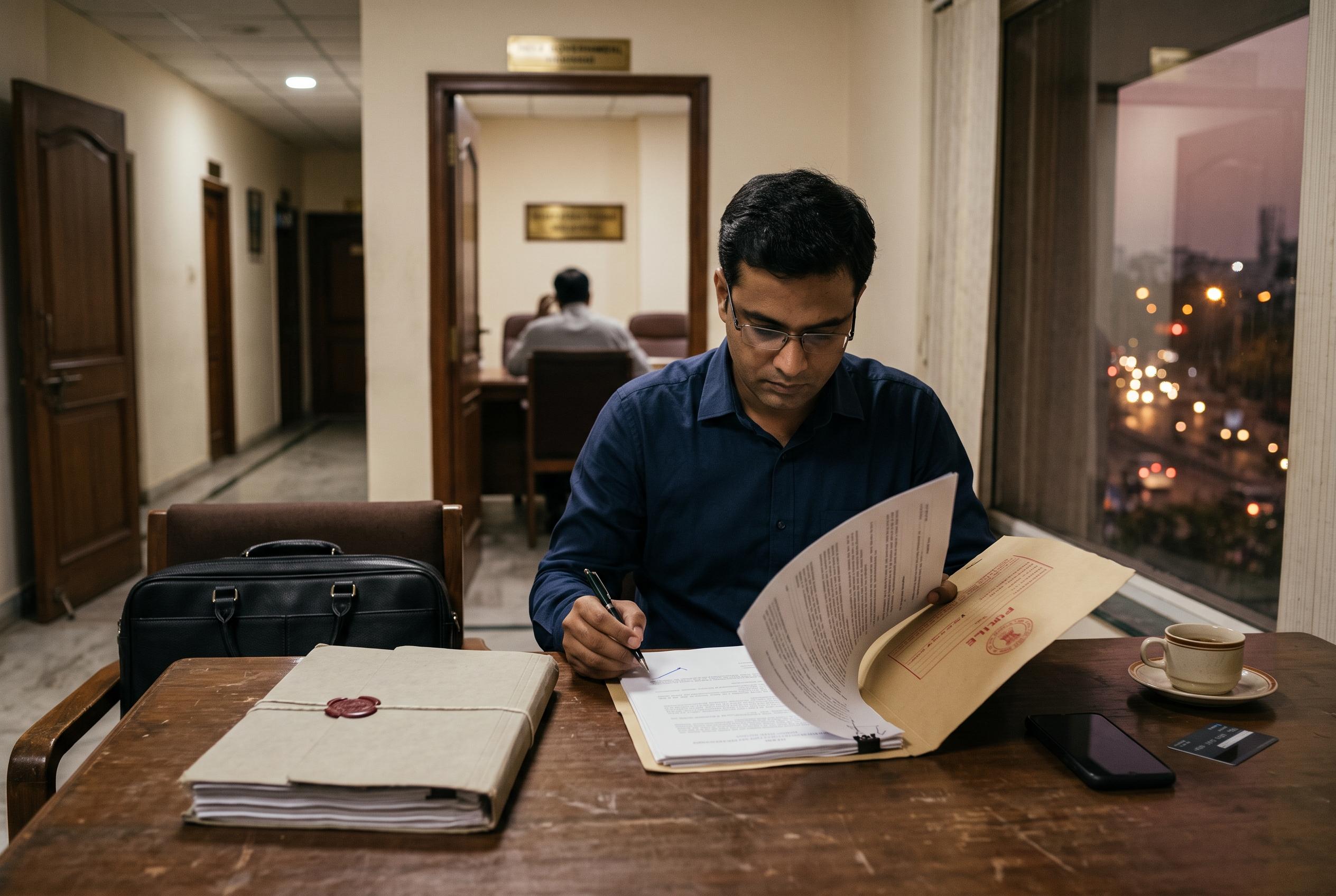

A recent ruling by the Income Tax Appellate Tribunal in Hyderabad emphasises that Section 69C applies only to unexplained expenditure, clarifying that traceable payments from bank accounts are not automatically subject to addition, even if the destination remains unclear.
An Income Tax Appellate Tribunal ruling in Hyderabad has drawn a sharp line between the source of a payment and what ultimately happened to it, holding that Section 69C cannot be used merely because a taxpayer cannot fully explain the purpose or destination of money already shown to have come from a bank account. According to reporting by The Tax Talk and TaxTMI, the tribunal said the provision is aimed at unexplained expenditure where the source itself is not satisfactorily accounted for. The case involved Shri Mothi Kumar Houdekar and a disputed addition of ₹10.70 lakh.
The dispute arose after an assessing officer compared the assessee’s claimed purchases and expenses of ₹12,94,508 with bearer-cheque payments totalling ₹23,65,315, leaving a difference of ₹10,70,807. The department treated that gap as unexplained expenditure, and the first appellate authority upheld the addition. But the tribunal found that the payments were made through the assessee’s bank accounts, which meant the source of funds was identifiable even if the exact end-use of the excess amount was not. The income tax department’s own explanation of Section 69C supports that reading, as the statute applies where the source of expenditure is not explained to the assessing officer’s satisfaction.
That distinction mattered. The tribunal said the revenue had focused on whether the taxpayer could show where the money went, rather than whether the money’s source was unknown. In the tribunal’s view, those are not the same inquiry. If a withdrawal or cheque issue is clearly traceable to a bank account, a remaining doubt about who received the cash or how it was used does not automatically satisfy Section 69C. The decision therefore turned on the limits of the deeming provision, which cannot be stretched beyond its wording simply because a transaction appears incomplete or awkwardly documented.
The ruling also offers a practical warning for assessments involving bearer cheques and similar instruments. Such payments can justify closer scrutiny, because they do not identify the ultimate recipient as neatly as account-payee transfers do. But as the tribunal’s reasoning shows, suspicion alone is not enough for a Section 69C addition. The department must still show that the source of the expenditure itself is unexplained. Where the funds are traceable through banking records, a tax officer may be entitled to ask difficult questions, but the legal basis for an addition has to match the statutory test.
For taxpayers, the case is a reminder to keep bank statements, cheque records, vouchers, ledgers and supporting bills in order, especially where cash-like instruments are used. Yet the broader lesson is simpler: an unclear destination is not the same as an unknown source. On that basis, the tribunal deleted the ₹10,70,807 addition in Shri Mothi Kumar Houdekar v. ITO, reinforcing that Section 69C is confined to unexplained expenditure in the statutory sense, not every payment whose trail is imperfect.
Disclaimer: This article is intended to inform and educate, not to recommend or endorse any financial product, investment or strategy. Please consider your own financial circumstances and seek professional advice where appropriate before making financial decisions.