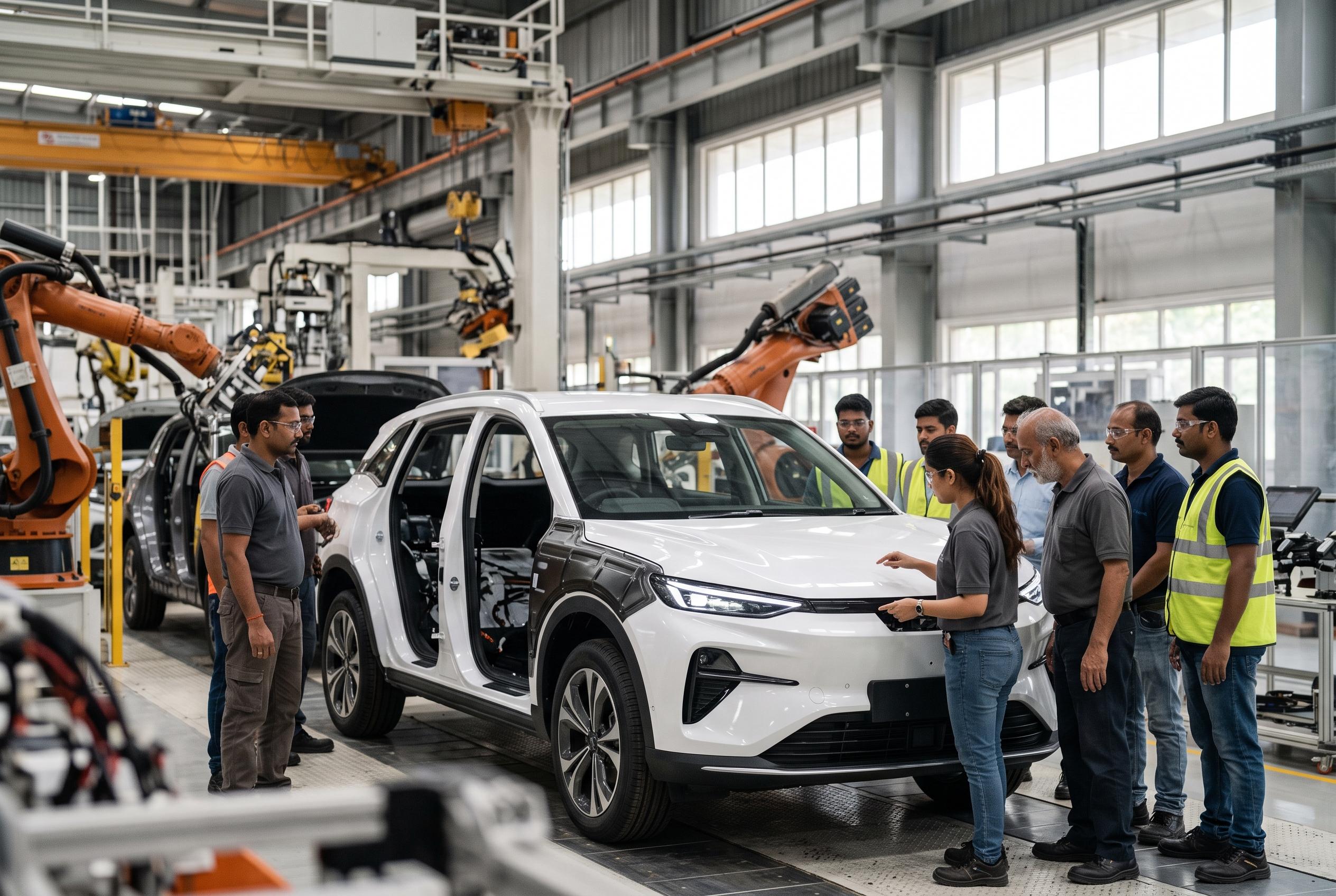

India’s push for electric mobility enters a new phase as policymakers emphasise localisation and commercial viability over subsidies, aiming to establish a resilient and competitive EV industry amid mounting cost challenges.
India’s electric-vehicle drive is entering a more demanding phase, with the government signalling that subsidies alone will not be enough to secure long-term growth. Heavy Industries Minister H D Kumaraswamy said in New Delhi that the shift to electric mobility must be “inclusive, affordable and economically sustainable”, placing cost, localisation and industrial scale at the centre of the next stage of policy.
That marks a subtle but important change in emphasis. For years, public support helped narrow the price gap between electric vehicles and petrol or diesel models, especially in two- and three-wheelers. Now the focus is moving towards whether manufacturers can make EVs competitive on their own economics, without depending indefinitely on incentives.
The scale of that challenge is clear from the latest figures on PM E-DRIVE, the ₹11,900-crore programme meant to support adoption and infrastructure. The scheme has incentivised more than 23.2 lakh electric vehicles, with ₹2,281.94 crore reimbursed by July 1. It also allocates money beyond vehicle purchases, including ₹4,391 crore for electric buses, ₹2,000 crore for charging infrastructure and ₹500 crore for electric trucks. A separate assessment by the Council on Energy, Environment and Water said PM E-DRIVE delivered 1.13 million electric vehicles in its first year, despite offering about half the per-vehicle subsidy of the earlier FAME II programme.
Officials are now pressing industry to turn that policy support into a durable manufacturing base. Heavy Industries Secretary Kamran Rizvi said electric mobility gives India an opportunity to emerge as a global player, while Additional Secretary Hanif Qureshi pointed to localisation as key to building resilience. The government is backing that effort through PLI-Auto, PLI-ACC and a rare-earth permanent-magnet programme, but lower imports alone will not automatically make EVs cheaper. Batteries, cells, magnets and power electronics still account for a large share of costs, and companies will need bigger volumes, better technology and stronger supply chains before affordability can improve on a lasting basis.
For now, the economics remain mixed. EV users can benefit from lower running costs and less fatigue, but the upfront purchase price is still a barrier in a market as price-sensitive as India’s. That leaves policymakers with a delicate balancing act: cut support too quickly and adoption could slow; keep it too long and the industry may have less incentive to prove that electric vehicles can stand on their own.
Disclaimer: This article is intended to inform and educate, not to recommend or endorse any financial product, investment or strategy. Please consider your own financial circumstances and seek professional advice where appropriate before making financial decisions.