

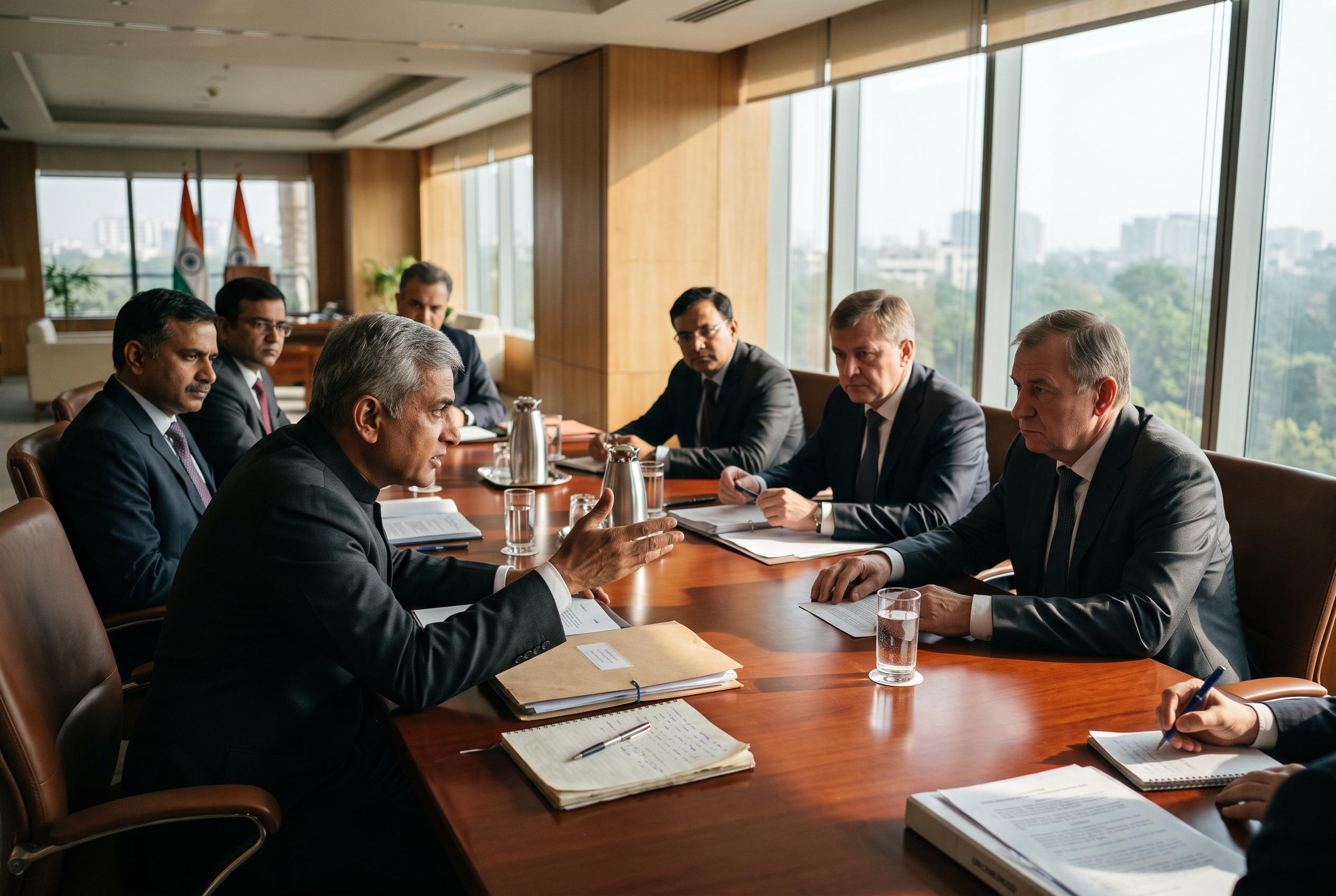

External Affairs Minister Jaishankar urges urgent action to narrow India’s trade deficit with Russia, highlighting energy reliance and stalled free trade talks as key challenges.
S Jaishankar has pressed for swift action to narrow India’s widening trade gap with Russia, saying the relationship’s commercial potential remains underused even after a sharp rise in bilateral trade. Speaking in Moscow at the India-Russia Inter-Governmental Commission, the external affairs minister said market access, tariff and non-tariff barriers, payment systems and closer business ties all need attention.
The imbalance has grown dramatically as India’s purchases from Russia have surged, driven largely by energy imports. The Hindu BusinessLine reported that bilateral goods trade has risen to nearly $60 billion, with India importing $55.3 billion worth of goods from Russia and exporting just $4.5 billion, leaving New Delhi with a deficit of more than $50 billion.
That pattern reflects a broader shift in trade since the Ukraine war, when discounted Russian crude was increasingly redirected to Asian markets under Western sanctions. The New Indian Express said the trade realignment has remained structurally intact despite some easing in India’s recent crude buying, underscoring how heavily the bilateral relationship now depends on energy.
Jaishankar also pointed to possible next steps, including reviewing negotiations on a proposed India-Eurasian Economic Union free trade agreement and pushing the commission’s working groups to focus on concrete deliverables before the next meeting. He argued that governments can set the framework, but businesses must do the work of trade, investment, innovation and job creation.
Disclaimer: This article is intended to inform and educate, not to recommend or endorse any financial product, investment or strategy. Please consider your own financial circumstances and seek professional advice where appropriate before making financial decisions.



