

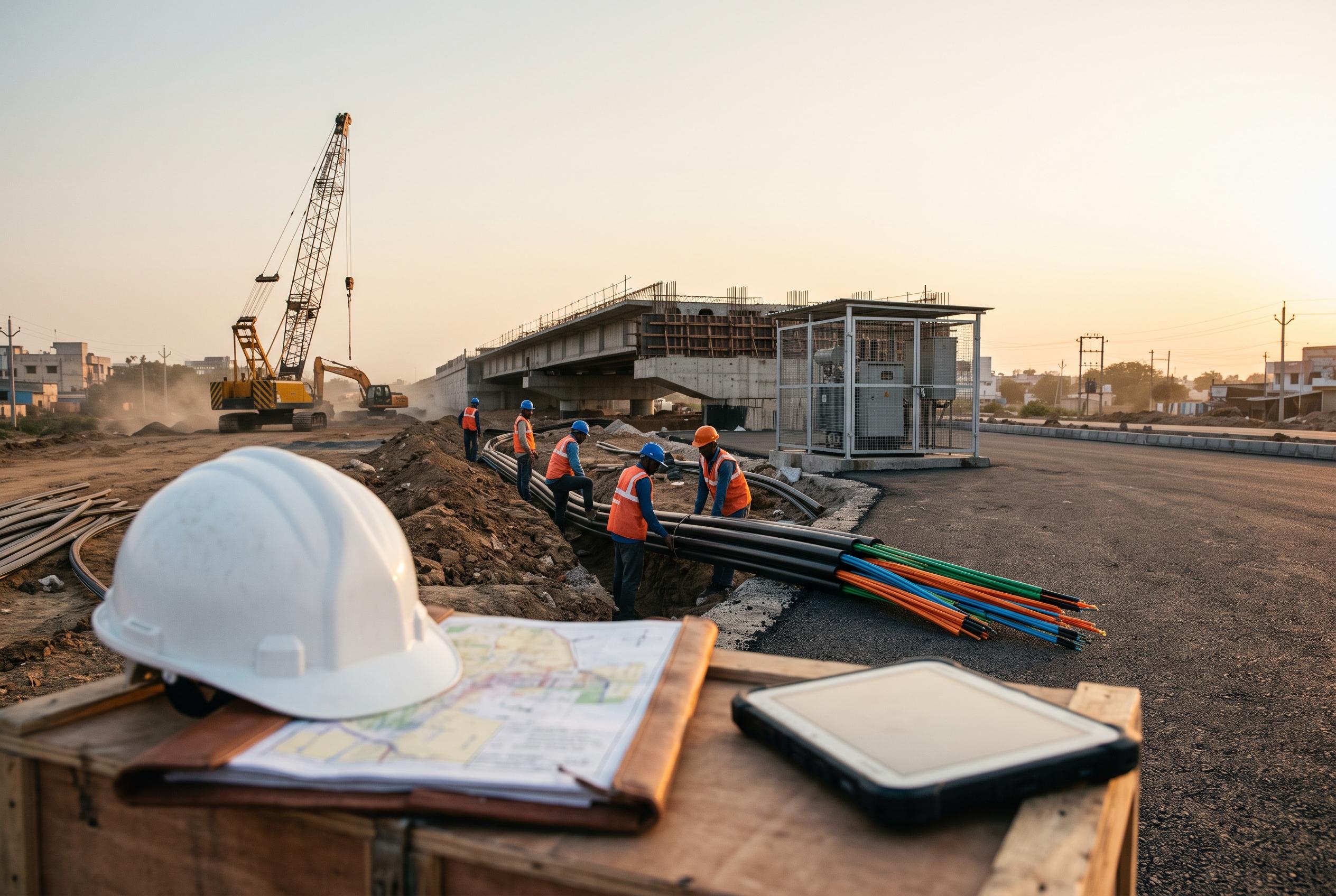

India’s government increases capital expenditure to support infrastructure growth and private investment, emphasising quality and digitalisation for sustainable expansion.
India’s public investment drive has gathered pace, with capital spending in June rising sharply year on year and the wider budgetary plan for 2026-27 set at Rs 12.22 lakh crore, according to the Indian Express article and the Union government’s budget material. That puts the Centre’s capex programme on a firmer footing at a time when policymakers are betting that roads, railways, power, digital systems and defence orders can help sustain growth and encourage more private spending. The budget documents also show a larger measure of effective capital expenditure, which includes grants for asset creation, at Rs 17.15 lakh crore.
The scale of the shift is significant. The Indian Express article says the Centre’s capital outlay has risen from Rs 2.63 lakh crore in 2017-18 to a budget estimate of Rs 11.21 lakh crore in 2025-26, before climbing again in 2026-27. The Economic Survey has also pointed to a rise in capex’s share of total central spending and as a share of GDP, while Finance Minister Nirmala Sitharaman said the 2026-27 allocation is meant to support infrastructure-led expansion without losing fiscal discipline.
The larger question is whether public spending is drawing in private investment rather than replacing it. The article points to signs of healthier corporate balance sheets, stronger capacity utilisation and rising capital goods imports. It also cites National Statistical Office estimates that private corporate capex on new assets could reach about Rs 11.44 lakh crore in 2025-26, with most of it financed from internal resources and domestic borrowing. That matters because private firms are more likely to expand only when demand is credible and financing is manageable.
This is where the quality of government investment becomes crucial. The article argues that capex does more than create physical assets: it lowers transport costs, improves market access and strengthens the foundations for future private activity. Budget commentary for 2026-27 suggests highways, railways, metros, shipbuilding and defence modernisation will remain the main focus, while the government’s support through schemes for state capital investment broadens the reach of the push. At the same time, the article warns that spending alone does not guarantee productivity if projects are delayed or poorly designed.
The next phase, it argues, has to move beyond concrete and steel. India’s growth story will increasingly depend on digital infrastructure, artificial intelligence, semiconductors, research capacity and skills. That requires more than subsidies for factories; it requires capabilities in engineering, design, testing, laboratories and universities. Academic work on developing economies cited in the material also finds that public investment can have a strong positive effect on growth, reinforcing the case for a well-targeted public capex strategy.
Disclaimer: This article is intended to inform and educate, not to recommend or endorse any financial product, investment or strategy. Please consider your own financial circumstances and seek professional advice where appropriate before making financial decisions.



