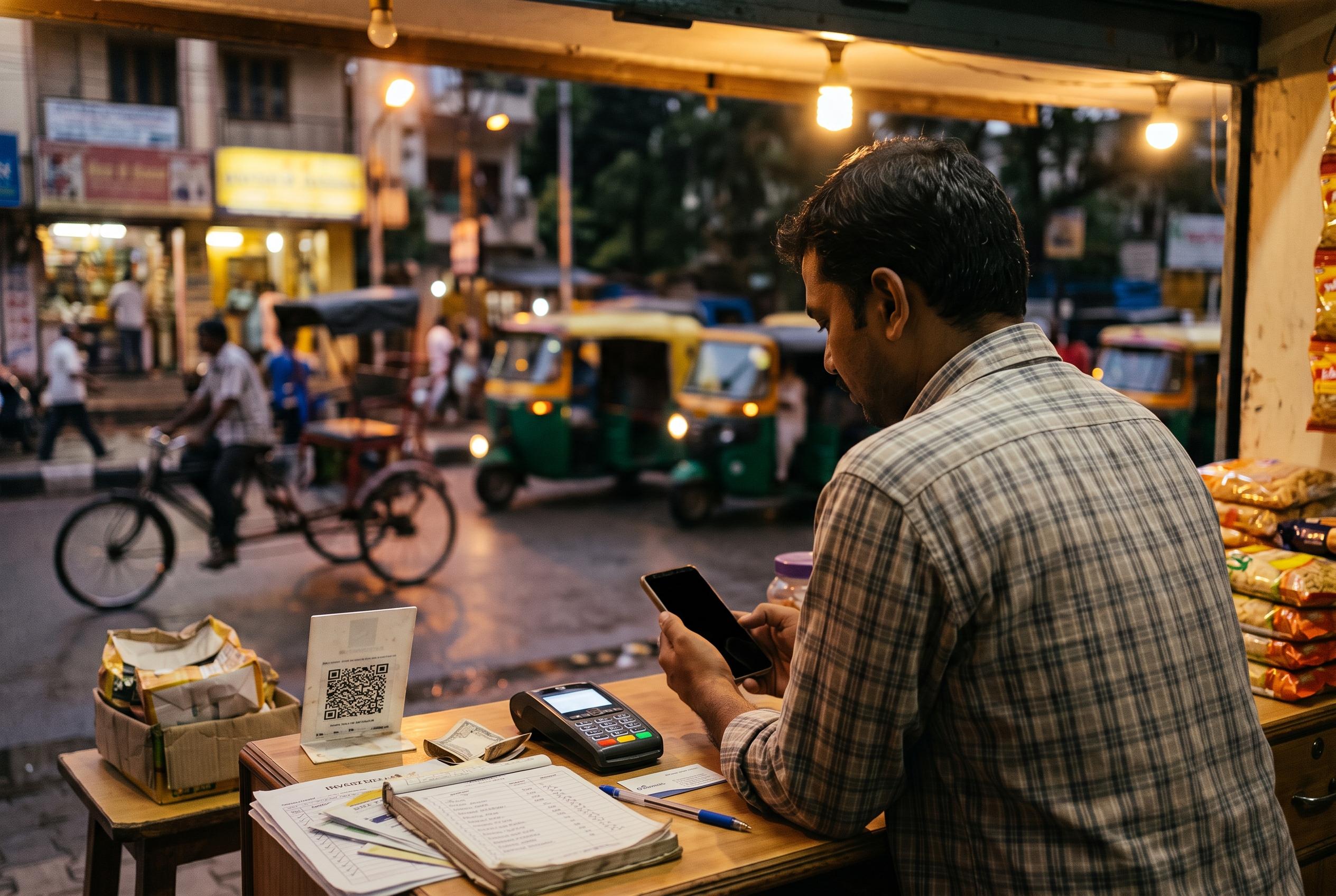

India’s digital payment platform UPI is set to revolutionise access to credit for small businesses and first-time borrowers, transforming the landscape of financial inclusion and lending practices.
India’s fintech story is entering a second stage. After years in which digital payments drove adoption, the more consequential test now is whether the same infrastructure can help unlock credit for small firms and first-time borrowers. That shift matters because UPI has become the backbone of India’s digital payments system, and the data it generates could give lenders a clearer view of cash flows, customer behaviour and repayment capacity than many conventional assessments allow. According to the Economic Survey and related research, that is exactly where digital public infrastructure can reshape access to finance.
The policy case for that transition has sharpened in recent weeks. At the Global Fintech Fest, Prime Minister Narendra Modi urged the industry to move beyond payments and into credit, especially for very small businesses whose borrowing needs are often poorly understood by traditional lenders. A day later, NITI Aayog vice-chairman Ashok Lahiri argued that UPI transaction records could strengthen credit appraisal and price risk more accurately, which would help bring informal firms and micro, small and medium-sized enterprises into the formal lending system.
The scale of UPI makes that ambition plausible. Business Standard noted that in August the platform handled 24.51 billion transactions worth ₹29.82 trillion, with volumes rising about 22 per cent from a year earlier. Other recent reporting has underlined how dominant UPI has become: the Reserve Bank of India’s annual report put its share of digital payment volume at 79.7 per cent in FY24, up sharply from 36.8 per cent in FY20. India has also seen digital payments spread far beyond major cities, with more than 65,000 crore transactions worth about ₹12,000 trillion recorded between FY20 and FY25, reflecting a much wider formalisation of everyday commerce.
That growth is important because it changes what lenders can know. A working paper cited by LiveMint says fintech firms have a particular role in reaching borrowers with no prior credit history, while the Economic Survey says UPI’s public, low-cost design has helped small traders adopt digital payments and enabled credit expansion without a corresponding jump in defaults. Research on MSMEs also suggests digital transaction use in that segment has climbed strongly, with the number of MSME transactions rising more than fourfold between 2020-21 and 2023-24. The lesson is straightforward: if India wants fintech to deepen financial inclusion, the next frontier is not just cheaper payments, but better lending.
Disclaimer: This article is intended to inform and educate, not to recommend or endorse any financial product, investment or strategy. Please consider your own financial circumstances and seek professional advice where appropriate before making financial decisions.