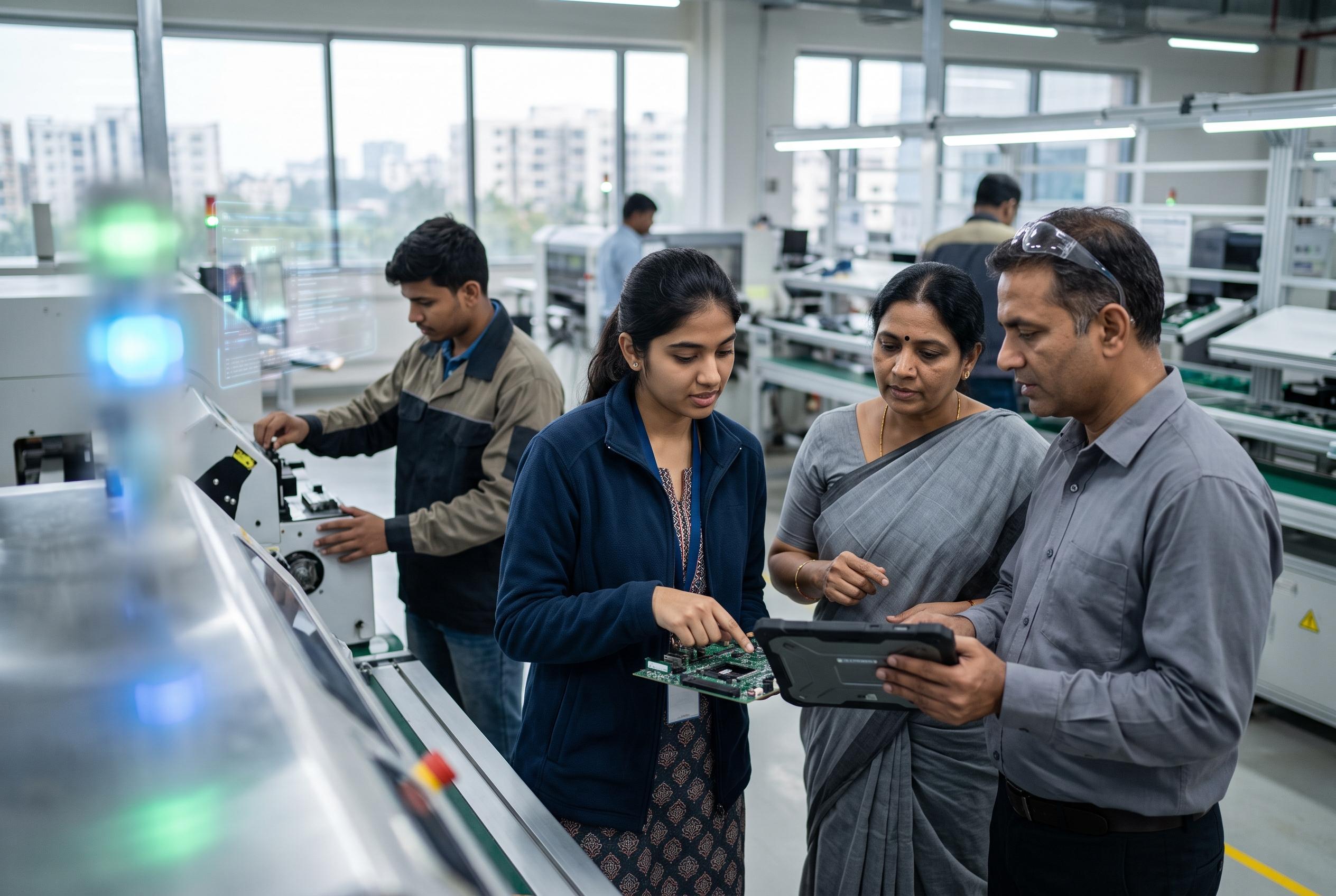

Chief Economic Adviser V. Anantha Nageswaran urges India to integrate AI into its growth model, emphasising job creation, human-centred policies, and early action to prevent displacement amidst global economic uncertainties.
India’s economy is at a turning point, according to Chief Economic Adviser V. Anantha Nageswaran, who has argued that the country needs to rethink the growth model that has guided policy for decades. Speaking at recent forums on artificial intelligence, Nageswaran said India cannot treat AI as a side issue: it has to be built into planning for productivity, jobs and long-term competitiveness.
His warning comes at a moment of heightened uncertainty in the global economy, with domestic pressures adding to the challenge. The core concern, as reported by NDTV, is not simply whether AI will lift output, but whether that gain will be matched by enough job creation. Nageswaran has said India should aim to use technology to support workers rather than replace them, while strengthening human capital through education and training.
At the AI Summit 2026, LiveMint reported that Nageswaran urged policymakers to act early so that workers are not displaced faster than they can be retrained. He said India risks wasting its demographic advantage if productivity rises without broader employment growth, widening inequality in the process. In a separate appearance covered by LiveMint, he also argued that AI should be used to raise the value of human labour, with machines handling routine tasks so people can focus on work that only humans can do.
That message has clear implications beyond labour policy. According to reports in The Economic Times and LiveMint, Nageswaran has also stressed the need to keep humans in the loop when AI is deployed, particularly in sensitive areas such as finance, so that the technology does not become a tool of exclusion. He has framed India’s opportunity in AI as a matter of political will, state capacity and deliberate policy, saying the country can lead globally only if it aligns technological adoption with broad-based employability. For investors and policymakers alike, the challenge now is to support innovation without leaving workers behind.
Disclaimer: This article is intended to inform and educate, not to recommend or endorse any financial product, investment or strategy. Please consider your own financial circumstances and seek professional advice where appropriate before making financial decisions.