


As India prepares to host the 18th BRICS Summit, the grouping faces its biggest test yet: overcoming internal divisions over Middle East conflicts and shifting focus towards tangible economic and developmental outcomes.
India is less than a week away from staging the 18th BRICS Summit at Bharat Mandapam in New Delhi on 12-13 September, according to an Indian diplomatic notice from the embassy in Riyadh (eoiriyadh.gov.in). The larger question after the bloc’s foreign ministers met in the capital in May is not whether leaders will gather, but whether India can stop that earlier split from defining the summit. Reuters (uk.marketscreener.com) and the Associated Press (wtop.com) reported that the ministers left without a joint statement, forcing the host to issue only a chair’s text instead.
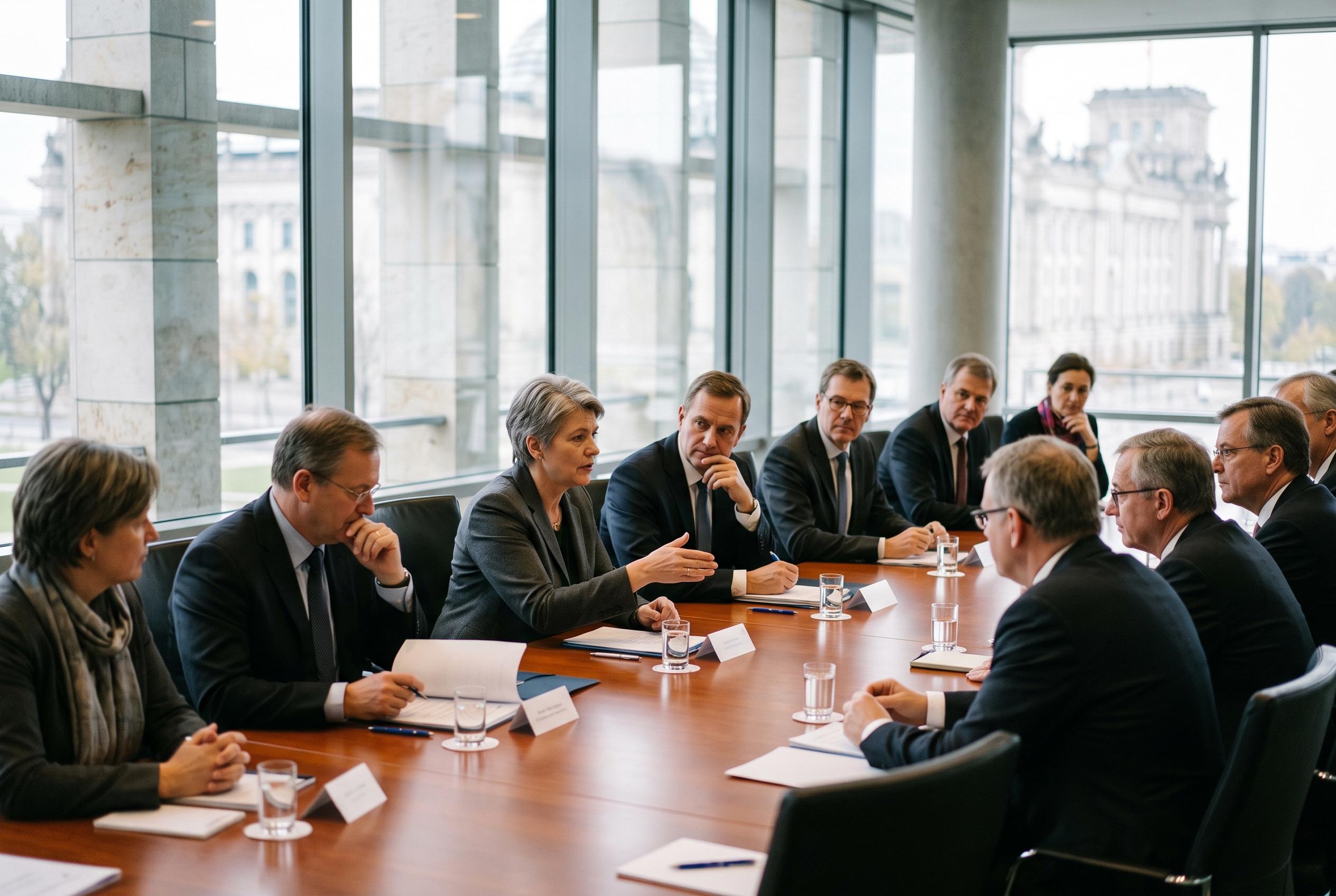
The scene in New Delhi in May showed why that mattered. AP (businessmirror.com.ph) reported that the opening line-up at Bharat Mandapam put Iran’s Abbas Araghchi and the UAE’s Khalifa bin Shaheen Al Marar in the same frame as Russia’s Sergey Lavrov, Brazil’s Mauro Vieira, South Africa’s Ronald Lamola, Ethiopia’s Gedion Timothewos, Egypt’s Badr Abdelatty, Indonesia’s Sugiono and China’s ambassador to India, Xu Feihong. Jaishankar spoke with Araghchi on arrival, AP said, underlining that this was not a ceremonial curtain-raiser but an early test of whether an enlarged BRICS could function while some of its members were on opposite sides of a live regional conflict.
Reuters (investing.com) had warned before the meeting that the war on Iran would overshadow proceedings from the outset. The agency said Tehran had urged India, which holds the 2026 chair, to use the forum to build consensus condemning US and Israeli actions in the Gulf conflict. Reuters also reported that Indian foreign ministry spokesperson Randhir Jaiswal had acknowledged as early as March that, because some BRICS members were directly involved in the fighting, it had been “difficult for us to forge a consensus”. By Reuters’ account, the war launched on 28 February had already placed Iran and the UAE on opposite sides of the front line and raised the stakes for any common language on energy, security and maritime trade.
When the talks ended on 15 May, the failure was plain. AP (wtop.com) said there was no joint statement because of “differing views among some members” on the situation in the Middle East, a formulation that Reuters (uk.marketscreener.com) also carried from India’s chair’s statement. Al Jazeera (aljazeera.com) cast the episode as a direct consequence of BRICS expansion, noting that the grouping now spans the original five countries as well as newer entrants including Ethiopia, Egypt, Iran, Indonesia and the UAE. The immediate dispute was about war, but the deeper problem was structural: a club that wants to speak for the Global South is now broad enough to contain rival security interests inside the room.
Since then, India has tried to shift the centre of gravity back to the sort of practical cooperation on which BRICS was built. Government statements after the BRICS trade ministers’ meeting in Jaipur on 7 August (pib.gov.in) said members advanced work on a Strategy for BRICS Economic Partnership 2030 and agreed Jaipur principles intended to narrow the finance gap for smaller businesses. Another official statement after science ministers met in Chennai on 22 August (pib.gov.in) said they had adopted a “Chennai Consensus” and endorsed a 2026-27 calendar for scientific cooperation. Those are not dramatic breakthroughs, but they suggest that consensus is still possible when the agenda turns from war to trade, technology and implementation.
That matters because the bloc’s most durable achievements have come in development finance rather than grand geopolitical theatre. In remarks delivered in Jaipur last month, New Development Bank vice-president Roman Serov (ndb.int) said the lender had approved 141 projects worth $44bn by 30 June, with $25bn already disbursed. Serov added that India was the bank’s second-largest recipient, with 35 approved infrastructure projects worth $10.5bn. For New Delhi, those figures are a reminder that BRICS has value when it behaves as a working platform for capital, infrastructure and institution-building, not simply as a stage for anti-Western posturing.
The emphasis also fits India’s own language for its chairship. Official notices across this year’s ministerial cycle have repeatedly described the theme as “Building for Resilience, Innovation, Cooperation and Sustainability” (pib.gov.in), while the summit announcement says New Delhi will host leaders from BRICS member and partner countries as well as outreach invitees (eoiriyadh.gov.in). India is, in effect, trying to prove that BRICS can be broad enough to claim a representative Global South role while remaining disciplined enough to produce useful outcomes. That is a narrower ambition than remaking the world order, but it is also more realistic.
So the summit beginning on 12 September will be judged against a fairly simple standard. After meeting Vladimir Putin in Bishkek on 31 August, Modi said he looked forward to welcoming the Russian president to India for the BRICS gathering (pib.gov.in). If New Delhi can secure agreements on development, finance and institutional reform while containing its members’ hardest political disputes, India will be able to present its chairship as effective. If the leaders cannot get even that far, the failed communiqué in May will stand not as a one-off embarrassment, but as the clearest sign yet that BRICS has grown faster than its ability to agree.
Disclaimer: This article is intended to inform and educate, not to recommend or endorse any financial product, investment or strategy. Please consider your own financial circumstances and seek professional advice where appropriate before making financial decisions.



